When you imagine hydronic heating, do you picture bulky, old-fashioned radiators? It’s a common misconception, and one that often leaves homeowners wondering if modern systems will suit their home’s aesthetic. You might also be asking if a ‘panel’ and a ‘radiator’ are even the same thing. The good news is that today’s hydronic heating panels offer a sophisticated, efficient, and stylish solution for achieving unparalleled warmth and comfort.
As Melbourne’s trusted hydronic heating specialists, we believe in empowering our clients with clear, reliable information. In this complete guide, we will break down exactly how hydronic panels work to create a consistent, radiant heat. We’ll explore the different styles and materials available-from sleek, minimalist designs to classic column radiators-and provide the expert knowledge you need to select the perfect size and type for your space. You’ll finish reading with the confidence to make an informed decision for your home.
Demystifying Hydronic Panels: What Are They, Really?
When you hear the term hydronic heating panels, it’s easy to get confused. Are they the same as radiators? In short, yes-they are the modern evolution. These panels are the visible, hard-working components of a hydronic heating system, responsible for transferring beautiful, silent warmth into your living spaces. Unlike noisy forced-air systems that blow dry, dusty air, hydronic panels provide a gentle, consistent heat that feels more natural and comfortable.
How Hydronic Panels Work: The Science of Comfort
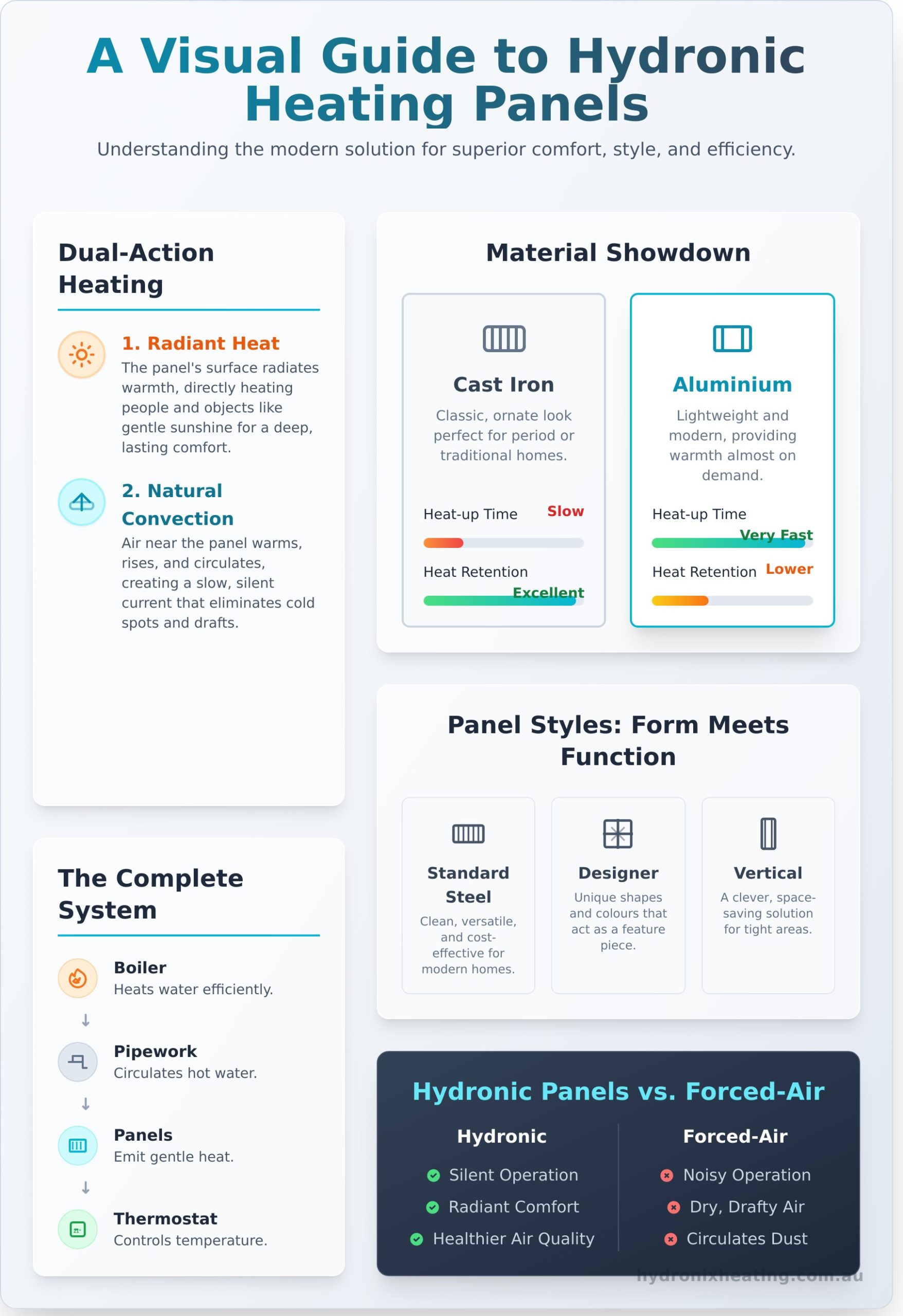
The principle behind hydronic heating is simple and effective. A central boiler, the heart of the system, heats water that is then circulated through a sealed network of pipes to the panels in each room. This method of using water as a heat-transfer medium is known as Hydronics. The panels then warm your space using a powerful two-part process:
- Radiant Heat: The panel’s surface radiates warmth, travelling through the air to heat objects, furniture, and people directly-much like the gentle heat from the sun.
- Natural Convection: Air near the panel warms up, becomes less dense, and naturally rises. This draws cooler air towards the panel, creating a slow, silent circulatory current that evenly warms the entire room.
This dual-action approach eliminates cold spots and creates a stable, comfortable indoor climate without the drafts or dryness associated with other heating methods.
Panels vs. Radiators: Is There a Difference?
In Australia, the terms ‘panel’ and ‘radiator’ are often used interchangeably. While both function on the exact same hydronic principle, the terminology typically points to a difference in style. ‘Panel’ usually refers to modern, flat, or slimline steel designs, while ‘radiator’ might bring to mind more traditional cast-iron or column styles. Ultimately, both are heat emitters in a hydronic system, designed to do the same job efficiently.
The Role of Panels in Your Complete Heating System
It’s crucial to understand that panels are just one part of a complete, integrated circuit. For reliable and efficient performance, every component must work together seamlessly. A professionally designed system includes:
- The Boiler: The heat source that warms the water.
- The Pipework: The network that delivers hot water to the panels.
- The Panels: The heat emitters that warm each room.
- The Thermostat: The control that regulates temperature for optimal comfort and efficiency.
A well-designed system ensures your home is heated effectively, giving you trusted warmth when you need it most.
A Tour of Hydronic Panel Styles & Materials
One of the greatest advantages of a modern hydronic heating system is its design flexibility. Gone are the days of bulky, uniform radiators; today’s hydronic heating panels are available in a vast range of styles, materials, and configurations to complement any Australian home, from a heritage terrace to a minimalist new build. Understanding these options is key to choosing a system that delivers both exceptional warmth and seamless style.
Standard Steel Panels: The Reliable & Popular Choice
For most modern homes, standard steel panels are the go-to choice. Their clean lines and versatile white finish integrate easily into any decor. Renowned for their excellent heat output and relatively fast response time, they warm a room efficiently. As the most widely produced option, they are also typically the most cost-effective solution for new hydronic heating installations, offering proven performance and reliability without a premium price tag.
Designer & Vertical Panels: Style Meets Function
Hydronic heating can also be a deliberate design statement. Designer panels move beyond pure function, available in flat-front profiles, a wide spectrum of colours, and unique architectural shapes that can serve as a feature piece. Vertical panels are a particularly clever solution for rooms with limited horizontal wall space, such as kitchens, bathrooms, or hallways. They use height to deliver powerful heating performance, turning a practical necessity into an elegant focal point.
Cast Iron vs. Aluminium: Choosing the Right Material
The material your panel is made from directly impacts its performance and aesthetic. Both cast iron and aluminium are excellent choices, but they function differently. All Radiant heating systems provide comfortable, consistent warmth, but the panel material determines how that heat is delivered.
- Cast Iron: With its classic, ornate look, cast iron is perfect for period or traditional homes. Its key benefit is excellent heat retention; the panels stay warm long after the boiler has turned off. However, they are slow to heat up and are significantly heavier, which can affect installation requirements.
- Aluminium: As a modern alternative, aluminium is lightweight and heats up exceptionally fast, providing warmth almost on demand. This makes it highly responsive to thermostat changes. The trade-off is that it cools down more quickly once the system is off.
The Key Benefits of Heating with Hydronic Panels
Choosing a heating system for your Melbourne home is a significant decision. While the primary goal is warmth, modern solutions offer much more. Hydronic heating panels deliver a superior level of comfort, health, and efficiency that conventional forced-air systems simply cannot match. Renowned for their durability and low maintenance, they represent a long-term investment in your family’s well-being and your home’s value.
Unmatched Comfort: The Power of Radiant Heat
The comfort from hydronic panels is fundamentally different. Instead of blowing hot, dry air, they emit radiant heat-a gentle, consistent warmth that feels like the sun on a cool winter’s day. This energy warms people and objects directly, not just the air. The result is an enveloping warmth that eliminates the drafts and cold spots common with ducted systems, ensuring every corner of your room is comfortable.
A Healthier Home: Better Air Quality for Your Family
For families, particularly those with allergy or asthma sufferers, indoor air quality is paramount. Because hydronic systems don’t use fans or vents to circulate air, they don’t spread dust, pollen, pet dander, and other allergens throughout your home. This creates a cleaner, healthier living environment. Furthermore, the system provides warmth without drying out the air, reducing irritation to skin and airways.
Energy Efficiency and Silent Operation
Hydronic heating is a highly efficient way to heat your home. Water is far more effective at holding and transferring heat than air, meaning the system’s boiler doesn’t have to work as hard. This efficiency is enhanced by Thermostatic Radiator Valves (TRVs), which allow you to set different temperatures for each room, preventing energy waste by not heating unused spaces. Perhaps one of the most appreciated benefits is their completely silent operation-no noisy fans or rattling ducts, just peaceful, consistent warmth.
design and install a hydronic system
How to Choose the Right Hydronic Panels for Your Home
Understanding what hydronic heating is and its benefits is the first step. The next, and most crucial, is ensuring you select the correct system components for your home. Making the right choices in panel size, placement, and control is the difference between an efficient, comfortable system and one that struggles to perform. This is not a DIY task; it requires specialist knowledge to guarantee optimal performance and long-term value.
Sizing Matters: Why Professional Calculation is Crucial
The single most important factor in the performance of your system is correct sizing. A hydronic heating specialist conducts a detailed heat loss calculation for every room. This isn’t a guess-it’s a technical assessment based on:
- Room dimensions (length, width, and ceiling height)
- The size and type of windows and external doors
- The quality of your home’s insulation
An undersized panel will never adequately heat the room on a cold day, while an oversized panel wastes energy and increases running costs. Professional sizing ensures your hydronic heating panels are perfectly matched to your space for maximum efficiency.
Optimal Placement for Maximum Efficiency
Where your panels are installed directly impacts their effectiveness. The traditional and most effective placement is on an external wall, ideally beneath a window. This positioning creates a natural convection current, as the panel’s rising warm air counteracts the cold air and drafts falling from the glass, circulating warmth evenly throughout the room. It’s also vital to leave adequate clearance above and in front of the panel to ensure unrestricted airflow.
Controlling Your Comfort with Thermostatic Valves (TRVs)
To achieve true room-by-room comfort and energy savings, Thermostatic Radiator Valves (TRVs) are essential. A TRV is a self-regulating valve fitted to the panel that controls the flow of hot water based on the room’s temperature. This allows you to set different temperatures for individual rooms-for instance, a cosy 21°C in the living room and a cooler 18°C in bedrooms or unused spaces. By not overheating parts of your home, TRVs significantly reduce energy consumption and lower your heating bills.
For an expert assessment of your home’s specific needs, it’s best to consult with a specialist. The team at hydronic heating installation in Melbourne can provide a detailed evaluation to ensure your system is designed for peak performance and comfort.
Embrace Efficient Warmth with the Right Hydronic Panels
As we’ve explored, hydronic heating panels are more than just a heat source; they are a sophisticated, efficient, and stylish upgrade for any home. By circulating warm water, they deliver a silent, gentle, and consistent radiant heat that traditional systems simply cannot match. The key to unlocking these incredible benefits lies in selecting the perfect style and material for your space, ensuring optimal performance and a seamless aesthetic fit.
Making that choice with confidence requires expert guidance. As Melbourne’s trusted hydronic heating specialists, we provide just that. At Hydronix, our ‘repair-first’ philosophy is designed to save you money, and we stand behind our work with an ironclad six-year workmanship guarantee on all installations. We are committed to finding the most reliable and cost-effective solution for your home.
Need expert advice on the right panels for your system? hydronic heating installation in Melbourne Let us help you take the first step towards a warmer, more efficient, and more comfortable home today.
Frequently Asked Questions About Hydronic Heating Panels
How are hydronic panels different from electric heating panels?
The primary difference is the heat source and its efficiency. Hydronic panels circulate hot water from a central boiler to produce gentle, radiant warmth. This method is highly efficient for whole-home heating. Electric panels use internal resistive elements to generate heat, which can result in significantly higher running costs, especially in the Australian climate. The quality of hydronic heat is also often considered more comfortable and less dry.
Do hydronic heating panels make any noise when operating?
Hydronic heating panels are virtually silent. As they contain no fans or moving parts, they radiate heat without producing any operational noise. The only sound associated with the system is the quiet hum of the central boiler, which is typically installed in a service area, garage, or outside the home. This silent performance ensures a peaceful and undisturbed living environment, unlike noisy forced-air systems.
Can hydronic panels be installed in an existing home, or only new builds?
Hydronic panels are perfectly suited for both new builds and retrofitting into existing homes. A qualified specialist can install the necessary insulated pipework with minimal disruption, often running it under floors or through ceiling cavities. This versatility means you can upgrade almost any property to enjoy the consistent, efficient warmth of a hydronic system without needing a major renovation. It is a reliable solution for any home.
How hot do the panels get? Are they safe for children and pets?
A panel’s surface temperature typically operates between 60°C and 75°C. While hot to the touch, this is significantly cooler and safer than old-fashioned radiators, posing a much lower risk of serious burns. The radiant heat they produce does not create dangerously hot air currents. For homes with young children or curious pets, they are considered a very safe heating option, though we always advise against prolonged direct contact.
What kind of maintenance do hydronic panels require?
The panels themselves are exceptionally low-maintenance, requiring little more than an occasional wipe-down to keep them clean. The system’s primary maintenance involves an annual service of the boiler unit by a hydronic heating expert. This professional inspection ensures the entire system operates at peak efficiency and safety, addressing any potential issues before they become problems. It is a simple step to protect your investment.
How long do hydronic heating panels typically last?
Quality hydronic heating panels are a durable, long-term investment. The panels themselves are incredibly robust and can be expected to last for 25 years or more, as they have no internal moving parts to fail. While the central boiler unit has a typical lifespan of around 10-15 years, the panels will reliably serve your home for decades, providing consistent and efficient warmth for many years to come.