
Considering the luxurious warmth of underfloor heating for your Melbourne home but worried about the price tag? You’re not alone. Navigating the quotes and technical jargon associated with the underfloor heating installation cost can be overwhelming, leaving many homeowners unsure of where to start or what a fair price looks like.
As hydronic heating specialists, we believe an informed decision is the best one. This guide is designed to provide clarity, breaking down the key factors that influence your final investment. We’ll explore everything from the type of hydronic system and heat source to the complexities of installing in new builds versus existing homes. By the end, you’ll have the knowledge to set a realistic budget, understand what a comprehensive quote should include, and feel confident asking installers the right questions to avoid any budget blowouts.
Typical Underfloor Heating Installation Costs in Melbourne
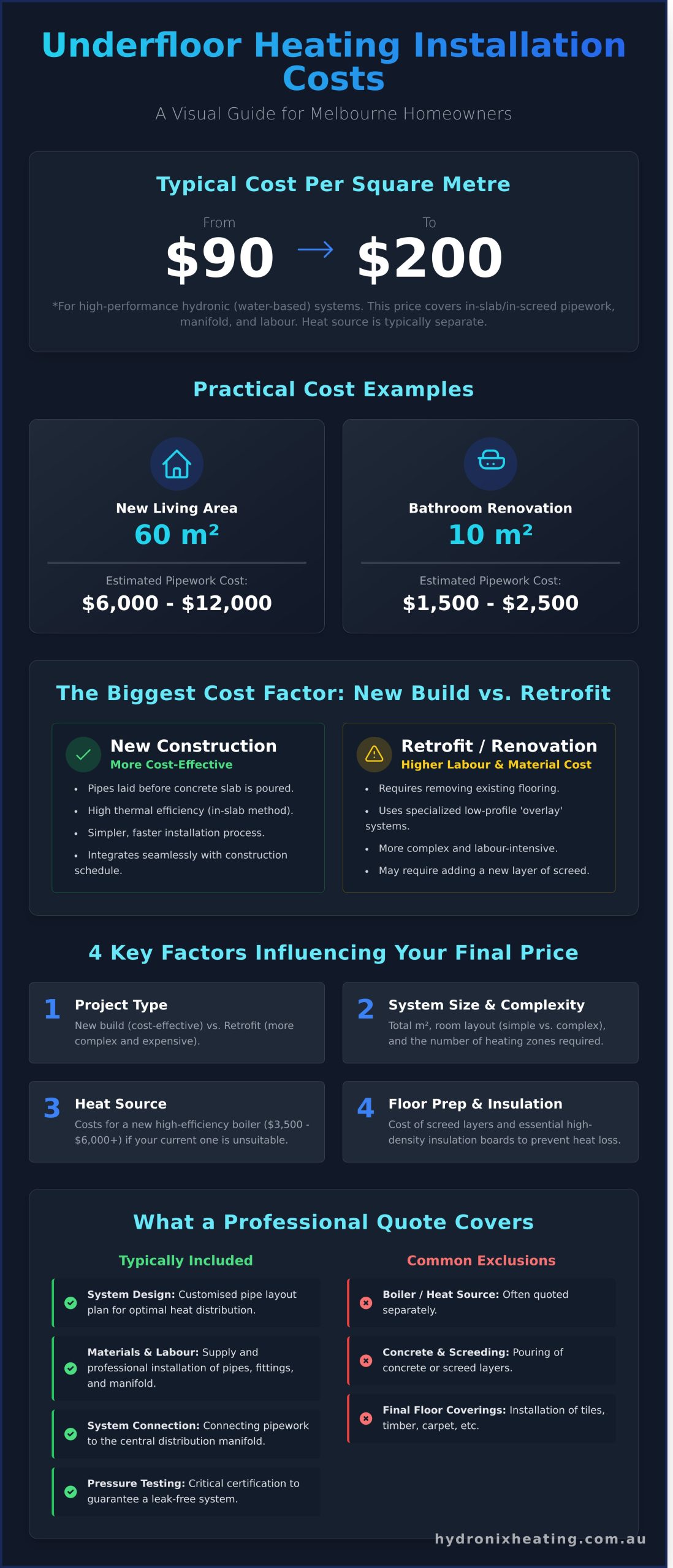
Understanding the typical underfloor heating installation cost in Melbourne is the first step towards achieving luxurious, efficient warmth. For a professionally installed hydronic system, homeowners can expect to invest between $90 to $200 per square metre. Before breaking down the costs, it’s helpful to understand what underfloor heating is and to note that these figures apply to high-performance hydronic (water-based) systems, which are distinct from less permanent electric DIY kits.
As a practical guide, a new 60-square-metre living area might cost between $6,000 and $12,000 for the pipework installation. A smaller 10-square-metre bathroom renovation, which is often more complex, could range from $1,500 to $2,500. These are reliable estimates, but a final quote will always depend on your project’s unique requirements.
Cost Per Square Metre: A Guideline
The $90 – $200 per square metre range generally covers the core components and labour for the “in-slab” or “in-screed” portion of the project. This includes the high-quality PEX piping, the central distribution manifold, and the specialised labour to lay and connect the system correctly. Importantly, this price does not usually include the heat source (such as a gas boiler or heat pump) or the cost of installing your final floor finishes.
New Build vs. Retrofit: The Biggest Cost Factor
The single largest variable in your final cost is whether the system is installed in a new construction or retrofitted into an existing home. New builds are significantly more cost-effective as the pipes are laid and secured before the concrete slab is poured. Retrofitting is more complex and labour-intensive, often requiring specialised low-profile panels or the addition of a new layer of screed over the existing subfloor, which increases both material and labour expenses.
What a Professional Installation Quote Includes
A transparent quote from a hydronic heating specialist should clearly itemise all inclusions. While every project is different, a professional quote typically covers:
- System Design: A customised pipe layout plan designed by an expert to ensure optimal heat distribution for your space.
- Materials & Labour: The supply and professional installation of all necessary pipes, fittings, and the central manifold.
- System Connection: Connecting the underfloor pipework to the manifold and preparing it for connection to the main boiler.
- Pressure Testing: A critical step to certify the integrity of the pipework and guarantee a leak-free system before any flooring is laid over it.
Common exclusions to be aware of are the boiler installation (often quoted separately), concrete pouring, screeding, and the installation of your final floor coverings like tiles or timber.
Key Factors That Influence Your Installation Price
Understanding your final quote means knowing what goes into it. The total underfloor heating installation cost isn’t just about the pipes; it’s a combination of your home’s specific needs, the system’s complexity, and the preparation required. As hydronic heating specialists, we provide transparent quotes that account for every variable, ensuring there are no surprises.
Here are the four main factors that will determine the price of your project.
1. Project Type: New Construction vs. Retrofit
The stage of your property is a major cost determinant. For new builds, installing hydronic pipes directly into the structural concrete slab is the most efficient and cost-effective method. Renovations and retrofits are more complex, as they may require removing existing flooring or using specialised low-profile ‘overlay’ or ‘under-joist’ systems. These methods demand more labour and materials, which increases the overall project cost.
2. System Size and Complexity
The total floor area (m²) is the most direct driver of cost-a larger space requires more piping, a larger manifold, and more installation time. However, complexity also matters. A large, open-plan rectangle is simpler to work with than multiple small rooms with awkward angles. Additionally, the number of independent heating ‘zones’ you require will affect the price. Each zone needs its own thermostat and manifold port, adding to the material and commissioning costs.
3. Heat Source and Boiler Connection
Our installation quotes typically assume you have a suitable, modern boiler ready for connection. If your existing boiler is old, inefficient, or not powerful enough for the new system, you will need to budget for a replacement. A new high-efficiency gas boiler can cost between A$3,500 – A$6,000+. Our expert technicians ensure the underfloor heating manifold is professionally integrated with your heat source for optimal performance.
4. Floor Preparation and Type
Proper floor preparation is critical for an efficient system. Laying pipes in a new structural slab is the baseline, but adding a sand-cement screed on top will add to material and labour costs. Crucially, high-density insulation boards must be installed beneath the pipes. While this adds to the upfront underfloor heating installation cost, it is essential. As the Australian Government’s YourHome guide advises, effective insulation is key to an energy-efficient home. Without it, heat is lost to the ground below, compromising performance and increasing your energy bills.
Cost Breakdown: New Build vs. Retrofit Installations
One of the most significant factors influencing the final underfloor heating installation cost is the type of property. Integrating a hydronic system into a new home during construction is fundamentally different from retrofitting one into an existing property. As specialists in both scenarios, we understand the unique processes and challenges of each.
Installation Costs for New Homes (In-Slab/In-Screed)
For new builds, the system is installed as part of the core construction, making it the most efficient and cost-effective approach. The two primary methods are:
- In-Slab Installation: This is the gold standard for thermal efficiency. Pipes are expertly fixed to the steel reinforcing mesh before the structural concrete slab is poured. This process turns the entire slab into a thermal mass that gently radiates heat. To maximise performance, proper insulation is essential, a point reinforced by the Australian Government’s guide to home heating.
- In-Screed Installation: In this method, pipes are laid on top of the structural concrete slab and then covered with a secondary layer of screed (a sand and cement mixture). This is also a highly efficient option, often used when the structural slab is already in place.
Both methods benefit from being integrated into the build schedule, which streamlines labour and reduces overall project complexity.
Installation Costs for Existing Homes (Retrofitting)
Adding hydronic underfloor heating to an established home requires a different set of specialised techniques. The goal is to install the system with minimal disruption to the existing structure. This requires more intricate labour, which can increase the underfloor heating installation cost.
- Overlay Systems: These low-profile panels are laid directly over your existing subfloor (e.g., concrete or timber floorboards). The floor finish is then installed on top. This is an excellent solution that causes only a minimal increase in floor height.
- Under-Joist Systems: If there is clear access to the floor joists from below (such as in a subfloor or cellar), pipes can be fitted between the joists, often using aluminium heat-spreader plates to distribute warmth evenly upwards.
Retrofit projects demand meticulous planning and execution from experienced technicians. The complexity of working around existing structures and finishes is what primarily drives the difference in cost compared to a new build.
hydronic heating installation in Melbourne
How to Get an Accurate Quote and Avoid Hidden Costs
Investing in underfloor heating is a significant decision for any homeowner. To ensure the price you are quoted is the price you pay, it is crucial to engage with a transparent and professional installer. This approach shifts the focus from finding the cheapest price to securing the best long-term value, protecting your investment for decades to come.
A clear quote and a proven installer are the best defence against unexpected expenses. Here’s what to look for to ensure your underfloor heating installation cost is accurate and fair.
Insist on a Detailed, Itemised Quote
A vague, one-line quote is a major red flag. A professional installer will provide a comprehensive, itemised document that breaks down all associated costs. This transparency prevents the final underfloor heating installation cost from escalating with hidden extras. Your quote should clearly specify:
- Materials: The type and quantity of pipes (e.g., PEX-a), insulation boards, manifold, and boiler or heat pump.
- Labour: An estimate of the hours or days required for the installation, along with the hourly rate.
- Controls: The brand and model of thermostats and control systems being installed.
- Ancillary Costs: Any charges for concrete grinding, screeding, or specialist equipment hire.
Ask About the Installer’s Experience and Licensing
The performance and longevity of your system depend entirely on the skill of the installer. Hydronic heating is a specialised trade that requires deep technical knowledge. Before you commit, always verify the installer’s credentials:
- Licensing: In Australia, any work on a hydronic heating system must be performed by a licensed plumber. Ask to see their VBA (Victorian Building Authority) registration.
- Experience: Request to see examples or case studies of similar underfloor heating projects they have completed.
- Insurance: Confirm they hold current Public Liability Insurance to protect your property during the installation.
Discuss the Workmanship Guarantee
A reputable installer will always stand behind the quality of their work. A workmanship guarantee provides you with peace of mind and recourse if any installation-related issues arise. Be sure to clarify the length and specific terms of the warranty. A comprehensive guarantee is a hallmark of a confident, expert team. As a benchmark for the industry, Hydronix Heating provides a six-year workmanship guarantee on all installations, ensuring your system performs flawlessly for years to come.
For a transparent quote from Melbourne’s trusted hydronic specialists, hydronic heating installation in Melbourne.
Invest in Comfort: Understanding Your Final Installation Cost
Understanding the factors that shape your underfloor heating installation cost is the first step towards making a smart investment in your Melbourne home. As we’ve covered, the final price depends on your chosen system, the size of the area, and whether it’s a new build or a retrofit project. A clear, itemised quote is your best tool for navigating these variables and ensuring there are no hidden surprises down the line.
For a precise and transparent quote tailored to your property, trust Melbourne’s hydronic specialists. At Hydronix Heating, our fully licensed and insured professionals provide expert advice and meticulous installations. We stand behind our work with an industry-leading Six-Year Workmanship Guarantee, giving you complete peace of mind.
Ready to experience unparalleled warmth and efficiency? free installation consultation today and take the first step towards a warmer, more luxurious home.
Frequently Asked Questions
Is hydronic underfloor heating more expensive to install than radiators?
Yes, the initial installation cost for hydronic underfloor heating is typically higher than for a standard radiator system. This is because the pipework must be meticulously laid within the concrete slab or a screed layer before flooring is installed, a more labour-intensive process. However, the long-term running costs are often significantly lower due to the system’s superior efficiency, making it a valuable investment for consistent, whole-home comfort.
How much does it cost to install underfloor heating in just one bathroom?
For a single standard-sized bathroom in Melbourne, you can expect the installation to cost between A$2,000 and A$4,000. This price typically covers an in-screed system, including the pipework, manifold, and labour. The final cost depends on factors like the size of the room and ease of access. Note that this estimate may not include the boiler heat source if one is not already present or advanced thermostat controls.
Does my choice of flooring (tiles, timber, carpet) affect the installation cost?
The type of flooring does not significantly change the cost of installing the hydronic pipework itself. However, it is a critical factor in the system’s design and performance. Hard surfaces like tiles and polished concrete offer the best heat transfer and efficiency. Thicker materials such as timber or carpet with heavy underlay require specific considerations during the design phase to ensure the system delivers optimal warmth, which our expert team will factor into your quote.
What are the running costs compared to the installation cost?
While the initial underfloor heating installation cost is a significant investment, the running costs are where you see the long-term savings. A well-designed hydronic system is exceptionally efficient, often using up to 30% less energy than conventional radiator systems to achieve the same level of comfort. This is because it operates at lower water temperatures and distributes heat evenly. Over the life of the system, these energy savings provide a substantial return on your initial outlay.
Can I claim any government rebates for installing hydronic heating in Victoria?
Yes, homeowners in Victoria may be eligible for rebates through the Victorian Energy Upgrades (VEU) program when installing an efficient hydronic heating system. Eligibility often depends on replacing an older, less efficient heating type, such as gas ducted heating. As accredited VEU providers, we can assess your specific situation and advise on any available rebates to help reduce the upfront cost of your installation. We handle the process to ensure you receive the maximum benefit.
How long does a typical underfloor heating installation take?
For a new build, installing the pipework into the slab or screed typically takes 1-3 days for an average-sized home. In a retrofit project, the timeline can be longer depending on the complexity and preparation of existing floors. It is also important to factor in slab or screed curing times before flooring can be laid. Our specialists provide a clear project timeline from the outset, ensuring a professional and efficient installation process.