

Planning a major home upgrade like hydronic heating can feel overwhelming, especially when it comes to your budget. If you’re trying to forecast the true cost of hydronic heating Melbourne 2026 and are concerned about hidden fees or confusing quotes, you’ve come to the right place. This guide is designed by trusted hydronic heating specialists to give you the clarity and confidence needed for your upcoming project, eliminating the fear of budget blowouts.
We will provide a clear, detailed breakdown of every factor that influences the final price-from boiler selection and radiator types to installation complexities. You’ll learn how to read a quote like an expert, understand exactly what you’re paying for, and budget effectively for a full system installation. Our goal is to empower you to make a smart, long-term investment in your home’s comfort, backed by reliable, professional insight. We know hydronic heating, and this guide ensures you know the costs.
Hydronic Heating Prices in Melbourne: A 2026 Snapshot
Understanding the investment required is the first step towards enjoying the silent, radiant warmth of a hydronic system. To help you plan your budget, we’ve outlined the estimated cost of hydronic heating in Melbourne for 2026. These figures represent a typical full installation, including a high-efficiency gas boiler, standard steel panel radiators, all pipework, and professional labour.
Please note these are reliable budget estimates. The final cost will depend on your home’s specific layout, insulation quality, and choice of components. Below is a clear breakdown based on typical Melbourne property sizes.
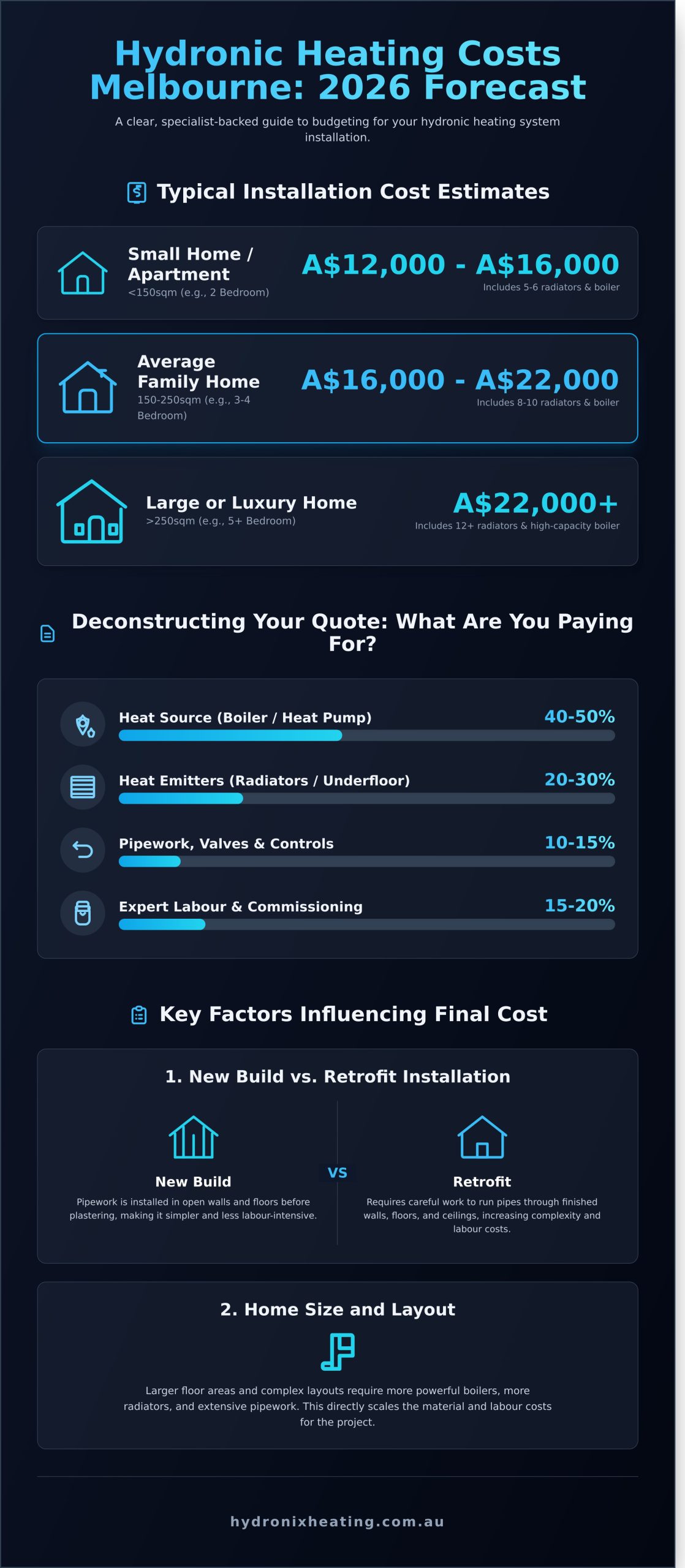
- Small Home / Apartment (<150sqm): A$12,000 – A$16,000
- Average Family Home (150-250sqm): A$16,000 – A$22,000
- Large or Luxury Home (>250sqm): A$22,000+
These prices are driven by three core components: the boiler (the system’s engine), the heat emitters (radiators or underfloor coils), and the pipework that connects them. A basic understanding of how hydronic systems work by circulating heated water reveals why the scale and complexity of this network directly influence the final quote. Our expert team ensures every component is sized correctly for maximum efficiency and long-term reliability.
Small Home or Apartment (e.g., 2 Bedroom, <150sqm)
For a compact Melbourne apartment or a smaller two-bedroom home, a typical installation falls between A$12,000 and A$16,000. This includes a high-efficiency boiler perfectly suited for the space and approximately 5-6 standard panel radiators. This setup provides exceptional, dust-free radiant heat without overwhelming smaller rooms, making it an ideal, healthy heating solution for modern living.
Average Family Home (e.g., 3-4 Bedroom, 150-250sqm)
The most common project for our specialists is the average family home in Melbourne’s suburbs. The expected cost of hydronic heating for a Melbourne home of this size in 2026 is between A$16,000 and A$22,000. This price point covers a suitably powerful boiler and 8-10 strategically placed radiators to ensure consistent warmth throughout living areas and bedrooms, delivering unparalleled comfort for the whole family.
Large Home or Luxury Build (e.g., 5+ Bedroom, >250sqm)
For larger properties, custom new builds, or homes with high ceilings and complex layouts, the investment typically starts at A$22,000 and increases from there. These projects require a high-capacity boiler, extensive pipework, and 12 or more radiators. Quotes often include premium components like designer radiators, towel warmers, and sophisticated multi-zone controls for ultimate comfort and efficiency.
Deconstructing the Quote: What Are You Actually Paying For?
A professional hydronic heating quote is more than just a final number; it’s a transparent breakdown of a highly specialised service. Understanding these components is key to appreciating the value and long-term reliability you receive. When evaluating the total cost of hydronic heating Melbourne 2026, you’ll find the investment is typically distributed across four key areas.
The Heat Source: Boiler or Heat Pump (40-50% of cost)
This is the engine of your entire system, and its quality dictates efficiency and lifespan. A high-efficiency condensing gas boiler is a popular and reliable choice. Alternatively, an air-to-water heat pump costs more upfront but can deliver significant long-term running cost savings by adhering to advanced energy efficiency principles. Investing in a premium European brand ensures superior performance and fewer repairs down the track.
Heat Emitters: Radiators vs. Underfloor Coils (20-30% of cost)
How your home is warmed makes up the next significant portion of the cost. The options include:
- Standard Steel Panel Radiators: The most cost-effective and popular choice, offering excellent performance.
- Designer Radiators & Trench Heaters: These provide an architectural solution for specific spaces but come at a premium price.
- Underfloor Heating: Involves laying coils under the floor. It has a higher installation cost but delivers unparalleled, silent, and invisible comfort.
Pipework, Valves & Controls (10-15% of cost)
The unseen components are critical for a flawless system. This portion of the quote covers high-quality multilayer pipes, precision fittings, isolation valves, and thermostats. While it’s tempting to cut costs here, using inferior materials can lead to leaks and system failure. Upgrading to smart thermostats adds a small amount to the initial cost but can significantly improve system efficiency and user control.
Expert Labour & Commissioning (15-20% of cost)
This is not just about connecting pipes. You are paying for the expertise of a specialist hydronic technician who handles system design, installation, and crucial commissioning. This final stage includes power-flushing the system, adding inhibitors to protect against corrosion, balancing the radiators for even heat distribution, and providing a comprehensive handover so you can operate your new system with confidence. Specialist labour prevents future problems and ensures your system runs at peak efficiency from day one.
7 Key Factors That Influence Your Final Installation Cost
While our price guide offers a reliable snapshot, no two Melbourne homes are the same. Your final quote will be tailored to your property’s specific needs. Understanding these variables is crucial to accurately estimating the final cost of hydronic heating Melbourne 2026 for your property. By identifying these factors in your own home, you can better understand your detailed quote from a hydronic heating specialist.
1. New Build vs. Retrofit Installation
New builds offer a blank canvas, allowing our expert technicians to run pipework through open wall frames and floor joists before plasterboard is installed. This process is simpler and less labour-intensive. Retrofitting a system into an existing home requires meticulous navigation of finished walls, floors, and ceilings. This additional complexity and labour naturally increase the installation cost.
2. Home Size and Layout
The total floor area directly impacts the system’s required capacity. Larger homes need a more powerful boiler, more radiators or underfloor heating coils, and extensive pipework to ensure every room is comfortable. Multi-story properties also add complexity, as vertical pipe runs demand more labour and materials than a single-level layout.
3. Insulation and Glazing Quality
Your home’s thermal efficiency is a critical factor. A property with poor ceiling insulation and single-glazed windows loses heat rapidly, demanding a larger, more powerful heating system to compensate. Conversely, a well-insulated home with double-glazing retains heat effectively, allowing for a smaller, more efficient boiler and radiators, which can reduce your initial installation cost.
4. Gas Boiler vs. Heat Pump
The heat source is a major decision. While traditional gas boilers have a lower upfront installation cost, electric heat pumps are the future of efficient home heating. Heat pumps are more expensive to install but offer superior energy efficiency and significantly lower running costs. As Melbourne moves towards electrification, choosing a heat pump future-proofs your home and may make you eligible for government incentives through programs like the Victorian Energy Upgrades program, which can help offset the initial investment.
Upfront Investment vs. Long-Term Running Costs
While the initial installation price of a hydronic system can be higher than some alternatives, this figure only tells part of the story. A true assessment must consider the Total Cost of Ownership (TCO) over the system’s 15 to 20-year lifespan. Unlike inefficient ducted systems that lose heat through vents and ductwork, a professionally installed hydronic system delivers consistent, radiant warmth with minimal energy loss. This superior efficiency is where your long-term savings are made.
Estimating Your Annual Running Costs
Your ongoing expenses will primarily depend on your heat source and Melbourne’s fluctuating energy tariffs. A high-efficiency gas boiler remains a popular and cost-effective choice, while electric heat pumps offer an increasingly viable path to lower running costs, especially when paired with solar PV.
- 95% Efficient Gas Boiler: For a typical 200m² Melbourne home, annual running costs could range from A$1,400 to A$1,800.
- Hydronic Heat Pump: The same home could see running costs drop to A$900 – A$1,300 per year, delivering significant savings that offset its higher installation price over time.
Factoring in these operational expenses is essential when calculating the total cost of hydronic heating melbourne 2026 and beyond.
The Importance of Regular Maintenance
To protect your investment and maintain peak efficiency, an annual service is crucial. Budgeting around A$250 – A$400 for a professional boiler or heat pump service prevents minor issues from becoming costly breakdowns. This simple step ensures your system uses the least amount of energy possible, keeping your bills low year after year. Hydronix Heating provides reliable, expert hydronic servicing to keep your system in optimal condition.
How Efficiency Translates to Savings
The long-term value of hydronic heating is rooted in its intelligent design. A quality system provides unparalleled comfort using less energy. Furthermore, the ability to implement zoning allows you to heat only the rooms you are using, eliminating the waste associated with heating an entire house. This targeted approach is the return on your initial investment, delivering lower energy bills and superior comfort for decades.
Planning for 2026: Trends, Rebates & Getting a Reliable Quote
Planning a major home upgrade like hydronic heating requires foresight. Understanding the potential cost of hydronic heating melbourne 2026 today allows you to budget effectively for your new build or renovation. As Melbourne’s trusted hydronic specialists, we help clients plan ahead with confidence, ensuring there are no surprises down the line.
Market Trends: Will Prices Go Up by 2026?
While no one can predict the future with certainty, several key factors will likely influence pricing:
- Inflation and Materials: General economic inflation impacts both the cost of raw materials like copper and steel, as well as the rates for skilled labour. We anticipate a steady but manageable increase in line with economic trends.
- Shift to Heat Pumps: The government-led push away from gas is accelerating the adoption of highly efficient hydronic heat pumps. While currently a premium option, increased demand and technological advancements may help stabilise their cost over time.
- Supply Chain Stability: Most high-quality boilers and components are imported from Europe. A stable global supply chain helps keep prices consistent, but unforeseen disruptions can cause temporary fluctuations.
Victorian Government Rebates and Incentives
Government incentives play a significant role in reducing the upfront investment. The Victorian Energy Upgrades (VEU) program currently offers substantial rebates for installing high-efficiency systems. While these programs evolve, the trend towards supporting energy-efficient home heating is clear. We always advise clients to check the official Energy Victoria website closer to their installation date for the most current information. These rebates can make a premium heat pump system significantly more affordable.
How to Get a Budgetary Quote Today
Planning for your hydronic heating system in 2026 doesn’t have to be guesswork. At Hydronix Heating, we can provide a detailed budgetary estimate based on your architectural floor plans. This preliminary quote gives you a reliable cost projection for financial planning, outlining expected expenses for materials and installation. While it’s subject to a final site inspection, it’s the most effective way to start planning your project with real numbers.
Take the first step towards securing luxurious, efficient warmth for your future home. Request a preliminary quote from our expert team today.
Secure Your Comfort: Finalising Your 2026 Hydronic Heating Budget
Planning for hydronic heating is a smart investment in your home’s long-term comfort and efficiency. As we’ve covered, your final price is shaped by key factors like system size, component choice, and installation complexity, but this upfront cost unlocks significant future savings on running expenses. Understanding these elements is the first step to accurately forecasting the cost of hydronic heating melbourne 2026 for your specific property.
When you’re ready to move from planning to action, partner with genuine specialists. At Hydronix Heating, we know hydronic heating-it’s all we do. Our repair-first philosophy ensures you get an honest assessment, while our six-year workmanship guarantee provides complete peace of mind. As Melbourne’s trusted hydronic specialists, we deliver clarity and confidence from the start.
Take the next step towards luxurious, efficient warmth. Get a Transparent Quote for Your Melbourne Home today and invest in a system built to last.
Frequently Asked Questions
Is underfloor hydronic heating more expensive to install than radiators?
Yes, underfloor hydronic heating is generally more expensive to install than a radiator system. The installation process for in-slab or in-screed heating is more complex and labour-intensive, particularly in existing homes. Radiator systems, on the other hand, can be retrofitted more easily with less disruption. Our specialists can assess your property and provide an accurate comparison to help you make an informed decision based on your home’s structure and your budget.
How much does it cost to replace just an old hydronic boiler in Melbourne?
Replacing an old hydronic boiler in Melbourne typically costs between A$4,500 and A$7,500 in 2026. This price range accounts for a new, high-efficiency gas boiler, professional installation, and removal of the old unit. The final cost depends on the boiler’s brand, capacity, and the complexity of the existing pipework. We provide detailed, fixed-price quotes after a thorough on-site assessment to ensure there are no surprises.
Does the cost of hydronic heating include removal of my old ducted system?
Typically, the quoted cost for a new hydronic heating installation does not include the removal of an old ducted system. Decommissioning and removing ductwork, vents, and the old furnace is a separate service that requires different labour and disposal considerations. We can provide a separate quote for this work if required, ensuring a clean and complete transition to your new, efficient hydronic system. Always clarify this with your installer.
How much extra does a heat pump add to the installation cost compared to a gas boiler?
Opting for an air-to-water heat pump instead of a gas boiler will significantly increase the initial installation cost. You can expect to add between A$7,000 and A$15,000 to the total price. While the upfront investment is higher, heat pumps offer exceptional energy efficiency and can lower running costs over the system’s lifespan. When evaluating the total cost of hydronic heating Melbourne 2026, it’s crucial to weigh this initial expense against long-term savings.
Are designer radiators significantly more expensive than standard ones?
Yes, designer radiators are significantly more expensive than standard steel panel radiators. While a standard radiator is priced for its heat output, a designer model’s cost is driven by its material, unique shape, and finish. A designer unit can cost anywhere from two to ten times more than a standard panel with the same heating capacity. Our experts can help you find a solution that balances both aesthetics and your budget effectively.
What are the average running costs for a hydronic system in a Melbourne winter?
For a typical, well-insulated three-bedroom home in Melbourne, average running costs with an efficient gas boiler can range from A$400 to A$700 per quarter during winter. Systems powered by an air-to-water heat pump can be even more economical. These figures are influenced by your home’s insulation, thermostat settings, and energy tariffs. A key benefit affecting long-term affordability is the system’s superior efficiency compared to other common heating methods.