

When considering heating for your Australian home, the term ‘radiators’ might bring to mind bulky, old-fashioned units. You may be questioning their efficiency, worrying if they’ll suit your home’s aesthetic, or feeling confused about how hydronic systems even compare to electric alternatives. These concerns are valid, but they often overshadow one of the most comfortable and reliable heating solutions available today.
This guide provides the clear, expert information you need to make a confident decision. We will demystify hydronic heating, exploring how these systems deliver superior radiant warmth. You’ll discover a world of sleek, modern radiator designs-from elegant steel panels to architectural feature pieces-and learn how to choose the right material and size for ultimate efficiency and comfort. Get ready to understand why a well-chosen hydronic system is the trusted choice for year-round warmth.
What is a Hydronic Radiator (and How Does It Work)?
When you hear the term ‘radiator,’ you might first think of a car engine. In modern home heating, however, a hydronic radiator is a sophisticated and efficient fixture designed to provide silent, consistent warmth. It is the most visible component of a hydronic heating system, which uses heated water to transfer thermal energy into your living spaces. The core principle is simple yet highly effective and has been refined over decades for optimal performance.
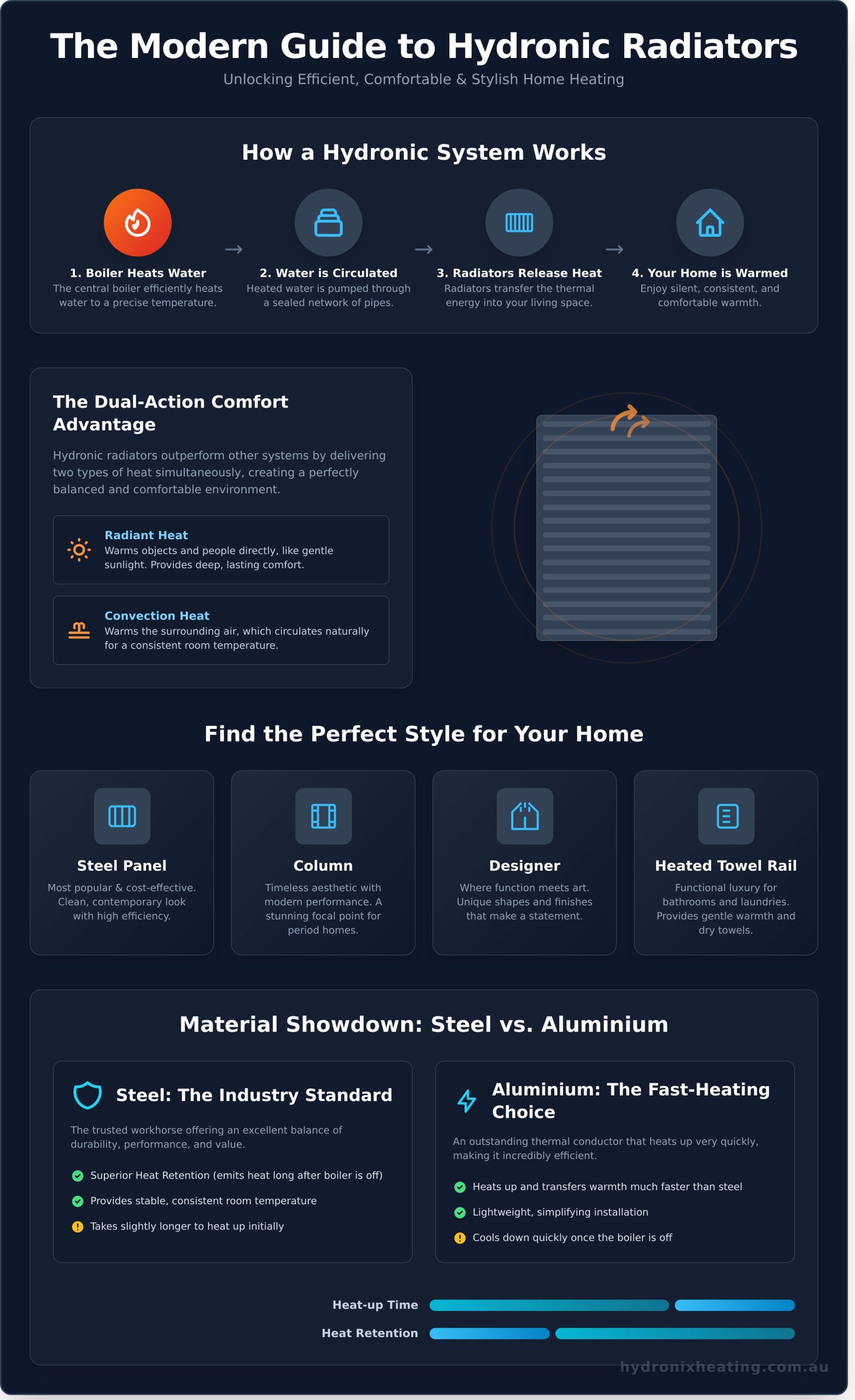
A central boiler heats water, which is then circulated through a sealed network of pipes to the radiators located in each room. For a technical overview of the complete process, you can explore how it works in more detail. Unlike noisy, forced-air systems, this method delivers a gentle, enveloping heat that warms your home comfortably and quietly.
The Role of the Boiler
Think of the boiler as the powerful engine of your entire hydronic system. Its sole job is to heat water to a precise temperature using an energy source like natural gas, LPG, or an energy-efficient heat pump. Once heated, this water is expertly pumped through the sealed pipework, travelling directly to each radiator to begin the heating cycle. It is the reliable heart of your home’s warmth.
Radiant vs. Convection Heating Explained
Hydronic radiators deliver superior comfort by producing two types of heat simultaneously, creating a perfectly balanced environment:
- Radiant Heat: This is direct heat that warms objects, surfaces, and people in its path, much like the gentle warmth of the sun. It provides a feeling of deep, lasting comfort.
- Convection Heat: This warms the air around the unit. As the air heats up, it rises and circulates naturally throughout the room, creating a consistent ambient temperature.
This dual-action approach is far more pleasant than electric panel heaters, which primarily use convection. The combination also reduces the circulation of dust and allergens often kicked up by forced-air systems, promoting better indoor air quality.
Types of Hydronic Radiators: Finding the Perfect Style for Your Home
When many people think of hydronic heating, they often picture bulky, old-fashioned units. The reality of modern systems is vastly different. Today’s market offers a huge range of radiators designed to complement any interior, from ultra-modern minimalist to classic traditional. Your choice is not just about aesthetics; the design, material, and size of your radiators directly impact heat output and overall system efficiency.
As hydronic heating specialists, we can help you select the perfect style that delivers reliable warmth and enhances your home’s decor. Below are the most common types available.
Steel Panel Radiators
As the most popular and cost-effective choice for Australian homes, steel panel radiators offer a clean, contemporary look that blends seamlessly into any modern interior. They are prized for their high efficiency and ability to heat up quickly, providing responsive warmth when you need it. Available in a wide array of sizes and configurations, including single, double, and triple panels, they are a versatile and reliable heating solution.
Column Radiators
For a timeless aesthetic, column radiators evoke the classic charm of traditional cast iron but are engineered for modern performance. Made from steel for superior efficiency and responsiveness, they provide excellent, consistent heat. Their elegant, traditional design makes them a stunning focal point in period or character homes, adding a touch of sophistication while delivering powerful warmth.
Designer & Architectural Radiators
This category is where function truly meets art. Designer radiators are available in an endless variety of unique shapes, bold colours, and premium finishes, transforming a heating appliance into a statement piece. Vertical models are an expert solution for rooms with limited wall space, drawing the eye upward. When evaluating these options, considering the Key Factors in Selecting Radiators, such as material and surface area, is crucial to ensure both style and performance. Options range from sleek flat panels to bespoke, custom-made designs.
Heated Towel Rails
A highly functional and popular addition to any modern home, heated towel rails are a perfect choice for bathrooms, laundries, and even kitchens. They provide gentle ambient warmth to the space while also offering the everyday luxury of dry, warm towels. Typically available in elegant ladder-style designs, they come in finishes like chrome, matte black, and brushed nickel to match your tapware and fixtures.
Choosing the Right Material: Steel vs. Aluminium
The material of your radiators is a critical decision that directly impacts your hydronic heating system’s performance, running costs, and longevity. While traditional cast iron radiators are still a beautiful choice for heritage homes, the two most common and efficient materials in modern systems are steel and aluminium. As detailed by industry experts on Choosing the Right Material, this single factor influences everything from installation flexibility to how quickly your rooms heat up. Understanding the key differences is essential for making a reliable, long-term investment.
Steel: The Industry Standard
Steel is the trusted workhorse of the hydronic heating industry, offering an excellent balance of durability, performance, and value for money. Its key advantage is superior heat retention; steel radiators continue to emit a comfortable, radiant warmth long after your boiler has switched off. While they take slightly longer to heat up initially, this thermal inertia provides a stable and consistent room temperature. Most standard panel and column radiators you’ll find in Australian homes are made from robust, high-quality steel.
Aluminium: The Fast-Heating Choice
Aluminium is an outstanding thermal conductor, meaning it heats up and transfers warmth to a room much faster than steel. This rapid response makes it an incredibly efficient choice. Aluminium radiators are also significantly lighter, which simplifies installation, particularly on internal plasterboard walls where weight is a concern. The trade-off is that they also cool down quickly once the system is off. This makes them ideal for modern designer radiators and a perfect partner for low-temperature systems, such as those powered by energy-efficient heat pumps.
To help you decide, here is a simple comparison of the key attributes:
- Heat-Up Time: Aluminium is significantly faster. Steel is slower but steady.
- Heat Retention: Steel holds heat for much longer, providing warmth after the boiler turns off. Aluminium cools quickly.
- Weight & Installation: Aluminium is lightweight and easier to install on non-structural walls.
- Cost: Steel generally offers better value for money, while aluminium can be a more premium option, especially for designer models.
Ultimately, the right choice depends on your home, budget, and heating priorities. A Hydronix Heating expert can assess your specific needs to recommend the most reliable and efficient material for your system.
Key Factors in Selecting Radiators: Size, Placement, and Efficiency
Choosing the right panel for your hydronic system involves more than just aesthetics. To achieve optimal comfort and efficiency, two factors are paramount: correct sizing and strategic placement. Getting these details wrong can lead to a system that either struggles to heat your space or wastes energy by constantly overheating it. As hydronic heating specialists, we know that a well-planned system starts with these fundamentals.
A radiator that is too small for the room will force your boiler to work overtime without ever reaching the target temperature, leaving you cold and frustrated. Conversely, an oversized unit will heat the room too quickly, causing uncomfortable temperature swings and inefficient system cycling, which wastes energy and increases running costs.
Calculating Heat Output (Watts)
A radiator’s heating capability is measured in Watts (W). This figure represents the amount of heat energy it can emit into a room. A professional heat load calculation is essential to determine the exact Wattage required for each space. This isn’t just about floor area; our experts assess critical heat loss factors, including ceiling height, the size and type of windows, insulation levels, and the number of external walls. A precise calculation ensures your radiators are perfectly balanced for your home’s unique thermal properties. To avoid guesswork and guarantee performance, get professional help sizing your radiators correctly.
Optimal Radiator Placement
Where you install your units is just as important as their size. Proper placement ensures even heat distribution and maximises the efficiency of your entire hydronic system. For best results, follow these proven guidelines:
- Counteract Cold Draughts: The traditional placement is on an external wall, ideally under a window. This allows the radiator to heat the cold air that drops from the glass, creating a natural convection current that circulates warm air effectively.
- Ensure Clear Airflow: Avoid blocking your units with large furniture like sofas, beds, or heavy curtains. A radiator needs space for air to circulate freely around it-typically at least 100mm clearance from the floor and 150mm from any shelf above.
- Use Space Wisely: In rooms with limited horizontal wall space, such as kitchens or hallways, a vertical radiator is an excellent, space-saving solution that delivers powerful heat output without compromising your layout.
Common Radiator Issues & When to Call an Expert
A well-maintained hydronic system provides consistent, silent warmth. However, occasional issues can arise. At Hydronix, we believe in a repair-first approach, empowering homeowners to solve simple problems while knowing when to call for professional diagnostics. Understanding the difference can save you both time and money.
Troubleshooting Cold Spots
One of the most frequent issues is a radiator that’s warm at the bottom but cold at the top. This is almost always caused by trapped air preventing hot water from circulating fully. You can often resolve this yourself by ‘bleeding’ the radiator. Using a radiator key, slowly open the bleed valve at the top until you hear a hissing sound. Once water begins to drip out, close the valve firmly. If the bottom of the radiator is cold, this may indicate a sludge buildup, which requires a professional system flush.
Addressing Strange Noises
Unusual sounds from your heating system are a clear sign that something needs attention. Gurgling or banging noises from your radiators often point to air in the system, which can be fixed by bleeding them. However, a loud rumbling or ‘kettling’ sound coming directly from your boiler is more serious. This usually signals a buildup of limescale or sludge on the boiler’s heat exchanger and requires an expert diagnosis to prevent damage.
When You Need a Hydronic Specialist
While some issues are simple fixes, others demand the skill of a qualified technician to ensure the safety and efficiency of your system. It is crucial to call an expert for:
- Any leaks, no matter how small, from valves, pipes, or the radiator body itself.
- Radiators that stay cold after you have tried bleeding them.
- Problems with your boiler, such as a loss of pressure, pilot light issues, or error codes.
- A system that requires frequent bleeding, as this may indicate a deeper problem.
Attempting to fix complex hydronic issues can lead to further damage or unsafe conditions. For reliable radiator repairs, trust the experts at Hydronix. We have the specialist tools and diagnostic expertise to fix systems others replace.
Your Next Step to Lasting Warmth and Comfort
Choosing the right heating for your Australian home is a significant investment in your comfort. As this guide has shown, selecting the ideal hydronic system goes beyond aesthetics; it’s about understanding the performance of different materials, calculating the correct size for each room, and ensuring strategic placement for optimal efficiency. Getting these details right is the key to creating a warm, inviting, and cost-effective living space for years to come.
Making the perfect choice requires specialist knowledge. As Melbourne’s trusted hydronic heating specialists, we offer an expert repair-first approach to save you money and provide complete peace of mind with our six-year workmanship guarantee on all installations. We know hydronic heating because it’s all we do.
Need expert advice on choosing the right radiators? Contact Hydronix today.
Frequently Asked Questions About Hydronic Radiators
Are hydronic radiators expensive to run?
Hydronic heating is one of the most energy-efficient solutions available in Australia. While the initial installation can be a significant investment, the long-term running costs are considerably lower than many other systems. A modern, high-efficiency boiler uses less energy to heat the water that circulates through your radiators, translating directly into lower gas or electricity bills. This efficiency makes them a smart, cost-effective choice for reliable and comfortable home heating.
Can you install hydronic radiators in an existing home?
Absolutely. Our specialist technicians are experts at retrofitting hydronic heating systems into existing homes with minimal disruption. We strategically run the required pipework through sub-floor spaces, within ceiling cavities, or discreetly along skirting boards. Whether your home is a period classic or a modern build, a professional can design and install a system that delivers silent, efficient warmth to every room without major structural changes.
Are hydronic radiators safe for children and pets?
Yes, hydronic heating is an exceptionally safe option for families. The system is completely sealed, meaning there are no exposed flames or electrical elements that could pose a fire risk. The surface temperature of the radiators is warm enough to heat a room effectively but is regulated to prevent serious contact burns, making them safe for curious children and pets. This provides reliable warmth and complete peace of mind, a priority that extends to all aspects of family life, including safe travel, where services like Tiptop Maxi Sydney cater to families with specific needs.
How long do hydronic radiators last?
High-quality hydronic radiators are built for exceptional durability. Steel panel radiators, a popular choice in Australia, typically have a lifespan of 20 to 30 years, while premium cast iron models can last for 50 years or more with proper system maintenance. This longevity is a key advantage of hydronic heating, representing a long-term investment in your property’s comfort and value. A professionally installed system provides decades of reliable performance.
Do hydronic radiators require regular maintenance?
To ensure peak efficiency and system longevity, we recommend an annual service by a qualified hydronic heating specialist. This service focuses on the boiler and overall system health, including checking pressure and inspecting for leaks. The radiators themselves may occasionally need to be “bled” to release trapped air, a simple procedure that ensures they heat up properly. Regular professional maintenance prevents costly repairs and keeps your system running efficiently.
Can I control the temperature of individual radiators?
Yes, individual room control is a primary benefit of modern hydronic systems. Most radiators are fitted with a Thermostatic Radiator Valve (TRV), which allows you to set a specific temperature for each room. This means you can have your living areas comfortably warm while keeping bedrooms or unused spaces at a lower, more energy-efficient temperature. This zoning capability provides superior comfort and greater control over your heating costs.