

Imagine stepping onto a perfectly warm floor on a cold Melbourne morning, without the hum of a furnace or the sight of bulky radiators. While this sounds like the peak of home comfort, the questions can be daunting. Is the upfront cost of underfloor heating worth the investment? What happens if a fault occurs beneath your new timber floorboards? And how do you even begin to choose between a hydronic or an electric system?
At Hydronix Heating, we believe an informed decision is the best decision. This expert guide provides the clear, reliable answers you need. We will break down precisely how underfloor heating works, compare the long-term efficiency and running costs of hydronic versus electric systems, and clarify which option is best for your specific flooring. Our goal is to give you the confidence to determine if this luxurious, highly efficient solution is the right choice for your new build or renovation, ensuring year-round comfort you can trust.
What is Underfloor Heating & How Does It Work?
Instead of blasting hot air like conventional ducted systems, underfloor heating works by turning your entire floor into a large, gentle radiator. It uses a principle called radiant heat, which operates much like the sun warming the earth on a calm day. This method provides a pervasive, silent warmth that heats objects and people directly, creating a far more comfortable living environment. To fully appreciate its efficiency, it helps to understand the fundamentals of what underfloor heating is and how its core components work together. Best of all, the entire system is installed invisibly beneath your floor, freeing up valuable wall space and eliminating the need for bulky radiators or vents.
This approach allows you to feel comfortably warm at a lower air temperature, as the heat is delivered exactly where you need it most-not trapped at the ceiling.
The Science of Radiant Heat
Conventional heaters focus on warming the air, which then circulates unevenly. This convection process often leads to drafts, cold spots, and stuffiness, with most of the heat rising and collecting uselessly at the ceiling. Radiant heat is fundamentally more efficient. It directly warms the solid objects in a room-including you, the furniture, and the floor itself. These objects then gently release that stored warmth back into the space, creating a consistent and comfortable temperature from the ground up.
Core Components of Any System
While the technology is sophisticated, every system is comprised of three key parts working in unison to deliver reliable warmth throughout your Melbourne home:
- The Heat Source: This is the engine of the system. For hydronic (water-based) systems, it’s typically a high-efficiency gas boiler or an electric heat pump. Electric systems draw power directly from your mains electricity.
- The Distribution Network: A network of durable pipes (for hydronic systems circulating warm water) or thin electric heating cables is laid beneath your floor finish. This network is responsible for distributing heat evenly across the entire room.
- The Control System: A dedicated thermostat, often programmable for each room or ‘zone’, gives you precise control over the temperature. This allows you to heat only the spaces you’re using, maximising both comfort and energy efficiency.
Hydronic vs. Electric Underfloor Heating: A Detailed Comparison
When considering underfloor heating for your Melbourne home, the most critical decision you’ll make is choosing between a hydronic (wet) system and an electric (dry) system. This choice directly impacts your installation process, long-term running costs, and the overall performance of your heating. As dedicated specialists, we believe in providing clear, expert advice to help you make the right investment. While both systems provide luxurious warmth, they are engineered for very different applications.
Hydronic (Wet) Underfloor Heating
A hydronic system operates by circulating warm water through a network of durable pipes laid beneath your floor. This water is heated by a central, high-efficiency source, such as a natural gas boiler or an air-to-water heat pump. The result is gentle, consistent, and remarkably cost-effective warmth. Due to its superior energy efficiency of radiant heat, hydronic heating boasts extremely low running costs, making it the ideal solution for new builds or major renovations where the entire home needs to be heated efficiently.
Electric (Dry) Underfloor Heating
Electric underfloor heating uses a system of electrical wires or pre-laid mats installed directly under the floor covering. These systems heat up much faster than hydronic alternatives, delivering quick warmth on demand. The installation is typically cheaper and less complex, especially when retrofitting a single room like a bathroom or ensuite. However, its convenience comes at a cost-electric systems have significantly higher running costs, making them financially impractical for heating large areas or an entire house.
Which System is Right for You?
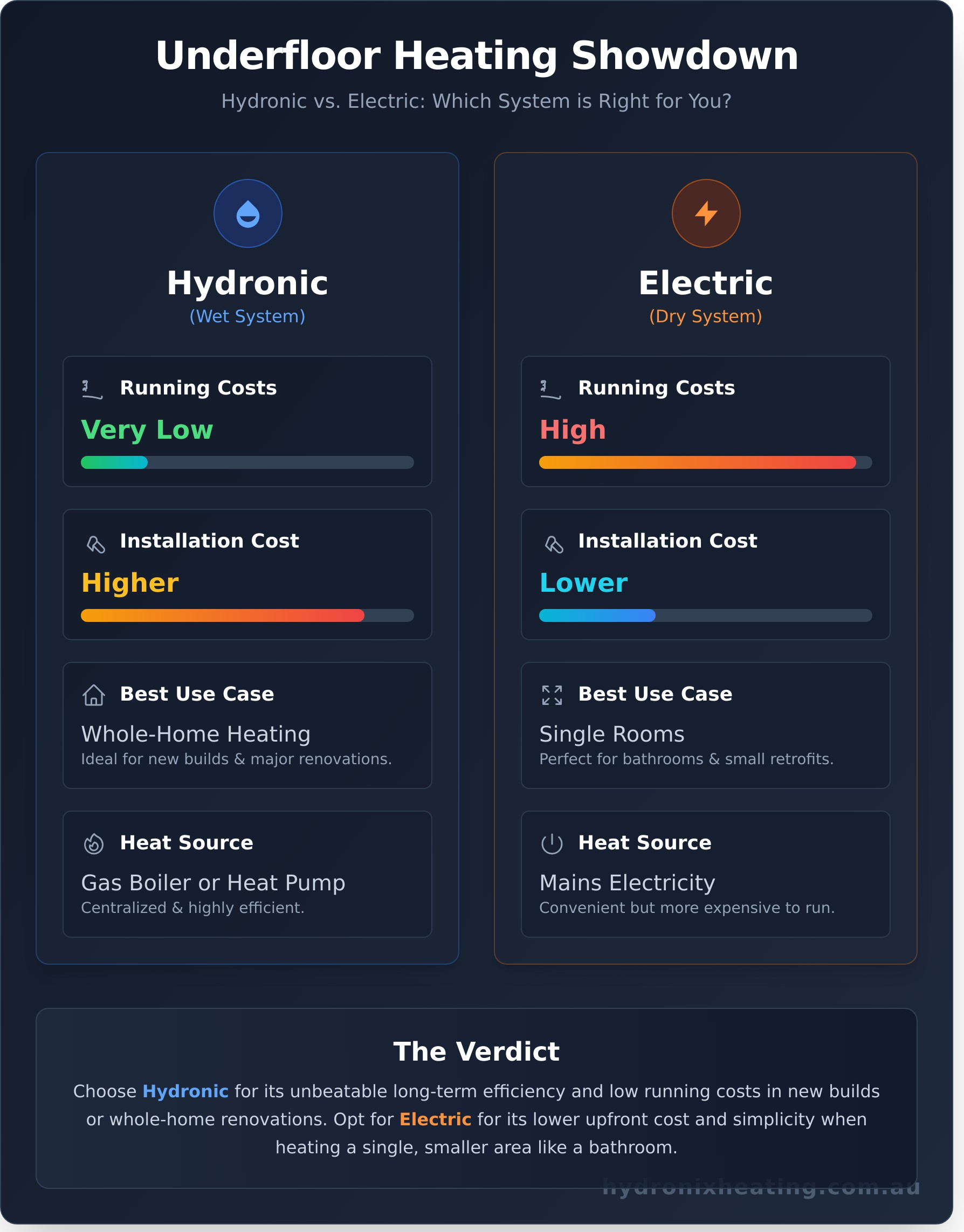
To help you decide, here is a direct comparison of the two main types of underfloor heating. This table summarises the key differences to guide your choice based on your specific project and budget.
| Feature | Hydronic System | Electric System |
|---|---|---|
| Running Costs | Very Low | High |
| Installation Cost | Higher | Lower |
| Best Use Case | Whole-home heating, new builds | Single rooms (e.g., bathrooms) |
| Heat Source | Gas boiler or heat pump | Mains electricity |
The Major Benefits of Underfloor Heating
While the luxurious feeling of a warm floor is undeniable, the true value of a professionally installed underfloor heating system lies in its practical, long-term advantages. For Melbourne homeowners, it represents a significant upgrade in comfort, efficiency, and home health, justifying the initial investment for years to come.
Unmatched Comfort and Warmth
Unlike conventional systems that create drafts and uneven hot spots, underfloor heating delivers gentle, radiant warmth from the ground up. This natural process heats objects and people in the room directly, creating a consistent and enveloping comfort. Say goodbye to cold tiles on a frosty Melbourne morning; your entire home becomes a zone of stable, silent warmth.
Superior Energy Efficiency
Radiant systems are fundamentally more efficient. They operate at lower temperatures (around 29°C) compared to radiators (65-75°C) to achieve the same level of comfort, resulting in lower energy consumption. When a hydronic system is paired with an energy-efficient heat pump, the running costs can be exceptionally low. Furthermore, as confirmed by modern research on underfloor heating, advanced zoning capabilities allow you to heat only the rooms you are using, eliminating wasted energy and significantly reducing your utility bills.
Design Freedom and More Space
One of the most appealing benefits is that the entire system is invisible. With no bulky radiators or wall-mounted units, you gain complete freedom in furniture placement and interior design. This allows for a clean, minimalist, and modern aesthetic, freeing up valuable wall space and ensuring your heating system never compromises your home’s style.
A Healthier Home Environment
Forced-air systems are known for circulating dust, pollen, and other allergens throughout a home. Because radiant heating doesn’t rely on air currents, it creates a healthier indoor environment. Key health benefits include:
- Reduced Allergen Circulation: A significant advantage for those with asthma or allergies.
- Better Air Quality: Radiant heat doesn’t dry out the air as much as convection heat, improving respiratory comfort.
- Mould Prevention: Warm, dry floors inhibit the growth of mould and mildew in bathrooms and other damp-prone areas.
To learn more about expert hydronic solutions, explore our services at hydronixheating.com.au.
Key Considerations Before You Install
While the luxury and efficiency of underfloor heating are compelling, a successful installation depends on careful planning. Answering a few key questions about your home and project scope will determine the best path forward. Making these decisions with a trusted specialist ensures your system is perfectly matched to your property, delivering reliable warmth for years to come.
Flooring Compatibility
Your choice of flooring directly impacts the performance of your system. Hard surfaces with high thermal conductivity are ideal partners for radiant heat.
- Best pairings: Tile, polished concrete, and natural stone are excellent conductors, transferring heat quickly and efficiently into the room.
- Good pairings: Many modern engineered timbers, luxury vinyl tiles (LVT), and specific underfloor heating-rated carpets are designed to work effectively.
- Requires expert advice: Solid timber can be prone to movement with temperature changes, and thick carpets with heavy underlay can act as insulators. Always verify compatibility with your installer to ensure optimal performance.
Since luxury vinyl tile is such an effective and popular partner for underfloor systems, it’s worth exploring its full potential. To see how versatile this material can be, you can visit Home Expo Asia for examples and inspiration.
New Builds vs. Retrofitting
The ideal time to install underfloor heating is during a new build, where pipes can be laid directly into the concrete slab. This is the most cost-effective and thermally efficient method. However, retrofitting is a highly effective and common solution for renovations and existing Melbourne homes. The system is typically installed in a layer of screed over the existing slab. While this can raise floor levels slightly, it’s a proven approach for bringing radiant warmth to an established property. Ask our experts if your home is suitable for a retrofit.
Factors That Influence Cost
The final investment for your system depends on several key variables. A professional quote will break down the costs, but the primary factors include:
- System Type: Hydronic systems have a higher upfront installation cost than electric systems but deliver significantly lower long-term running costs.
- Project Size: The total square meterage being heated is a primary driver of the overall project price.
- Heat Source: For hydronic systems, a standard gas boiler is a common choice, while a high-efficiency heat pump costs more initially but offers exceptional energy savings.
- Installation Complexity: A straightforward installation in a new build will be less labour-intensive and therefore more affordable than a complex retrofit project.
Step Into a Warmer, More Efficient Melbourne Home
As we’ve explored, modern heating offers a level of consistent, radiant warmth and energy efficiency that is simply unmatched. Understanding the key differences between hydronic and electric systems, along with the major benefits for your lifestyle and property value, empowers you to make an informed decision for your Melbourne property.
Choosing the right system is a significant investment in your home’s comfort. As Melbourne’s trusted hydronic heating specialists, we focus on designing reliable, long-term heating solutions tailored to your needs. We stand by our professional installations with a six-year workmanship guarantee, giving you complete peace of mind and confidence in your choice.
Ready to discover the ultimate in home comfort? Get expert advice on the right underfloor heating system for your home. Experience the difference of silent, luxurious warmth this winter and for many years to come.
Frequently Asked Questions About Underfloor Heating
What happens if my underfloor heating system leaks?
Leaks in professionally installed hydronic systems are extremely rare. The pipes are manufactured as a single, continuous loop without joints beneath the floor, and the entire system is pressure-tested before the final flooring is laid. In the unlikely event of a puncture, a specialist can use thermal imaging and acoustic equipment to pinpoint the exact location. This allows for a targeted repair with minimal disruption to your flooring, reflecting our repair-first approach to solving problems efficiently.
How long does underfloor heating last and what maintenance is required?
The underfloor pipework itself is exceptionally durable, with a lifespan of over 50 years, and requires no maintenance. The system’s boiler and manifold, which control the heat and water flow, need regular servicing to ensure peak performance and longevity. We recommend a professional diagnostic and service by a hydronic heating specialist annually. This preventative maintenance ensures your system remains reliable and efficient for decades, protecting your investment and guaranteeing consistent warmth.
Can I control the temperature in different rooms independently?
Yes, absolutely. One of the greatest advantages of a hydronic system is the ability to create different heating zones. Each zone can be controlled by its own thermostat, allowing you to set unique temperatures for different areas of your home. You can keep bedrooms cooler while the living area remains warm, for example. This precise control not only enhances comfort but also significantly improves energy efficiency by only heating the rooms you are using.
How long does it take for underfloor heating to warm up the room?
The warm-up time depends on the type of installation. In-slab systems have high thermal mass and can take 12-24 hours to reach the desired temperature from a cold start, but they retain heat exceptionally well. Lighter in-screed or timber-joist systems are more responsive, typically warming a room in 30 to 60 minutes. Once at temperature, the system works efficiently to maintain a stable and comfortable level of radiant heat throughout the space.
Can underfloor heating be my only source of heat in Melbourne?
A professionally designed hydronic underfloor heating system is more than capable of being the sole heat source for a modern, well-insulated home in Melbourne. It provides a consistent and comfortable radiant heat that warms the entire room from the ground up, eliminating cold spots. Unlike forced-air systems, it does not create drafts or circulate dust. For Melbourne’s chilly winters, it offers a complete, silent, and highly efficient heating solution for your entire property.
Will underfloor heating increase the value of my home?
Yes, installing underfloor heating is considered a premium upgrade that can significantly increase your home’s value and appeal to potential buyers. Much like a modern, insulated garage door, it is a highly sought-after feature associated with luxury, comfort, and energy efficiency-you can learn more about Door Supply to see how their options contribute. In the competitive Melbourne property market, a fully integrated and invisible heating system is a major selling point that can differentiate your home, potentially leading to a quicker sale and a higher final price. It demonstrates a commitment to quality and modern living.