


As the temperature drops, the last thing you need is a surprise spike in your energy bills or, worse, a complete boiler breakdown. These costly issues often stem from a lack of routine maintenance. For many homeowners, the challenge isn’t just about finding time; it’s knowing which tasks are safe for DIY and when to call a trusted expert. Efficiently and safely heating the home requires a reliable system, and that reliability is built on regular, professional care.
At Hydronix Heating, we know hydronic systems. We’ve created this essential maintenance checklist to give you peace of mind. This guide provides clear, practical steps for the crucial DIY checks you can perform to boost efficiency and catch problems early. We’ll also outline what a specialist service should cover to guarantee your boiler operates safely and reliably, extending its lifespan and keeping your running costs down. Get ready to take control of your home’s warmth and comfort.
Why Boiler Maintenance is a Non-Negotiable for Melbourne Homes
Your boiler is the hard-working heart of your hydronic system, the central command for keeping your home warm and comfortable through Melbourne’s chilly winters. Neglecting it is not just an oversight; it’s a risk that can lead to sudden breakdowns, inefficient performance, and costly emergency call-outs when you need your heating the most. Professional, scheduled servicing is the single most effective way to ensure your system operates reliably, safely, and efficiently year after year.
Think of it as a proactive investment in your comfort and property. A well-maintained boiler protects your home, your family, and your wallet from the stress of a mid-winter heating failure. At Hydronix Heating, we know that preventative care is the key to extending the lifespan of your valuable hydronic system.
Efficiency and Cost Savings
A professionally serviced boiler uses less fuel to produce the same amount of warmth, directly translating to lower energy bills. Over time, sediment and sludge can accumulate inside your boiler and pipework. Understanding how hydronic heating works reveals that this internal build-up forces your boiler to work harder, burning more gas for heating the water. Our expert technicians clean and fine-tune components, catching minor issues before they become expensive repairs and ensuring you maintain your manufacturer’s warranty.
Safety and Peace of Mind
For homes with gas boilers, safety is the primary concern. A faulty or poorly maintained unit can pose a serious risk of carbon monoxide (CO) leaks-a colourless, odourless gas with dangerous consequences. During a professional service, our specialists meticulously check for proper combustion, inspect flues and ventilation for blockages, and test all safety controls, including the pressure relief valve. This gives you complete peace of mind that your system is operating safely.
Early Warning Signs Your Boiler Needs Attention
Even with regular maintenance, it’s wise to know the tell-tale signs of a developing problem. Acting quickly can prevent a minor fault from escalating. Look out for:
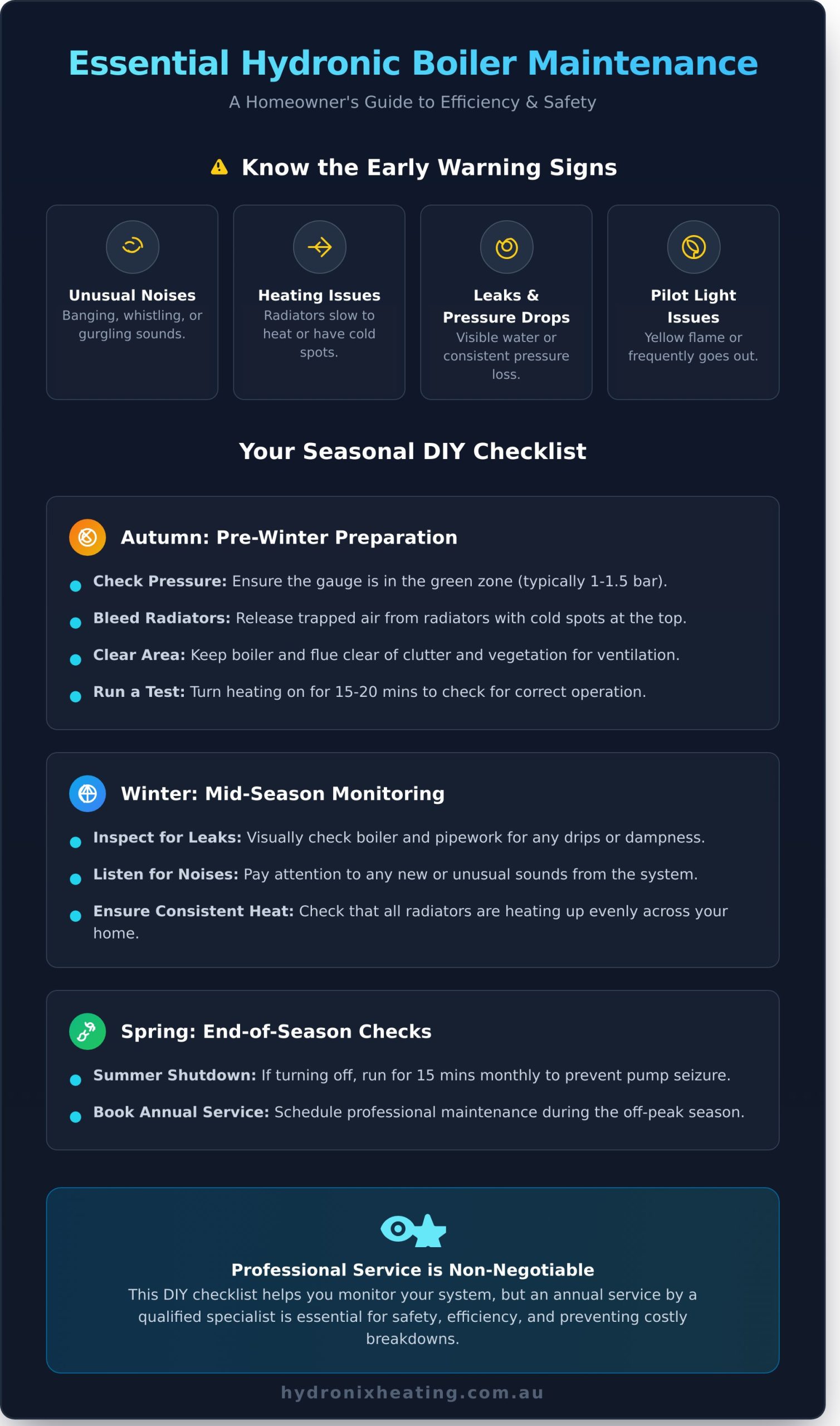
- Unusual Noises: Banging, whistling, or gurgling sounds can indicate trapped air, low water pressure, or limescale build-up.
- Heating Issues: If your radiators take longer than usual to warm up or have noticeable cold spots, it often points to circulation problems.
- Visible Leaks or Pressure Drops: Any sign of water around the boiler or a consistent drop on the system’s pressure gauge requires immediate professional diagnosis.
- Pilot Light Problems: On older models, a pilot light that frequently extinguishes or burns with a yellow flame instead of a crisp blue one is a clear warning sign.
Your Seasonal DIY Boiler Checklist: Simple Steps for Homeowners
While an annual service from a qualified hydronic specialist is essential, there are several simple yet effective checks you can perform yourself. This seasonal routine empowers you to monitor your system’s health, catch potential issues early, and ensure you’re efficiently heating the home all winter long. These steps are not a replacement for a professional diagnosis but are a vital part of responsible system ownership.
Important: Always consult your boiler’s instruction manual before performing any checks, as recommended pressure levels and components can vary between models.
Autumn: Pre-Winter Preparation
Before the cold weather arrives, prepare your hydronic system to ensure it’s ready for the demands of winter. A few proactive steps in autumn can prevent inconvenient breakdowns when you need your heating most.
- Check the Pressure: Locate the pressure gauge on your boiler. It should typically be within the green zone, around 1-1.5 bar when the system is cold. If it’s too low, consult your manual for instructions on how to repressurise it.
- Bleed Your Radiators: If you notice cold spots at the top of your radiators, it means trapped air is preventing water from circulating properly. Use a radiator key to slowly release the air until water begins to drip out.
- Clear the Area: Ensure the space around your boiler and its external flue terminal is completely clear of clutter, flammable materials, and overgrown vegetation. This guarantees proper ventilation and safe operation.
- Run a Test: Turn your heating on for 15-20 minutes to confirm the boiler fires up correctly and that all radiators begin to warm up as expected.
Winter: Mid-Season Monitoring
During the coldest months, your boiler is working hard. Regular monitoring helps ensure it continues operating safely and efficiently. Make these quick visual and auditory checks a monthly habit.
- Inspect for Leaks: Visually check the boiler unit and the visible pipework for any signs of water drips or dampness. Early detection can prevent significant water damage.
- Listen for Unusual Noises: Pay attention to the sounds your system makes. Loud banging, gurgling, or whistling noises can indicate underlying issues like air in the system or low water pressure.
- Ensure Consistent Heat: As you move around your home, check that all radiators are heating up evenly. Inconsistent performance could signal a circulation problem.
Spring: End-of-Season Checks
As the weather warms, properly preparing your boiler for the quieter months will protect your investment and make next autumn’s startup much smoother.
- Summer Shutdown: Decide whether to turn your boiler off completely. If you do, remember to turn it back on for 15 minutes once a month. This simple action helps prevent internal components like the pump from seizing up.
- Book Your Annual Service: Spring and summer are the ideal times to schedule professional maintenance. Booking during the off-peak season avoids the autumn rush and ensures your system is expertly serviced. Expert technicians perform critical safety and efficiency diagnostics that go beyond visual checks, aligning with best practices like the U.S. Department of Energy boiler maintenance guidelines to ensure your system is in peak condition.
- Plan Ahead: Schedule your expert boiler service with Hydronix ahead of the rush.
The Professional Annual Service: What Our Experts Check
While your own checks are beneficial, the annual professional service is the most critical part of your maintenance schedule. This is where a qualified technician performs tasks that require specialised tools, deep system knowledge, and gas-fitting qualifications. It’s the difference between a system that just works and one that operates at peak safety and efficiency. This is why a dedicated hydronic specialist, not a general plumber, is essential-hydronic systems are all we do.
Internal Component Inspection and Cleaning
Inside your boiler, a series of critical components work together. Our experts meticulously inspect and clean these parts to ensure flawless operation. This includes:
- Cleaning the heat exchanger: We remove any scale or soot buildup to guarantee maximum heat transfer and prevent wasted energy.
- Checking the burner and pilot assembly: A clean burner ensures a clean, efficient flame, which is vital for properly heating the system’s water.
- Inspecting seals and gaskets: We check for any signs of wear or perishing to prevent dangerous water or gas leaks.
- Testing the circulation pump: We confirm the pump is running correctly, ensuring heated water circulates effectively to every radiator.
Gas and Combustion Analysis
This is arguably the most important safety check. Using calibrated equipment, our licensed gas technicians perform a flue gas analysis to measure the by-products of combustion, like carbon monoxide. This process, which aligns with official recommendations for Department of Energy boiler maintenance, confirms your boiler is burning gas safely and efficiently. We also check gas pressures and inspect the flue terminal for blockages, safeguarding your home and family.
System-Wide Checks and Adjustments
A professional service extends beyond the boiler itself. We assess the entire hydronic heating system to ensure every part functions as a cohesive unit. Our technicians test all safety devices, including the pressure relief valve, to ensure they will operate correctly in an emergency. We check the system pressure, topping it up if needed, and inspect the expansion vessel to ensure it can properly manage pressure fluctuations. Afterwards, you receive a detailed service report outlining all findings and work performed.
Trust Melbourne’s hydronic specialists to keep your system running safely and efficiently. Schedule your annual service today.
Troubleshooting Common Issues Before You Make the Call
Before you spend money on a professional call-out, it’s worth knowing that many common hydronic heating issues can be safely resolved yourself. A few simple checks can restore warmth to your home, saving you both time and inconvenience. These steps empower you to handle minor problems with confidence. However, your safety is paramount; if you are ever unsure or uncomfortable, always contact a qualified technician.
How to Re-pressurise Your System
Low system pressure is a frequent cause of boiler shutdowns. If your pressure gauge is reading below 1 bar, your system needs more water. You can typically fix this using the filling loop-a silver braided hose connecting two valves.
- Locate the Loop: Find the filling loop and pressure gauge, usually underneath your boiler.
- Open the Valves: Slowly open one valve, then the other. You should hear water entering the system.
- Watch the Gauge: Keep an eye on the pressure gauge. You are aiming for a level between 1.2 and 1.5 bar.
- Close Both Valves: Once the correct pressure is reached, close both valves firmly to prevent over-pressurising.
If you find the pressure keeps dropping after a few days, it may indicate a leak somewhere in the system. In this case, it’s time to call a professional for a proper diagnosis.
Fixing Cold Radiators
When you have issues with heating the home evenly, cold radiators are a common culprit. Fortunately, the cause is often straightforward. Start with the simplest check: ensure the valve on the radiator is turned to the ‘on’ position. If the valve is open, the location of the cold spot can tell you more.
- Cold at the Top: This usually means trapped air is preventing hot water from circulating fully. The radiator needs to be ‘bled’ using a radiator key to release the air.
- Cold at the Bottom: This can be a sign of sludge and debris build-up, which restricts water flow. This problem requires a professional power flush to clean the system internally.
For persistent uneven heating, your system may need balancing-a technical process of adjusting valves to ensure every radiator gets its fair share of hot water.
Understanding Basic Boiler Error Codes
Modern boilers use error codes to communicate specific faults. When a code appears, your first step should be to consult your boiler’s user manual, which will explain what the code means. Sometimes, the solution is simple; for example, a fault code indicating low water pressure can be cleared by following the re-pressurising steps above.
However, many codes point to internal component failures that require expert attention. For persistent errors or any fault you can’t confidently identify, trust the experts at Hydronix to diagnose the fault. Our repair-first approach means we get to the root of the problem, ensuring a reliable and efficient fix.
Ensure Year-Round Warmth with Professional Boiler Care
Your hydronic boiler is the heart of your home’s comfort. As we’ve covered, consistent maintenance-from your own seasonal checks to an annual professional service-is the key to ensuring reliability, efficiency, and safety. Following this checklist helps you catch small issues early and understand when to call in the experts, ensuring you have a dependable system for heating the entire house when Melbourne’s chill sets in.
Don’t wait for a breakdown to compromise your comfort. As Melbourne’s trusted hydronic heating experts, our repair-first approach means we fix systems others would replace, saving you time and money. For complete peace of mind backed by our six-year workmanship guarantee, trust the specialists to keep your system running flawlessly. Book your professional boiler service with Melbourne’s hydronic specialists.
Stay warm, stay safe, and enjoy the consistent comfort of a perfectly maintained hydronic system.
Frequently Asked Questions
How often should I get my hydronic boiler professionally serviced?
We strongly recommend a professional service for your hydronic boiler at least once a year. An annual check-up by a qualified technician ensures the system runs safely and efficiently, preventing carbon monoxide risks and identifying minor issues before they become costly breakdowns. Regular servicing is the most reliable way to maintain consistent warmth and extend the life of your hydronic heating system, protecting your investment and ensuring your family’s comfort through Melbourne’s colder months.
What is the average cost of a professional boiler service in Melbourne?
In Melbourne, a standard professional service for a hydronic boiler typically costs between A$250 and A$450. This price can vary depending on the age and model of your boiler, the complexity of the system, and whether any immediate repairs or parts are required. At Hydronix Heating, we provide a clear, upfront quote so you understand all costs before we begin work. This ensures there are no surprises, just reliable and expert service.
Can I legally service my own gas boiler in Australia?
No, it is illegal for an unlicensed person to carry out any work on a gas appliance in Australia, including your boiler. This work must be performed by a licensed and qualified gasfitter to ensure it complies with strict safety standards. Attempting a DIY service is extremely dangerous, posing a significant risk of gas leaks, fire, or carbon monoxide poisoning. Always trust a professional technician to handle your boiler servicing and repairs for your safety.
What happens if I skip my annual boiler service?
Skipping your annual service exposes your system to several risks. Minor faults can escalate into major, expensive repairs, often leading to a complete breakdown when you need it most. An unserviced boiler can become inefficient, significantly increasing your energy bills for heating the same space. Most critically, it poses a safety hazard, as potential carbon monoxide leaks may go undetected. Regular maintenance is a small investment that prevents these costly and dangerous outcomes.
Is it better to turn my boiler off completely in the summer?
For most modern hydronic systems, turning the boiler off completely during the summer is the most energy-efficient option. This prevents the pilot light (on older models) from consuming gas unnecessarily and reduces standby power consumption. However, it’s a good practice to briefly turn the system on for 10-15 minutes once a month. This helps circulate water and prevent components like the pump from seizing up, ensuring a smooth start when winter returns.
How do I know if my boiler is energy efficient or needs an upgrade?
Key signs your boiler may be inefficient include its age (if it’s over 15 years old), a noticeable rise in your gas bills without increased usage, and frequent breakdowns. If your system is slow to warm up or struggles with heating the house evenly, it’s another indicator. Our expert technicians can perform a full system diagnostic to assess its efficiency. We always take a repair-first approach but will provide an honest assessment if a modern replacement is the most cost-effective solution.