


That strange gurgling from your hydronic system isn’t just an annoyance-it’s a warning sign. Paired with climbing energy bills, it’s easy to feel stressed about your home’s heating, especially when faced with confusing technical terms.
This guide provides the clear, expert answers you need. We will break down the crucial differences between a circulator pump and a heat pump, compare the running costs of gas boilers vs. modern heat pumps, and help you make an informed decision for your Melbourne home. You’ll gain the confidence to choose a reliable, long-term solution that lowers your energy bills and guarantees winter warmth for years to come.
Decoding Your System: The Two ‘Pumps’ in Hydronic Heating
When homeowners in Australia search for a "heat-pump," they are often trying to solve one of two very different problems. A hydronic heating system relies on two critical components that can be described as ‘pumps’: one that moves water, and another that generates heat. Understanding the distinction is the first step toward accurate diagnostics and making smart, cost-effective upgrades to your system.
At Hydronix Heating, we believe in empowering you with expert knowledge. Distinguishing between these two parts will help you communicate issues clearly and understand your options for repair or replacement.
The Circulator Pump: The Heart of Your System
This component is the literal pump in your hydronic system. Its sole job is to move hot water from your heat source (the boiler or heat pump) to your radiators or in-floor coils. Think of it as the heart of your home, pumping warmth through the ‘veins’ of your pipework. When it fails, the entire system grinds to a halt, even if the heat source is working perfectly.
Common signs of a failing circulator pump include:
-
Gurgling or humming noises coming from the unit.
-
Some radiators getting hot while others remain cold.
-
Your boiler or heat pump is on, but there is no warmth circulating.
Diagnosing a faulty circulator requires professional testing. A specialist can determine if the issue is the pump itself, an electrical fault, or a blockage, ensuring you only pay for the repair that’s truly needed.
The Heat Source: Heat Pump vs. Gas Boiler
The second, and more significant, ‘pump’ is the heat source itself-the engine that creates the thermal energy. For decades, this has been a gas boiler. The modern, highly efficient alternative is an air-to-water heat pump. This is the component that has the biggest impact on your energy bills and home comfort.
A heat pump doesn’t burn fuel; it efficiently moves ambient heat from the outside air into the water for your system. For a detailed explanation of how a heat pump works, the underlying principles of thermodynamics are key to its efficiency. Choosing the right engine-whether it’s a reliable gas boiler or a future-focused heat pump for heater efficiency-is the most important decision you will make for your home’s warmth.
Heat Pump vs. Gas Boiler: Which Engine is Right for You?
Choosing between a heat pump and a gas boiler is the most critical decision you’ll make for your home’s long-term comfort and running costs. This isn’t just about replacing a component; it’s about selecting the core engine that will power your hydronic heating system for years to come. To make a confident choice, we need to compare them directly on the factors that truly matter: operational cost, initial investment, and environmental responsibility.
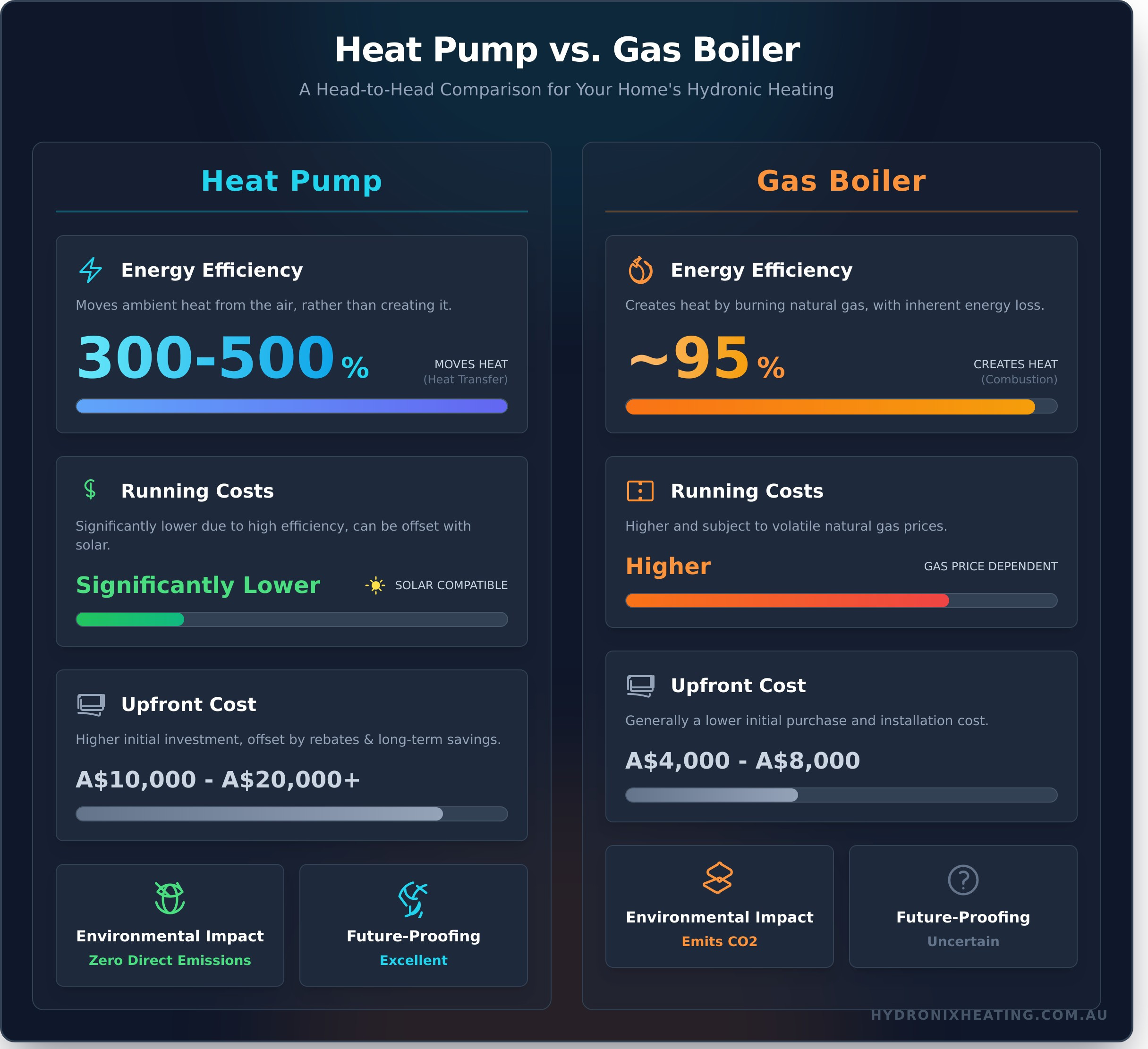
Here is a clear, head-to-head comparison of these two trusted technologies.
| Factor | Heat Pump | Gas Boiler |
|---|---|---|
| Energy Efficiency | 300-500% (Moves heat) | ~95% (Creates heat) |
| Running Costs | Significantly lower, especially with solar | Higher, subject to volatile gas prices |
| Upfront Cost | Higher (A$10,000 – A$20,000+) | Lower (A$4,000 – A$8,000) |
| Environmental Impact | Zero direct emissions (can run on renewables) | Emits CO2 (burns fossil fuel) |
| Future-Proofing | Excellent; aligns with electrification | Uncertain due to gas phase-outs |
Energy Efficiency and Running Costs
The fundamental difference lies in how each system generates warmth. A gas boiler burns natural gas to create heat, and even the most advanced condensing models peak at around 95% efficiency. In contrast, a modern electric heat-pump systems don’t create heat-it intelligently moves it from the outside air into your home. This process of heat transfer is incredibly efficient, often reaching 300-500%. For a detailed breakdown of how different systems operate, the Energy Department guide to heat pumps provides an excellent overview. This efficiency gap directly translates into major savings on your energy bills, especially as Australian gas prices rise and electricity can be offset by solar.
Upfront Investment and Installation
A new gas boiler system generally has a lower initial purchase and installation cost. However, a heat pump delivers a powerful long-term return on investment through drastically lower running costs. Furthermore, various Australian state and federal government rebates are often available to reduce the upfront cost of installing an efficient electric heat-pump technology, making the switch more accessible than ever. For a qualified technician, the installation complexity for either system is comparable.
Environmental Impact and Future-Proofing
Gas boilers are reliable, but they burn a fossil fuel and produce carbon emissions. Heat pumps are electric and produce zero direct emissions. When paired with rooftop solar or green energy from the grid, they offer a truly sustainable heating solution. With policies like Victoria’s ban on gas in new homes, choosing a heat pump future-proofs your property against upcoming regulations and aligns your home with Australia’s clean energy transition.
Why Heat Pumps Excel in Melbourne’s Climate
A common myth we often encounter is that heat pumps struggle during Melbourne’s cold, damp winters. While this may have been true for older models, modern air-source heat pump technology is a different story. These highly efficient systems are expertly designed to perform reliably even when the temperature drops, making them a superb choice for our city’s notoriously variable climate.
Instead of burning fuel to create heat like a traditional boiler, a heat pump functions by transferring it. Even on a cold day, the outside air contains latent thermal energy. A modern heat-pump system uses a refrigerant cycle to extract this ambient heat, concentrate it, and move it inside your home to warm the water for your hydronic system. This process of moving heat rather than generating it is why they are considered a leading energy-efficient alternative to furnaces and boilers, often achieving efficiency ratings of over 400%.
Consistent, Comfortable Radiant Heat
When paired with a hydronic system, a heat pump delivers a steady and gentle warmth that is unmatched for comfort. Unlike forced-air systems that can create dry, stuffy conditions and circulate dust, hydronic heating provides comfortable radiant heat. This maintains a consistent temperature throughout your home, eliminating the dramatic on-off cycles and temperature swings common with older, less efficient heating methods.
Long-Term Savings Against Volatile Gas Prices
Choosing a heat pump is also a strategic financial decision. Natural gas prices in Australia are increasingly tied to volatile global markets, leading to unpredictable and often rising bills. In contrast, electricity offers greater price stability, especially for homeowners with solar panels who can generate their own energy. Investing in an efficient heat-pump grades your comfort while insulating your household from future gas price shocks. See how much you could save with a system upgrade.
Is Your Pump or Boiler Failing? Key Warning Signs
A failing boiler or pump isn’t just an inconvenience-it can lead to skyrocketing energy bills and a cold home when you need warmth most. Recognising the warning signs allows you to call an expert before a minor issue becomes a complete system breakdown. At Hydronix Heating, our ‘repair-first’ philosophy means we focus on accurate diagnostics to find the real problem, saving you from unnecessary and costly replacements. Never ignore these symptoms; they rarely resolve on their own.
Symptoms of a Failing Circulator Pump
The circulator pump is the heart of your hydronic system, moving hot water to your radiators. When this critical **heat-pump **systems begins to fail, you’ll often notice clear signs that it’s struggling to do its job:
-
Unusual Noises: You hear loud grinding, humming, or banging sounds coming from the boiler area.
-
Uneven Heating: Radiators furthest from the boiler are cold or lukewarm, while those closer are hot.
-
Slow Performance: The system takes an unusually long time to heat your home after turning on.
-
No Heat Transfer: Your boiler is firing up, but the radiators remain cool to the touch.
Symptoms of a Failing Boiler or Heat Pump
The boiler or heat pump is the engine of your central heating. Problems here can affect the entire system’s safety and efficiency. Look out for these common red flags:
-
Water Leaks: Any visible water pooling around the unit is a serious issue that needs immediate attention.
-
Error Codes: Modern units will often display a specific error code on their digital screen to signal an internal fault.
-
High Energy Bills: A sudden, unexplained spike in your gas or electricity usage points to a major inefficiency.
-
Constant Cycling: The system turns on and off frequently without reaching the target temperature, or it fails to turn on at all.
These symptoms are universal for hydronic systems, and finding a qualified technician is key. For instance, homeowners in the UK rely on expert services like Plumbing & Boilers London for reliable diagnostics and repairs, highlighting the importance of specialized knowledge regardless of location.
Why You Need a Hydronic Specialist, Not a General Plumber
Hydronic heating systems are complex networks that require specialised knowledge. A general plumber may lack the diagnostic tools and experience, leading to a misdiagnosis that could cost you thousands in an unnecessary replacement. Our technicians are true hydronic experts. We carry a wide range of specific parts, ensuring most repairs are completed in a single visit. Don’t risk a costly mistake with your system. Trust Melbourne’s hydronic experts. Schedule a service call today.
Your Expert Partner for Efficient Home Heating
Choosing the right heating system comes down to understanding your home’s unique needs. We’ve explored the key differences between a modern heat pump and a traditional gas boiler, highlighting how heat pumps offer superior energy efficiency in Melbourne’s climate. Recognising the warning signs of a failing system-whether it’s the boiler itself or the circulation pump for heater efficiency-is the first step toward a reliable solution that ensures long-term comfort and savings.
If your hydronic system is showing signs of trouble, don’t wait for a complete breakdown. As Melbourne’s trusted hydronic heating specialists, our ‘Repair-First’ approach is designed to save you money. We diagnose accurately and fix systems others rush to replace. Experiencing heating issues? Schedule a professional diagnosis with our experts. All our work is backed by a comprehensive six-year workmanship guarantee, giving you complete peace of mind. Trust Hydronix Heating to keep your home warm and comfortable, year after year.
Frequently Asked Questions
Can a heat pump replace my existing gas boiler without changing radiators?
In many cases, yes, but a professional assessment is essential. Heat pumps operate most efficiently at lower flow temperatures than gas boilers. Our specialists will conduct a heat loss calculation for your home to determine if your existing radiators are large enough to provide adequate warmth. Sometimes, a few key radiators may need to be upgraded to ensure the entire system performs reliably and efficiently.
How much can I realistically save per year by switching from a gas boiler to a heat pump?
Your savings depend on your home’s insulation, energy tariff, and system design. With their high efficiency, heat pumps can reduce heating running costs significantly. For a typical Australian household, switching from gas could save between A$900 and A$1,600 per year. Factoring in government rebates available in states like Victoria, the long-term financial benefits become even more compelling, providing a strong return on your initial investment.
Are heat pumps noisy to operate?
Modern heat pumps are engineered for quiet operation. A quality, well-installed unit produces a sound level comparable to a high-end dishwasher or a quiet conversation, typically between 40 and 60 decibels. As hydronic heating specialists, we ensure the outdoor unit is correctly positioned on a solid, anti-vibration base and away from sleeping areas to guarantee minimal disturbance and maintain a peaceful home environment.
How long does a heat pump last compared to a traditional gas boiler?
A professionally installed and regularly serviced heat pump has a typical lifespan of 15 to 20 years, which is on par with a modern gas boiler. The key to longevity for any heating system is quality installation and consistent annual maintenance. Committing to regular servicing by a qualified technician is the best way to protect your investment and ensure your system operates efficiently for its full expected lifespan.
What maintenance does a heat pump hydronic system require?
Like any sophisticated heating system, a heat pump requires an annual service by a qualified technician. This involves checking refrigerant levels, cleaning coils and filters, and inspecting the internal circulation pump for heater efficiency. Homeowners should also ensure the outdoor unit is kept clear of leaves and debris. This simple, routine maintenance ensures your system runs reliably and at peak performance, preventing costly future repairs.
Can a heat pump also provide cooling in the summer?
Yes, one of the major advantages of a heat pump is its ability to provide both heating and cooling. These "reverse-cycle" systems can circulate chilled water through your hydronic network to either specialised fan coil units or your underfloor heating pipes. This creates a complete, year-round climate control solution from a single, highly efficient unit, offering superior comfort and value compared to running separate heating and cooling systems.