


Do terms like ‘boiler’ and ‘radiator’ make home heating sound more complicated than comfortable? If you’re picturing a complex network of pipes and worrying about how it all works together, you’re not alone. Many homeowners find the concept of a hydronic heating system intimidating, especially when compared to the noisy, forced-air systems they might be used to. But the reality is far simpler and more elegant than you might imagine.
Your hydronic system relies on stable pressure to circulate hot water effectively. This pressure is maintained by crucial components, and sourcing them from specialist importers, such as SmartPressure in the UK, ensures system reliability. You can monitor this using the pressure gauge on your boiler, which should typically read between 1 and 1.5 bar when the system is cold. If the pressure drops too low, the boiler may shut down as a safety measure, leaving you in the cold. The most common cause of low pressure is a small, often undetected, leak somewhere in the pipework.
This simple guide is designed to strip away the technical jargon and give you a clear, confident understanding of how hydronic heating delivers its signature silent warmth. We will walk you through each key component and explain the step-by-step process in plain English. By the end, you’ll have a clear mental model of the entire system, feel ready to explain it to a partner or friend, and be prepared to take the next step in your research.
The Anatomy of a Hydronic System: Your Home’s Circulatory System for Heat
At its core, a hydronic heating system operates on a simple, highly effective principle: using water to transfer heat. Think of it as your home’s own circulatory system, working silently and efficiently to deliver consistent warmth. This process, technically known as What is Hydronics?, is a closed-loop design. This means the same water is continuously heated, circulated, and returned to be reheated, making it incredibly resource-efficient. Understanding this system is simple when you break it down into its three main components: the heat source, the distribution network, and the heat emitters.
The Heat Source: The ‘Heart’ of the System
Every hydronic heating system begins with a central unit that heats the water-the ‘heart’ that pumps life into the network. Your choice of heat source is critical for performance and running costs. The two primary options our specialists work with are:
- Gas Boilers: The traditional and powerful choice for many Melbourne homes, a high-efficiency gas boiler provides reliable, robust heating performance, even on the coldest winter days.
- Heat Pumps: The modern, energy-efficient alternative. An air-to-water heat pump extracts ambient heat from the outside air to warm the water, offering significant long-term savings and a smaller carbon footprint.
The Distribution Network: The ‘Arteries and Veins’
Once heated, the water travels through a network of insulated pipes, acting as the ‘arteries and veins’ of the system. These pipes, typically made from durable PEX or copper, are professionally installed under floors, within walls, or through ceiling cavities. Because this is a completely sealed network, it doesn’t circulate dust, allergens, or pollutants like forced-air systems do. This results in superior indoor air quality and a healthier environment for your family.
The Heat Emitters: Delivering Warmth to Your Rooms
The final step is releasing the heat into your living spaces via emitters. These are the points where you feel the comfortable warmth. Unlike ducted systems that blow hot, dry air, hydronic emitters release gentle, radiant heat that warms objects and people directly. This creates a more pleasant and consistent ambient temperature. Common emitters include:
- Panel Radiators: Sleek, modern panels installed on walls.
- In-Slab or In-Floor Coils: Hidden pipes that turn your entire floor into a gentle radiator.
- Heated Towel Rails: A luxurious and practical addition to any bathroom.
The Journey of Water: A Step-by-Step Breakdown of the Heating Cycle
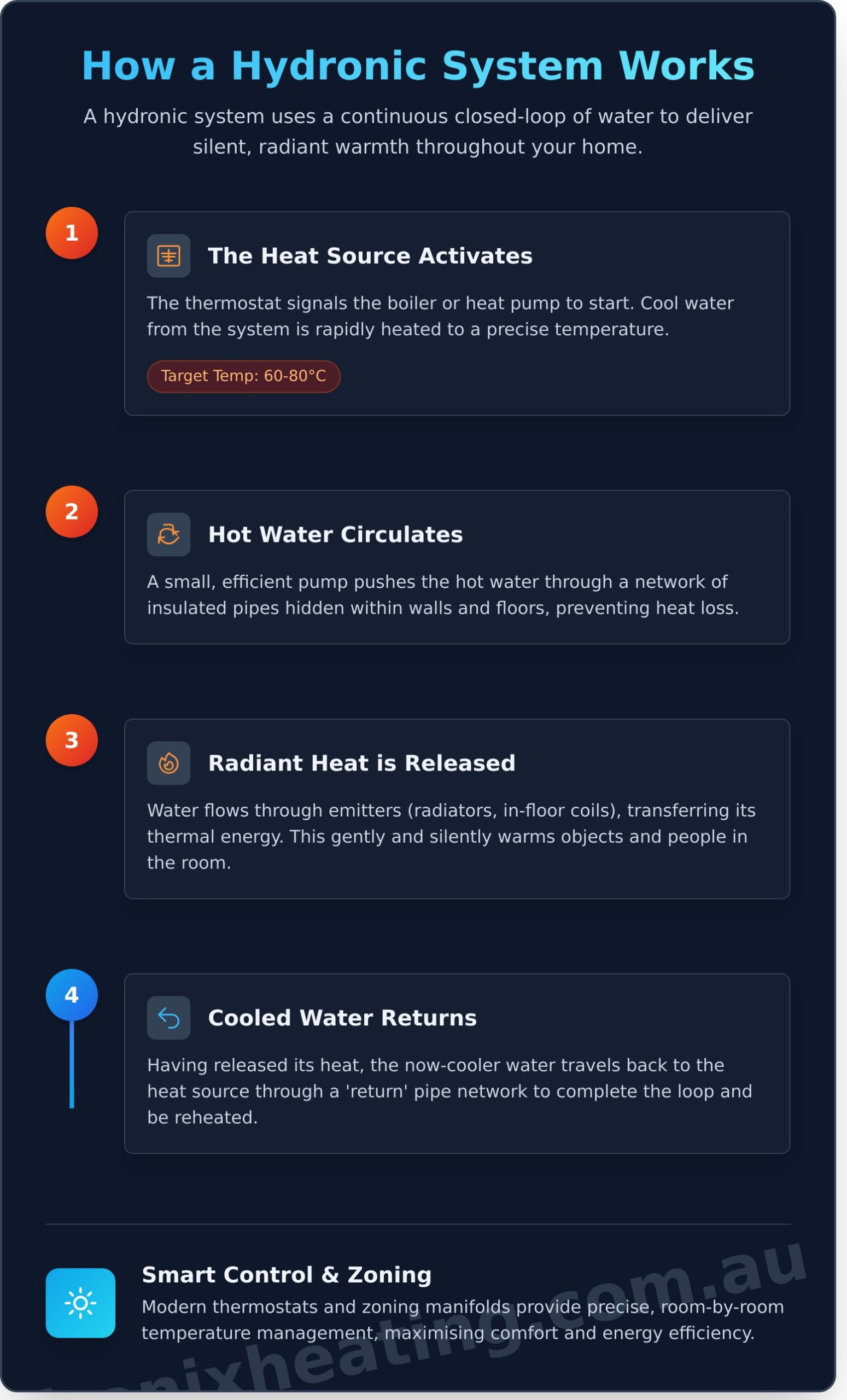
To truly understand the efficiency of a hydronic heating system, it helps to follow the journey of a single drop of water. This water is part of a continuous, closed-loop circuit, meaning it is endlessly recycled and never leaves the pipework. Guided by a small, energy-efficient circulation pump, this constant flow provides the consistent and stable warmth that hydronic heating is known for. The entire process is a quiet, reliable cycle of heating, delivering, and returning.
Step 1: The Boiler Ignites and Heats the Water
The journey begins when your thermostat detects a drop in room temperature and sends a signal to the boiler. This activates the heating source, which draws in cooler water from the system’s return pipes. This water passes through a high-efficiency heat exchanger inside the boiler, where it is rapidly heated to a precise, pre-set temperature, typically between 60°C and 80°C, preparing it for its mission to warm your home.
Step 2: Hot Water Circulates Through the Pipework
Once heated, the water is pushed out of the boiler and into the ‘flow’ pipe network by the circulation pump. This network of high-quality, insulated pipes runs discreetly under floors or within walls, acting as a delivery network. The insulation is critical, ensuring that minimal thermal energy is lost as the water travels from the boiler to the heat emitters located in each room.
Step 3: Heat Radiates into Your Room
The hot water arrives at its destination: a radiator panel or an in-floor heating coil. As it flows through the emitter, it transfers its heat to the surface, warming it from within. This surface then radiates gentle, silent warmth into the space. This process of radiant heating is incredibly efficient and comfortable, a principle supported by industry experts like the Radiant Professionals Alliance. Unlike forced-air systems, it warms objects directly, creating a lasting and comfortable feeling of warmth.
Step 4: The Cooled Water Returns to the Boiler
After releasing its heat into the room, the now-cooler water exits the emitter and enters the ‘return’ pipe network. This network guides the water directly back to the boiler to be reheated. This completes one full circuit in an endless loop that continues as long as your thermostat calls for heat, ensuring your home remains consistently and efficiently warm.
Controlling the Comfort: How Thermostats and Zoning Work
One of the standout features of a modern hydronic heating system is the exceptional level of control it offers over your home’s climate. Unlike basic heaters that often operate on a simple on/off switch for the entire house, hydronic heating provides precise, room-by-room management. This granular control is the key to unlocking superior comfort and significant energy savings.
The Thermostat: The ‘Brain’ of the Operation
At the heart of your system’s control is the thermostat. Its primary job is to monitor the air temperature in a room and signal the boiler to turn on or off to maintain your desired setting. While basic models do this job well, upgrading can deliver greater efficiency.
- Programmable Thermostats: Allow you to create a heating schedule that matches your lifestyle, automatically lowering the temperature when you’re asleep or away from home.
- Smart Thermostats: Offer remote control via a smartphone app, learning capabilities, and energy usage reports, putting complete control in the palm of your hand.
What is Zoning and How Does It Work?
Zoning is the practice of dividing your home into separate heating areas, or ‘zones,’ that can be controlled independently. This is managed by a manifold-a central hub where pipes converge-and a series of valves that direct the flow of hot water only to the zones that need it. The primary benefit is a major reduction in running costs, as you only heat the parts of the house you are actually using. For example, you can keep living areas warm during the day while leaving bedrooms at a lower temperature until the evening.
Thermostatic Radiator Valves (TRVs)
For the ultimate in room-specific temperature control, Thermostatic Radiator Valves (TRVs) are an essential component. Think of a TRV as a mini-thermostat for a single radiator or in-floor coil. It senses the temperature of the room and automatically adjusts the flow of hot water into that specific heat emitter to maintain a consistent temperature. This allows you to fine-tune comfort levels across your home-keeping a bedroom comfortably cool while ensuring the living room remains cosy and warm.
Keeping Your System Healthy: How Maintenance Supports Performance
A hydronic heating system is a finely tuned machine. Its efficiency and reliability depend on a perfect balance of water, pressure, and heat moving through a closed-loop network. Just like any high-performance equipment, regular maintenance is not just a recommendation-it’s essential for longevity and preventing costly failures. Ignoring simple issues can lead to significant problems down the line.
At Hydronix, our repair-first philosophy is built on a deep understanding of how these systems operate. By identifying and addressing the root cause of a problem, we ensure your system runs efficiently for years to come. Proactive care is the key to year-round warmth and peace of mind.
System Pressure: The Key to Proper Circulation
Your hydronic system relies on stable pressure to circulate hot water effectively. You can monitor this using the pressure gauge on your boiler, which should typically read between 1 and 1.5 bar when the system is cold. If the pressure drops too low, the boiler may shut down as a safety measure, leaving you in the cold. The most common cause of low pressure is a small, often undetected, leak somewhere in the pipework.
Bleeding Radiators: Why Trapped Air is the Enemy
Over time, small amounts of air can find their way into the sealed system. Because air is lighter than water, it collects at the highest points-usually the tops of your radiators. These air pockets block the flow of hot water, resulting in frustrating cold spots on an otherwise warm radiator. The solution is a simple process called ‘bleeding’, which involves using a small key to release the trapped air until water begins to emerge.
The Importance of an Annual Service by a Specialist
While bleeding radiators is a simple task, a comprehensive annual service by a qualified expert is the best way to guarantee performance. A specialist will perform critical checks that go beyond basic upkeep, including:
- Testing system pressure and re-pressurising if necessary.
- Inspecting for minuscule leaks that cause pressure loss.
- Cleaning essential boiler components to maintain efficiency.
- Checking for corrosion and ensuring all parts are functioning correctly.
This preventative maintenance is your best defence against an unexpected breakdown during Melbourne’s coldest months. Investing in a professional service ensures your hydronic heating system operates safely, efficiently, and reliably when you need it most. Trust Melbourne’s specialists to keep your system running perfectly.
Your Hydronix Heating System: Efficient, Reliable Comfort
As we’ve seen, the elegance of a hydronic heating system lies in its simplicity and efficiency. By circulating heated water through a closed loop of pipes to radiators or in-slab coils, it delivers a consistent and silent warmth that is second to none. Understanding how thermostats control different zones and why regular maintenance is crucial empowers you to get the most out of this premium heating solution, ensuring it performs reliably for years to come.
At Hydronix Heating, we are Melbourne’s trusted hydronic heating specialists. With decades of diagnostic experience on all system types, we bring an expert perspective to every project. Our ‘repair-first’ approach is designed to save you money, as we focus on fixing systems that others might simply replace. We know hydronic heating because it’s all we do.
Have a question about how a hydronic system could work in your home? Contact our experts. Let us help you experience the ultimate in reliable, comfortable warmth.
Frequently Asked Questions
Is a hydronic heating system noisy while it’s operating?
One of the key benefits of hydronic heating is its near-silent operation. Unlike forced-air systems that produce noise from fans and air rushing through ducts, the heat is transferred quietly through water. The only sound typically comes from the boiler unit, which is usually located outside or in a service area, away from living spaces. This ensures your home remains a peaceful and comfortable environment, free from the disruptive background noise of traditional heating methods.
What kind of water is used inside the pipes, and does it need to be changed?
The system uses regular tap water sealed within a closed-loop network of pipes. To protect against corrosion and scale buildup, a special inhibitor is added to the water. Because it’s a sealed system, the water is not consumed and does not need to be regularly changed or replaced. The water and inhibitor levels should only be checked and topped up by a qualified technician during routine annual servicing or if a repair is required.
How hot do the radiator panels get? Are they safe for children and pets?
Radiator panels operate at a surface temperature typically between 60°C and 75°C. While they are hot to the touch, they radiate heat gently and do not have exposed flames or glowing elements like space heaters, making them a safer option for homes with children and pets. Brief contact is unlikely to cause a serious burn, but as with any heating appliance, we recommend teaching children not to touch the panels directly for extended periods.
What happens to the hydronic heating system if the power goes out?
Your hydronic heating system requires electricity to power the boiler’s controls and the circulation pump that moves hot water through the pipes. If there is a power outage, the system will shut down and will not produce heat. The good news is that once power is restored, the system is designed to restart automatically and resume normal operation without any need for manual intervention, ensuring your home returns to a comfortable temperature quickly.
How long does it typically take for the system to heat a room from cold?
The time it takes to heat a room depends on factors like the home’s insulation, ceiling height, and the outside temperature. Generally, a radiator-based system will begin to radiate warmth within minutes and can make a room feel comfortable in as little as 30 to 60 minutes. In-slab or in-floor heating takes longer for the initial warm-up, often several hours, but provides a very stable and even ambient temperature once it reaches its set point.
Can the system be used for cooling as well as heating?
A standard hydronic heating system is designed exclusively for heating. While specialised hydronic cooling systems do exist, they are structurally different, require a heat pump instead of a boiler, and are not common in Australian homes due to complexity and condensation issues. For reliable cooling, a separate air conditioning system is the most effective solution. As specialists, we focus on providing expert hydronic heating services-it’s all we do, and we do it best.