

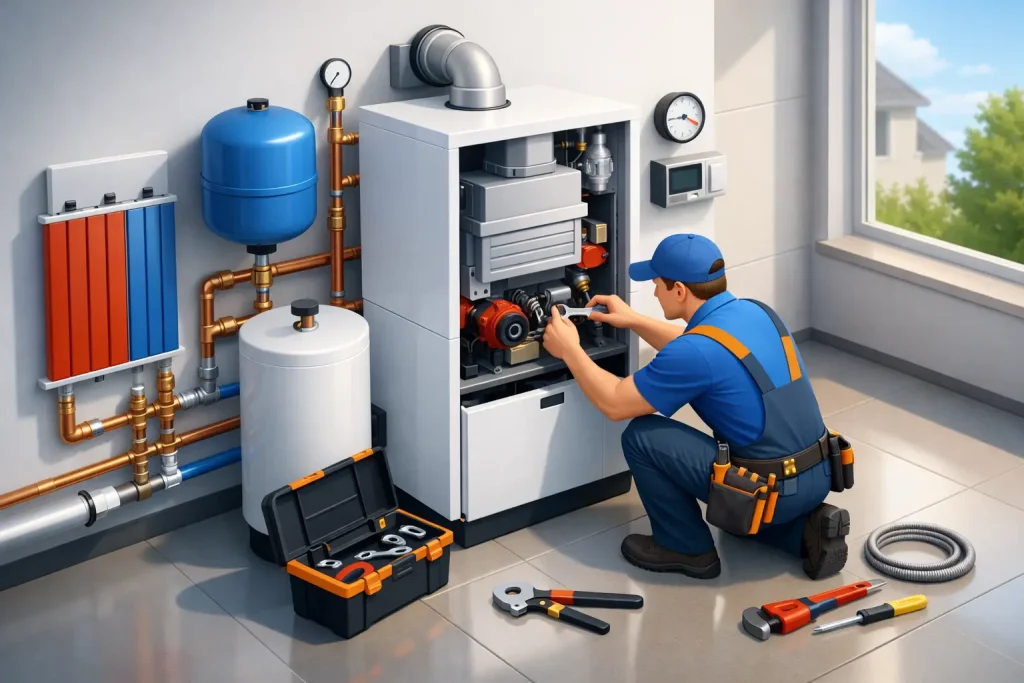
When the boiler stops in the middle of a Melbourne winter, most homeowners are not looking for theory. They want the house warm again, they want a clear answer, and they do not want to pay for two or three appointments just to reach the obvious. That is exactly why a first visit hydronic boiler repair service matters. It is not a slogan. It is the difference between one well-prepared specialist visit and a drawn-out process that leaves you with cold rooms, disrupted routines and mounting cost.
Hydronic heating is not a basic plumbing job. It is a specialised system with interacting components – boiler, pump, expansion vessel, valves, controls, radiators or underfloor circuits. When one part fails, the symptom is often misleading. A cold radiator may not be a radiator problem. A noisy boiler may not be a boiler problem. If the person attending does not work on hydronic systems every day, there is a real risk of guesswork, repeat call-outs and unnecessary replacement advice.
What first visit hydronic boiler repair service really means
A genuine first visit hydronic boiler repair service is built around preparation, not luck. The goal is to diagnose the fault properly on site, carry the parts most likely to fail, and complete the repair there and then whenever the system condition allows it.
That sounds straightforward, but it takes a specific service model to make it work. The contractor needs deep experience with hydronic faults, not just general plumbing knowledge. They need a broad on-hand stock of common spare parts. They also need a repair-first mindset. If the business is geared towards replacement sales, the first visit often becomes a quoting exercise rather than a repair appointment.
For homeowners, the benefit is simple. Less downtime, fewer disruptions, and a clearer path back to reliable heat.
Why some boiler repairs drag on for days
The usual pattern is familiar. A technician arrives, confirms there is a problem, then leaves to source parts, check manufacturer information or arrange a second appointment. In some cases, they recommend replacing the boiler before the system has even been fully tested.
Sometimes a return visit is unavoidable. Older systems can have multiple issues, obscure discontinued parts or wider installation defects that need staged works. But many delays happen because the contractor was not properly set up for hydronic repair work in the first place.
A specialist approaches the visit differently. They come ready to test, isolate and fix. That includes checking water pressure, combustion performance where applicable, electrical controls, circulation, zoning, radiator output and leak points. It also means understanding whether the visible symptom is the main fault or just the result of something happening elsewhere in the system.
The value of repair-first thinking
Homeowners are often told replacement is the only sensible option. Sometimes that is true. If a boiler is beyond economic repair, unsafe, or badly outdated and inefficient, replacement can be the better long-term decision. But that should come after proper diagnosis, not before it.
A repair-first contractor protects the customer from unnecessary spend. They ask whether the issue can be resolved safely and reliably with the right part, adjustment or system correction. They consider the age of the unit, the condition of surrounding components and the likely service life after repair. That is a more honest way to advise.
This is especially important in established and higher-end homes where hydronic systems are often integrated into the way the house lives. A rushed recommendation to rip everything out rarely serves the homeowner well. In many cases, the right repair restores comfort quickly and buys valuable time before any future upgrade.
What happens on the first visit
A proper repair appointment should feel organised from the start. The process is not complicated, but it should be deliberate.
1. System diagnosis comes first
The first step is to identify the actual cause of failure. That may involve testing the boiler itself, checking thermostat and control signals, inspecting pumps and valves, confirming circulation, and looking at pressure loss or visible leakage. The aim is to avoid swapping parts based on assumption.
2. Clear explanation, then action
Once the fault is identified, the homeowner should get a straightforward explanation in plain English. What has failed, what needs to be done, and whether the repair can be completed immediately. Good service is not just technical accuracy. It is helping the customer understand the decision without wading through jargon.
3. Immediate repair where possible
If the relevant part is on hand and the rest of the system is sound, the repair should happen on the spot. That is the point of a first visit service model. Heat restored on the day is always better than another week of waiting.
4. A plan if more work is needed
Not every job can be completed in one appointment. If a system has multiple failures, a major leak, severe corrosion or an obsolete component, the right next step may be staged repair or replacement planning. The difference is that the homeowner leaves the appointment with a proper diagnosis and a structured path forward, not uncertainty.
First visit hydronic boiler repair service depends on stocked parts
One reason specialists resolve more faults on the first visit is simple: they carry what fails most often. Pumps, valves, sensors, ignition components, pressure-related parts and other common repair items can turn a breakdown from a two-visit problem into a same-day fix.
This matters more with hydronic systems than many homeowners realise. Every extra appointment means more lost time, more disruption and often more labour cost. It can also mean temporary heaters, cold bedrooms and a system left partially drained or isolated while you wait.
A contractor who invests in spare parts stock is investing in customer outcomes. It is a practical sign that the business is set up for service, not just attendance.
Why specialisation matters in hydronic heating
Hydronic systems are all we do. That matters because the fault patterns, design considerations and repair methods are different from mainstream plumbing work. A generalist may be excellent in other areas and still miss the real issue in a boiler-led heating system.
Specialisation changes the quality of diagnosis. It changes how quickly the technician recognises repeat fault patterns. It changes what parts are kept on the van. And it changes the advice the customer receives when there is a choice between repair, maintenance adjustment or full upgrade.
For busy households, this is not just about technical confidence. It is about predictability. The right specialist arrives prepared, works tidily, respects the home and moves the job forward without drama.
When first-visit repair is realistic and when it is not
It is sensible to be clear about trade-offs. A first visit hydronic boiler repair service should aim for same-day resolution, but no reputable contractor should promise every fault can be fixed instantly.
If the boiler is very old and parts are discontinued, if there is hidden pipework leakage, or if previous poor-quality work has created wider system issues, a single visit may not be enough. Likewise, if a condensing upgrade is the smarter long-term option, it may be better to plan that properly than force a short-term repair that offers little value.
The key point is this: the first visit should still deliver something meaningful. Accurate diagnosis. Honest advice. Safe temporary measures if needed. And, wherever possible, a completed repair rather than another round of uncertainty.
Choosing the right contractor for the job
If you are comparing providers, ask a few direct questions. Do they specialise in hydronic heating? Do they carry common boiler and system repair parts? Do they focus on repair before replacement? Can they explain what happens during the visit? Those questions tell you more than generic claims about plumbing services.
For many Melbourne homeowners, the right choice is the contractor who treats a winter breakdown as an urgent service problem to be solved, not a sales lead to be converted. That is the standard we work to at Hydronix, because warm homes, clear answers and respectful workmanship are what customers actually need when the system fails.
A cold house puts everything else on hold. The best repair service does not just turn up – it arrives ready to diagnose properly, fix what can be fixed on the spot, and protect you from unnecessary replacement costs. If your boiler has stopped, the right first visit can save far more than time. It can restore confidence in the whole system.