

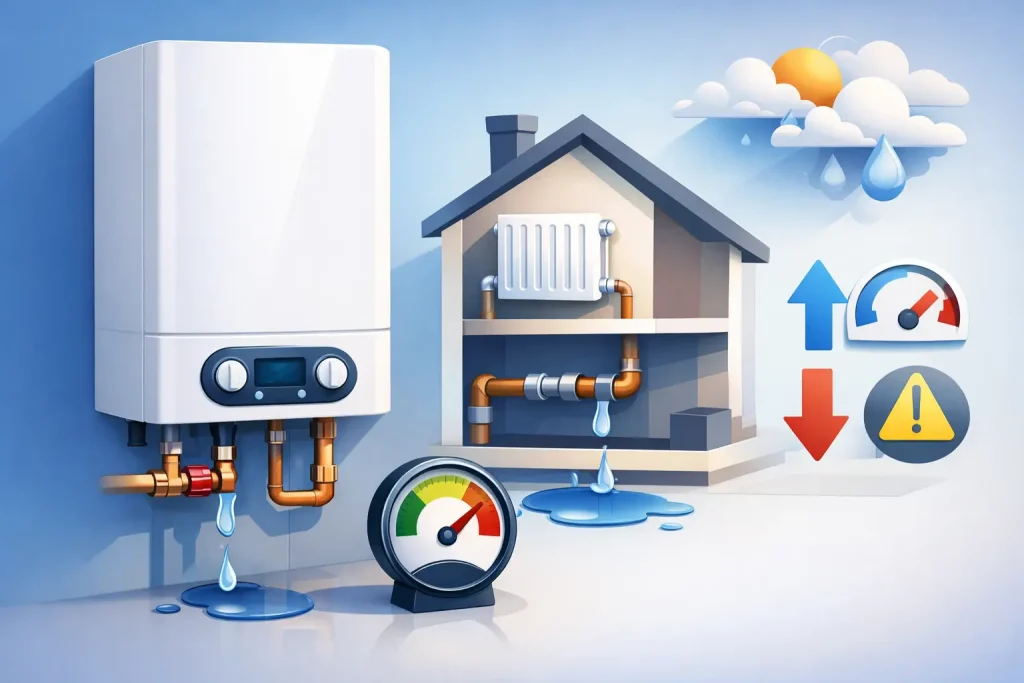
A boiler that needs topping up every few days is not having a bad week. If you’re asking, “why does boiler keep losing pressure”, the short answer is that the system is losing water, drawing in air, or struggling with a fault that is affecting the pressure reading. In a hydronic heating system, pressure should stay broadly stable. Small seasonal movement is normal. Regular pressure loss is not.
For homeowners, this usually shows up as cold radiators, a boiler lockout, gurgling pipework, or the pressure gauge dropping back towards zero after you’ve already re-pressurised it. The key point is simple: pressure does not disappear on its own. Something in the system is causing it, and the right fix depends on where that fault sits.
Why does a boiler keep losing pressure?
Most of the time, the cause falls into one of four areas: a water leak, a problem with the expansion vessel, a faulty pressure relief valve, or air and component issues after recent work. The reason these faults matter is that hydronic systems are sealed. If pressure keeps falling, the sealed side of the system is no longer behaving as it should.
A small leak is the most common culprit. Not every leak leaves an obvious puddle under the boiler. In many homes, the leak is slow and hidden – a weeping radiator valve, a pinhole in pipework under the floor, a compression fitting in a cupboard, or a bleed point that was never fully tightened. In established homes, especially where pipe runs disappear behind walls or under timber floors, these faults can be easy to miss without a proper diagnostic process.
The expansion vessel is another frequent issue. This component manages the change in water volume as the system heats and cools. If the vessel loses its charge or the internal diaphragm fails, boiler pressure can rise sharply when hot and then drop once the system cools. That pattern often leads to discharge through the safety valve, after which the system is left under-pressurised.
Then there is the pressure relief valve itself. If it has lifted during an overpressure event, debris can stop it from resealing properly. The result is a slow but steady loss of water through the discharge pipe. Homeowners rarely spot this because the water often drains outside or into a location they do not routinely check.
Less commonly, the gauge or pressure sensor is wrong rather than the system pressure itself. That does happen, but it should never be assumed early. A boiler showing low pressure may genuinely be low, and repeated topping up without diagnosing the cause can make the system worse.
The pressure loss pattern tells you a lot
One of the quickest ways to narrow down the fault is to look at when the pressure drops.
If it falls gradually all the time, even when the heating is off, a leak is more likely. If it rises when the boiler runs and then crashes back down after cooling, the expansion vessel becomes more likely. If the drop started just after radiators were bled, a repair was completed, or a filling loop was used, trapped air or a small fitting leak may be involved.
This is why specialist diagnosis matters. Two homes can show the same low-pressure warning and need completely different repairs. Replacing a boiler because of pressure loss, without confirming the actual fault, is often unnecessary. We fix systems others replace because pressure problems are usually repairable when the right checks happen in the right order.
What you can safely check first
Before booking a repair, there are a few sensible checks you can make without pulling covers off or disturbing boiler components.
Look at the pressure gauge when the system is cold, then again after the heating has been running. If the needle climbs sharply towards the upper end when hot, then falls well down when cold, that points towards expansion issues rather than a simple static leak.
Check visible radiator valves, towel rails, and exposed pipe joints for signs of water staining, green residue, rust marks, warped skirting, or a musty smell. A leak does not need to be dramatic to affect pressure over time.
It is also worth looking outside for the pressure relief discharge pipe. If you notice drips or staining there, especially after the heating has been on, the safety valve may be passing.
If you have recently bled radiators, remember that releasing air also lowers system pressure. A one-off top-up after bleeding can be normal. Needing to top it up repeatedly is not.
Why topping up is not a real fix
Homeowners are often told to re-pressurise the boiler and “keep an eye on it”. That can get the heating running again in the moment, but it is not a repair.
Every top-up introduces fresh water into the system. Fresh water carries oxygen and minerals, which increase corrosion risk inside the boiler, radiators, valves, and pipework. Over time, that can create sludge, damage components, and shorten the life of the system. In other words, a pressure problem left unresolved rarely stays as just a pressure problem.
There is also a safety point. If the pressure is dropping because of an internal boiler fault or a failing safety device, repeated topping up can mask the issue until it becomes more disruptive – usually on a cold morning when you need the heating most.
Common causes in older and renovated homes
In larger period homes and renovated properties, pressure loss often comes with extra complexity. Pipe routes may have been altered over the years. Floors may conceal older joins. Extensions can create mixed-age sections of system pipework and emitters, which means one weak point can affect the whole circuit.
We also see problems where a general plumbing repair has addressed only the symptom. A valve gets changed, the system is refilled, and the pressure drops again because the original fault was elsewhere. Hydronic systems are all we do, so the approach is different. Rather than swapping parts and hoping, the job starts with confirming exactly where and why pressure is being lost.
When the fault is inside the boiler
Not all pressure issues come from radiators or external pipework. Some faults are internal to the boiler itself.
A worn plate heat exchanger in certain system designs can contribute to pressure irregularities. An automatic air vent may be weeping. Seals can degrade with age and heat cycling. In some cases, the boiler’s own expansion vessel has failed; in others, an external vessel has been undersized or incorrectly charged. These are not faults to guess at. They need testing, not assumptions.
This is where stock on hand matters. If a specialist arrives, confirms the problem, and carries the correct common parts, the repair can often be completed on the first visit instead of turning into days without reliable heat.
When should you call a specialist?
If the boiler loses pressure more than once, call a specialist. If you can see leaking water, hear constant gurgling, notice radiators cooling at the top, or the boiler has locked out, call sooner.
You should also book a diagnostic visit if the pressure swings dramatically between hot and cold, because that usually points to a component fault rather than a simple top-up issue. And if your system is older, has had repeated repairs, or serves a larger home with multiple zones, specialist testing becomes even more important. Complex hydronic systems do not respond well to guesswork.
At that stage, the right service visit should be straightforward: inspect the system, isolate whether the loss is internal or external, test the expansion side properly, check the discharge path, confirm whether any visible leaks exist, and carry out the repair where possible. If a larger upgrade is genuinely needed, that should come after diagnosis, not before.
Why does boiler keep losing pressure after being repaired?
If pressure keeps dropping after a previous repair, that does not automatically mean the boiler is finished. It usually means one of three things: the original fault was only part of the problem, a second leak exists elsewhere, or the system was not fully tested under operating conditions after the first repair.
For example, replacing a leaking radiator valve may solve one issue while leaving an undercharged expansion vessel unresolved. The system seems fine for a day or two, then the pressure falls again. That is frustrating for homeowners, but it is also avoidable with a more complete diagnostic process.
A proper hydronic repair should not stop at restoring pressure on the day. It should explain why the pressure was lost, what has been fixed, and whether any related risks remain. That is the difference between a quick visit and a repair-first specialist approach.
If your boiler keeps losing pressure, treat it as an early warning rather than a nuisance. The sooner the cause is found, the more likely it is to be a tidy, contained repair instead of a much larger winter problem.