

Are you tired of the constant hum from your ducted system, the dust circulating through your rooms, and the dry, stuffy air that comes with it? For many Melbourne homeowners, high energy bills and allergy flare-ups are an unwelcome part of winter. If you’re seeking a quieter, healthier, and more efficient way to warm your home, it’s time to understand the benefits of hydronic heating. This trusted technology uses heated water, not forced air, to deliver a superior, radiant warmth that feels completely different.
But how does this ‘heating with water’ actually work? In this complete guide, we demystify the entire process. We provide a clear, simple explanation of the technology, compare its real-world benefits to conventional forced-air systems, and walk you through the components of a full installation. Our goal is to give you the expert knowledge and confidence to decide if a hydronic system is the right, reliable choice for your home.
What Is Hydronic Heating? The Core Concept Explained
At its core, hydronic heating is a sophisticated method of warming your home using heated water. A central boiler-typically powered by natural gas, LPG, or an electric heat pump-heats water that is then circulated through a sealed network of pipes. This warm water flows to heat emitters, such as stylish wall-mounted radiators or invisible underfloor coils, which then transfer warmth into your living spaces.
This approach stands in stark contrast to conventional forced-air systems. Instead of blowing hot, dry air that can circulate dust, pollen, and other allergens, a hydronic system provides gentle, radiant warmth. The result is a silent, consistent, and deeply comfortable heat that feels entirely natural. It’s for these reasons that hydronic heating is considered a premium, healthy, and exceptionally efficient heating method trusted by discerning homeowners.
Radiant Heat vs. Convection Heat
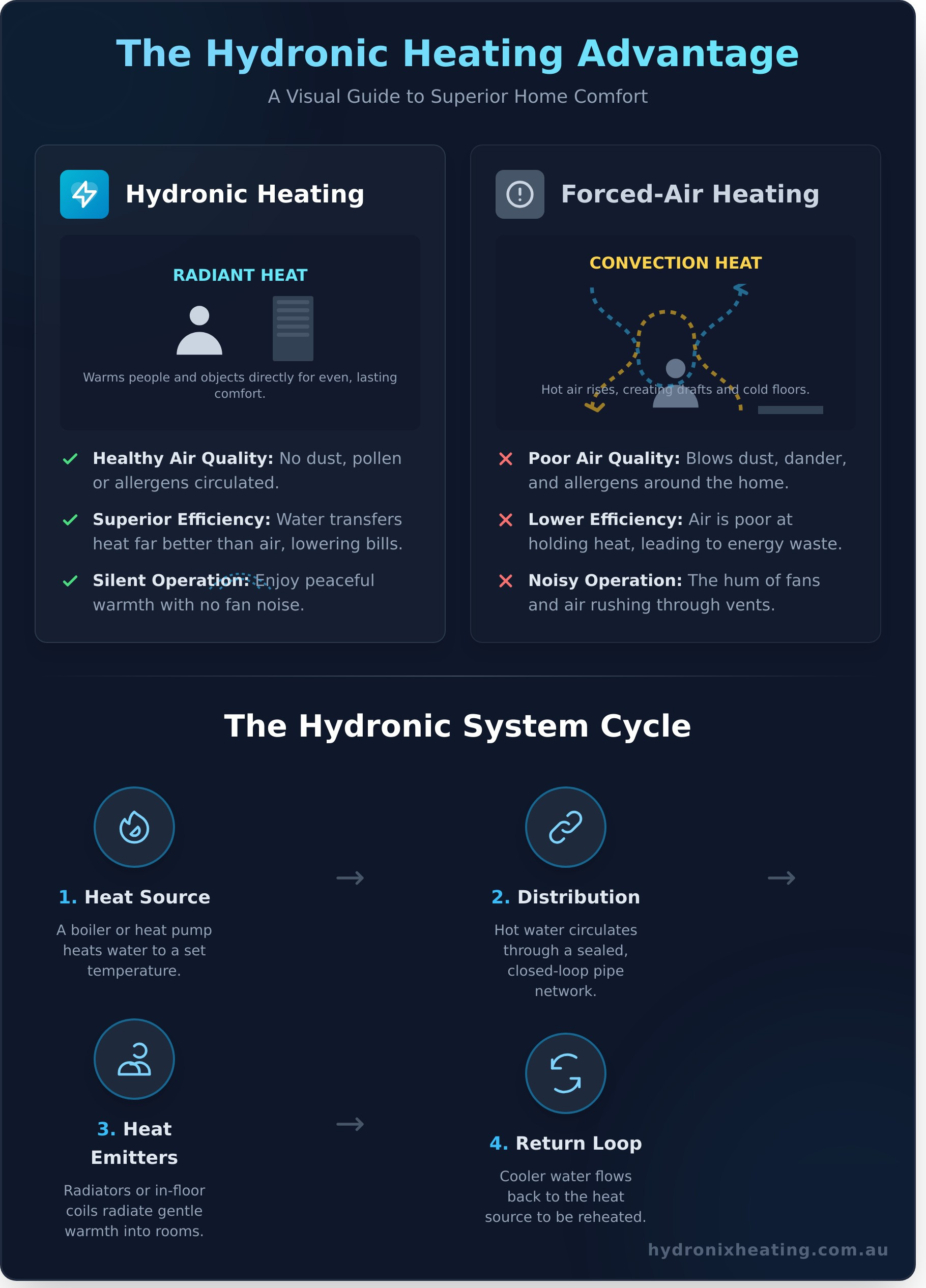
The superior comfort of a hydronic system is delivered through radiant heat. Think of the gentle warmth you feel from the sun on a cool day-that’s radiant energy. It warms people, furniture, and surfaces in a room directly, creating a stable and lasting thermal comfort. This stored heat keeps the room feeling warm and cosy. Convection systems, on the other hand, primarily heat the air, which quickly rises to the ceiling. This process can create drafts and leave you with cold floors and uneven temperatures.
Why Water is the Ideal Medium for Heating
The remarkable efficiency of these systems comes down to a simple law of physics: water is a far better medium for transporting heat than air. In fact, water can carry thousands of times more thermal energy than the same volume of air. This is the central principle of Hydronics, the technology of using a liquid to move heat. Because the system doesn’t have to work as hard, it consumes less energy. This efficiency translates directly into lower running costs and makes it an ideal solution for effectively heating large, open-plan homes.
How a Hydronic System Works: From Boiler to a Warm Room
At its core, a hydronic heating system is a simple and elegant solution for achieving consistent warmth. Think of it as the journey of water, starting at a central heat source and travelling through your home to deliver radiant heat exactly where you need it. The entire process is a continuous, closed-loop cycle managed by a central thermostat, ensuring efficient and reliable comfort.
Understanding this journey is the key to appreciating why this method of heating is so effective. The system is comprised of three main components working in perfect harmony: the heat source, the distribution network, and the heat emitters.
Step 1: The Heat Source (Boiler or Heat Pump)
The journey begins at the engine of the system: the boiler or heat pump. This central unit, typically powered by natural gas or electricity, is responsible for heating the water to a precise temperature set by your thermostat. Modern boilers are incredibly efficient at this task. For a detailed explanation of how different types of Furnaces and Boilers operate and are rated for efficiency, the U.S. Department of Energy offers an excellent resource. Increasingly, high-efficiency heat pumps are also used as an energy-conscious alternative to power hydronic systems.
Step 2: The Distribution Network (Pipes)
Once heated, the water is pushed by a small pump through a network of insulated pipes. This network is completely sealed-a ‘closed-loop’ system-meaning the same water is continuously circulated and reused, which eliminates water waste. The pipes are expertly installed within your home’s floors, walls, or ceiling cavities, remaining completely out of sight. Modern piping, such as multi-layered PEX, is durable, flexible, and designed to last for decades without issue.
Step 3: The Heat Emitters (Radiators & In-Floor Coils)
The hot water arrives at its destination: the heat emitters. These are the components you see and feel. They come in several forms:
- Radiator Panels: These classic panels, mounted on walls, release warmth into a room through a combination of radiant heat (warming objects and people directly) and convection (warming the air that circulates around them).
- In-Floor Heating Coils: Hidden beneath your flooring, these coils turn your entire floor surface into a large, gentle radiator. The result is a luxurious, even heat that rises naturally from the ground up.
- Heated Towel Rails: A popular choice for bathrooms, these emitters provide warmth while also keeping your towels dry and cosy.
After releasing its thermal energy into the room, the now-cooler water flows back through the pipe network to the boiler, where the entire cycle begins again. This constant, controlled circulation is what makes hydronic heating so consistent and comfortable.
The Anatomy of a System: Key Hydronic Components
A hydronic heating system might seem complex, but it’s simply a set of high-quality components working together seamlessly to deliver reliable warmth. Understanding these key parts helps demystify the technology and shows why it’s such an efficient and comfortable solution for your home. Below is a clear breakdown of the essential components you’ll encounter.
Boilers and Heat Pumps
The boiler or heat pump is the powerhouse of your system. This central unit is responsible for heating the water that circulates through the pipes. Modern systems are highly efficient and can be powered by a range of sources to suit your property and budget. The most common fuel types in Australia include:
- Natural Gas: A popular and cost-effective option for many urban homes.
- LPG (Liquefied Petroleum Gas): An excellent alternative for properties without a natural gas connection.
- Electric Heat Pumps: A highly efficient, renewable-friendly option that extracts ambient heat from the air to warm the water.
We often recommend modern condensing boilers, which capture and reuse waste heat, achieving efficiency ratings of over 95% and significantly reducing running costs.
Radiator Panels and Trench Heaters
Radiator panels are the most visible part of a traditional hydronic heating system. Far from the old-fashioned designs of the past, today’s radiators come in a vast range of sleek, modern styles and sizes to complement any interior decor. Our specialists position them strategically within a room-typically under windows-to counteract cold draughts and ensure optimal, even heat distribution.
For spaces with floor-to-ceiling glass or where wall space is limited, trench heaters offer a discreet and effective solution. These units are installed into the floor, providing powerful warmth without obstructing views or furniture placement.
Underfloor Heating Systems
For the ultimate in invisible comfort, an underfloor heating system provides luxurious radiant warmth from the ground up. This method involves laying a network of durable pipes (or ‘coils’) within the concrete slab of a new build or underneath the timber floors during a major renovation. The result is a gentle, consistent heat that warms objects and people in the room directly, creating an unparalleled feeling of comfort with no visible hardware.
Thermostats and Controls
The thermostat is the brain of your entire system. It constantly monitors the room temperature and tells the boiler when to turn on or off to maintain your desired setting. Advanced systems allow for zoning, which means you can set different temperatures for different areas of your home-for example, keeping living areas warmer than unused bedrooms. Modern smart thermostats take this a step further, allowing you to control your heating remotely from a smartphone, optimise energy usage, and reduce your power bills.
The Unbeatable Benefits of Hydronic Heating
When choosing a heating solution, homeowners are often forced to compromise between comfort, running costs, and indoor air quality. A modern hydronic heating system eliminates these compromises, delivering a superior experience that conventional forced-air systems simply cannot match. It’s an investment in the long-term comfort and value of your home.
Superior Comfort and Consistent Warmth
Forget the sudden blasts of hot, dry air and the frustrating cold spots common with ducted systems. Hydronic heating works by circulating hot water through radiators or in-slab coils, which then radiate a gentle, consistent warmth. This radiant heat warms objects in the room, not just the air, creating an enveloping and stable temperature that feels completely natural. The result is silent, uniform comfort in every corner of the room.
Healthier Indoor Air Quality
Forced-air systems act like a giant fan, constantly circulating dust, pet dander, pollen, and other allergens throughout your home. Hydronic heating is a sealed system that doesn’t rely on air circulation. This means it doesn’t spread airborne contaminants, making it the ideal choice for families with asthma, allergies, or respiratory sensitivities. It also helps maintain natural humidity levels, preventing the dry air that can lead to irritated skin and throats in winter.
Whisper-Quiet Operation
One of the most immediate benefits you’ll notice is the peace and quiet. There are no noisy fans, blowers, or the sound of air rushing through vents. A hydronic system operates in virtual silence. The only sound you might ever hear is a faint click from the thermostat as it maintains your perfect temperature, allowing you to work, relax, and sleep in a truly tranquil environment.
Energy Efficiency and Lower Running Costs
Water is far more effective at holding and transferring heat than air. This fundamental principle makes hydronic heating an incredibly efficient solution. When combined with modern high-efficiency boilers and smart zoning controls, the long-term savings are significant.
- Superior Heat Retention: Water’s thermal properties mean the system uses less energy to maintain a set temperature.
- Smart Zoning: Easily control the temperature in different rooms or “zones,” so you only heat the spaces you are actually using.
- Proven Savings: A correctly installed hydronic system can be up to 35% more efficient to run than central ducted heating, leading to a substantial reduction in your energy bills.
To learn how these benefits could be applied to your property, speak with a trusted hydronic heating specialist.
Is Hydronic Heating Right for Your Melbourne Home?
Deciding on the right heating system is a significant investment. While hydronic heating offers unparalleled comfort and efficiency, its suitability depends on your specific property and circumstances. As trusted specialists, we believe in providing clear, practical advice to help you determine if it’s the best fit for your home.
New Builds vs. Existing Homes (Retrofitting)
Installing a hydronic system is most straightforward and cost-effective during the construction of a new home. Pipes for underfloor heating can be laid directly into the concrete slab or fitted between floor joists before flooring and walls are installed. However, retrofitting a system into an existing home is a very common and feasible project. Our expert technicians can run pipework discreetly under floors, within walls, or through ceiling cavities with minimal disruption, ensuring a seamless integration.
Best Flooring Types for Hydronic Systems
The type of hydronic system you choose can influence your flooring considerations. For underfloor heating, the best performance comes from flooring with high thermal conductivity:
- Polished concrete
- Tiles and natural stone
- Engineered timber
While these are ideal, underfloor systems also work effectively with quality carpet and appropriate underlay. If you opt for a radiator panel system, your flooring choice is completely unrestricted-it works perfectly with any floor type, making it a highly flexible option for existing homes.
Why It’s Perfect for Melbourne’s Climate
Melbourne is known for its long, damp, and often penetratingly cold winters. This is where hydronic heating truly excels. Unlike forced-air systems that circulate dry, dusty air, radiant heat warms the objects and surfaces in your home, creating a consistent and comfortable warmth that eliminates that deep ‘bone chill’ feeling. It provides a silent, gentle heat that is perfectly suited to combatting Melbourne’s persistent cold.
Every home is unique, and determining the best approach requires expert advice. Unsure? Talk to a Hydronix expert about your home. We provide clear, practical assessments to help you make a confident decision.
Your Trusted Partner for Hydronic Heating in Melbourne
As we’ve explored, hydronic heating delivers an unparalleled standard of comfort. It provides silent, allergen-free, and highly efficient warmth that is perfectly suited to Melbourne’s variable climate. Choosing the right system is a significant investment in your home, and expert installation is key to unlocking its long-term performance and reliability.
This is where our specialised expertise makes the difference. At Hydronix Heating, we bring decades of dedicated experience to every project. Our repair-first philosophy is designed to provide the most cost-effective solution, and we stand behind our quality with a six-year workmanship guarantee. We don’t just service systems-we provide lasting peace of mind.
Ready to transform your home’s comfort? Schedule a consultation with a Hydronix heating specialist today. Let us help you make the best investment in warmth for your family.
Frequently Asked Questions About Hydronic Heating
How is hydronic heating different from central heating?
While both are forms of central heating, their methods differ significantly. In Australia, ‘central heating’ often refers to ducted systems that push hot air through vents. This can circulate dust and create dry conditions. Hydronic heating, however, uses hot water to circulate through sealed pipes to radiators or underfloor coils. This provides a silent, radiant warmth that is more comfortable and doesn’t spread allergens, offering a superior and healthier indoor environment.
Is hydronic heating expensive to run compared to other systems?
While the initial installation cost can be higher, hydronic heating is one of the most efficient systems to run. Modern gas boilers are highly efficient, and water retains heat far better than air. This means the system works less to maintain your desired temperature. Australian homeowners often find their running costs are significantly lower than conventional ducted gas systems, making it a smart long-term investment that reduces energy bills year after year.
Can you install hydronic heating in a house that’s already built?
Absolutely. Installing a hydronic system into an existing home is known as retrofitting, and it is a common project for our specialists. Our expert technicians are highly skilled at discreetly running pipework under floors, within walls, or through ceiling cavities to connect radiators. A professional assessment ensures the installation is completed with minimal disruption to your home, delivering the comfort of hydronic warmth without a major renovation.
Does a hydronic system require a lot of maintenance?
Hydronic systems are known for their reliability and require minimal upkeep. To ensure peak performance and longevity, we recommend a professional service once a year. This annual check-up typically involves inspecting the boiler, checking system pressure, and bleeding any air from the radiators. This simple, preventative servicing by a trusted expert is all that’s needed to keep your system running efficiently and reliably for decades.
Is hydronic heating safe for children and pets?
Yes, it is one of the safest heating solutions available for families. The system is completely sealed, with no exposed flames or electrical elements in your living spaces. While radiators become warm, they don’t reach the dangerously high surface temperatures of old-fashioned heaters. Furthermore, because there are no fans or vents blowing air, it doesn’t circulate dust, pollen, or other allergens, making it an excellent choice for those with asthma or allergies.
How long does a hydronic heating system typically last?
A professionally installed and properly maintained hydronic system is a long-term asset for your home. High-quality boilers typically have a lifespan of 15-20 years, while the radiators and pipework can last for over 25 years, often for the entire life of the house. This durability far exceeds that of many other heating systems, offering decades of reliable and consistent warmth. It is a robust investment in your property’s comfort and value.
Can a hydronic system also provide my home’s hot water?
Yes, and it is a highly efficient way to do so. A ‘combi’ (combination) boiler can provide heating for your radiators and also heat domestic hot water on demand, eliminating the need for a separate storage tank. Alternatively, a system boiler can be paired with an indirect hot water cylinder, using the boiler’s power to heat a large volume of water. Both options create a streamlined, reliable, and energy-efficient solution for all your home’s heating needs.