

When the winter chill sets in, choosing the right heating system can feel overwhelming. You hear the term central heating, but what does it actually mean for your Australian home? If you’re confused by terms like ‘ducted’ and ‘hydronic’, concerned about rising energy bills, or worried about dust and allergens circulating through your air, you’re not alone. Making the wrong choice can lead to years of discomfort and unnecessarily high running costs.
This expert guide is designed to provide the clarity you need. We will break down the key differences between the main types of central heating available in Australia: ducted, reverse-cycle, and hydronic. You’ll gain a clear understanding of how each system works, its typical running costs, and its impact on your home’s air quality. By the end, you’ll be equipped to make a confident, informed decision to create a warm, efficient, and healthy home for your family.
What Exactly Is Central Heating?
At its most fundamental level, central heating is a system that generates warmth from a single, primary source and distributes it throughout your entire home. This stands in stark contrast to ‘space heating’, which relies on individual units like portable electric heaters or a fireplace to warm one room at a time. Think of it as the heart of your home, pumping consistent warmth through a network of arteries to every room, ensuring no cold spots.
The core benefit of a well-designed central heating system is the ability to achieve a consistent, comfortable, and easily controllable temperature across your whole property. This not only enhances comfort during the colder months but also contributes to a healthier living environment by reducing dampness and maintaining stable air quality.
The Three Core Components of Any System
While systems like hydronic and ducted heating differ in their specifics, they all share three essential components that work together to warm your home:
- The Heat Source: This is the engine of the system where warmth is generated. It’s typically a boiler (for hydronic systems) or a furnace (for ducted systems), usually powered by natural gas.
- The Distribution Network: This is the infrastructure that moves the heat from the source to your rooms. It consists of a network of insulated pipes carrying hot water or large ducts carrying warm air.
- The Heat Emitters: These are the points where the generated warmth is released into your living spaces. Common examples include wall-mounted radiators, underfloor heating coils, or vents in the floor or ceiling.
Why It’s a Popular Choice for Melbourne Homes
Melbourne’s notoriously cold and damp winters demand a robust, whole-home heating solution. Relying on space heaters is often inefficient and costly, failing to combat the pervasive chill. A professionally installed central heating system offers significant efficiency gains over heating room-by-room, providing superior comfort for a lower running cost. Furthermore, a quality system is a sound investment, adding tangible value and appeal to your property in the competitive Melbourne real estate market.
The 3 Most Common Types of Central Heating in Australia
When selecting a whole-home heating solution in Australia, you’ll encounter three primary systems: ducted gas, reverse-cycle air conditioning, and hydronic heating. Each method of central heating distributes warmth differently, resulting in a unique feel, varying running costs, and distinct impacts on your home’s air quality. The ideal choice depends entirely on your priorities. The Australian Government’s guide on Choosing the Right Central Heating provides excellent, independent advice on evaluating your needs against system performance.
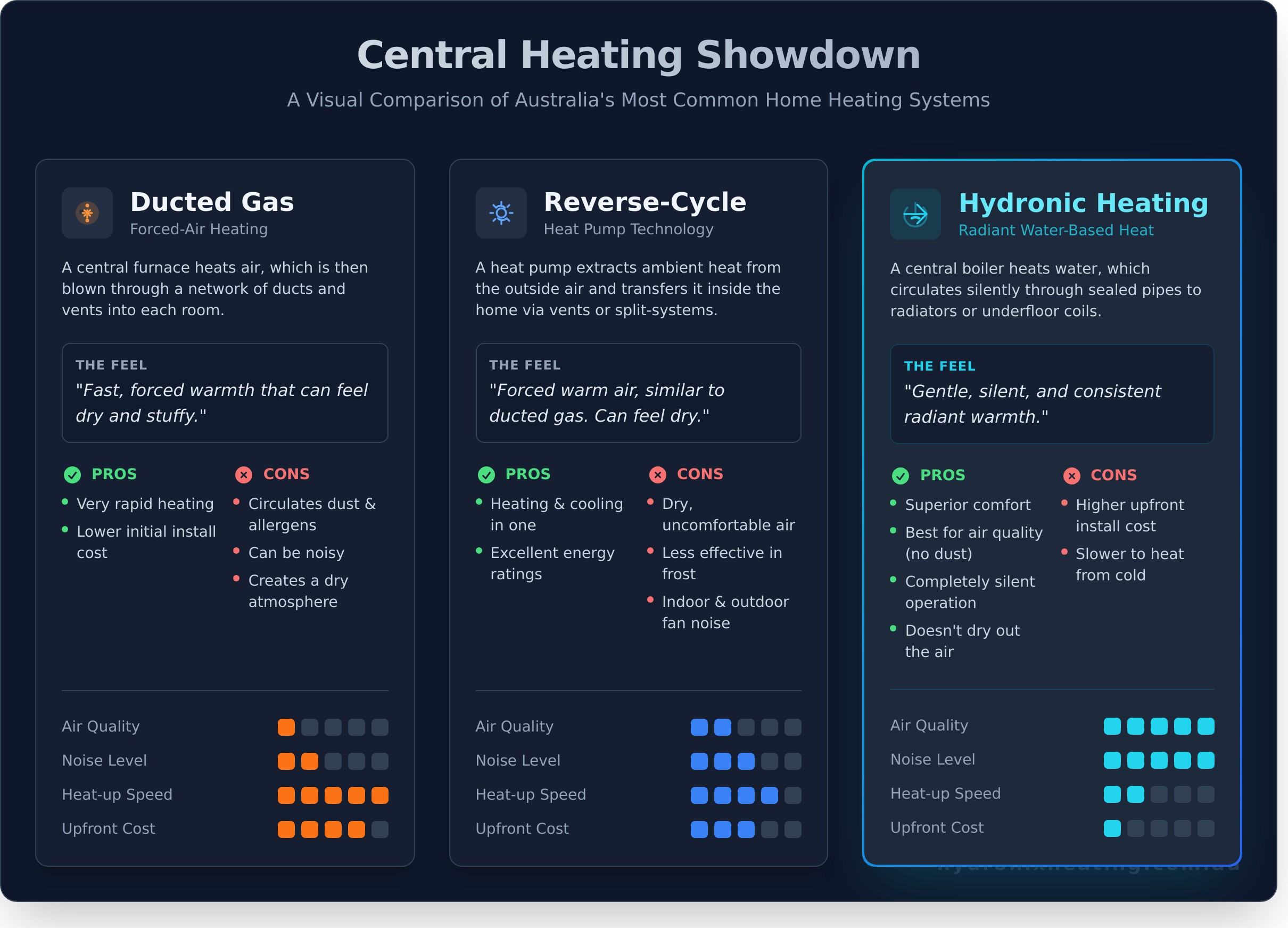
Here is a quick comparison of the three main systems:
1. Ducted Gas Heating (Forced-Air)
A central gas furnace heats air, which is then pushed by a powerful fan through a network of ducts and vents into each room. It is a common choice for its rapid heating capabilities.
- Pros: Very fast to heat a home from cold and often has a lower initial installation cost compared to other systems.
- Cons: The forced-air system circulates dust, allergens, and other airborne particles, which can be a problem for respiratory health. It can also be noisy and produce a dry, stuffy atmosphere.
2. Reverse-Cycle Air Conditioning (Ducted or Split-System)
This popular system uses a heat pump to cleverly extract ambient heat from the outside air and transfer it inside. It can be installed as a whole-home ducted system or as individual wall-mounted split systems.
- Pros: Its greatest advantage is providing both efficient heating and cooling in one unit. Modern systems have excellent energy ratings.
- Cons: The forced air can feel dry and uncomfortable. Performance can also decline significantly in sub-zero temperatures, and both the indoor and outdoor units produce fan noise.
3. Hydronic Heating (Radiant Heat)
As hydronic heating specialists, we know this system offers unparalleled comfort. A central boiler heats water that circulates silently through sealed pipes to radiators, in-slab floor coils, or trench heaters, which then radiate warmth into the room.
- Pros: Delivers a gentle, superior radiant warmth that doesn’t dry the air. The system is completely silent and, because it doesn’t blow air, it is the best choice for air quality and those with asthma or allergies.
- Cons: The upfront installation cost is typically higher, and it takes longer to heat a room from a cold start compared to forced-air systems.
How to Choose the Right Central Heating for Your Home
Selecting a new heating system is a significant long-term investment in your home’s comfort and value. The best choice is not a one-size-fits-all solution; it depends entirely on your property, lifestyle, and priorities. To make a confident decision, it’s crucial to weigh the key factors that differentiate hydronic systems from other forms of central heating.
An expert assessment is the most reliable way to determine the ideal fit, but understanding these core differences will empower you to ask the right questions.
Factor 1: Comfort and Air Quality
The type of heat produced has a direct impact on your daily comfort. Hydronic systems use radiant heat, which warms objects and people directly for a gentle, consistent warmth, much like natural sunlight. In contrast, ducted systems use convective heat, pushing warm air through vents. This process can circulate dust, pollen, and other allergens, potentially aggravating asthma and allergies. Forced air can also dry out the air, leading to dry skin and irritation. Finally, hydronic radiators and underfloor systems operate in complete silence, whereas ducted systems produce ambient noise from fans and air movement.
Factor 2: Energy Efficiency and Running Costs
Long-term running costs are a critical consideration. While modern systems have high Energy Star ratings, their real-world efficiency varies. As noted in the Australian government guide to heating, factors like fuel source and system design play a major role. Gas-powered hydronic boilers are typically very efficient, and because water retains heat far longer than air, the system cycles on and off less frequently, reducing energy consumption. It’s vital to remember that no system can be efficient without proper home insulation, which minimises heat loss and dramatically lowers running costs.
Factor 3: Your Home’s Characteristics
The structure and style of your home will influence which system is most practical.
- New Builds vs. Retrofitting: Installing hydronic pipework or ductwork is simplest during a new build or major renovation. Retrofitting a hydronic system into an existing home is highly achievable, whereas installing new ducts can be invasive and sometimes impossible without significant structural changes.
- Floor Plan: Hydronic systems excel at zoning, allowing you to control the temperature in individual rooms, making them ideal for homes with many separate spaces. Ducted systems are often effective in open-plan living areas.
- Aesthetics: Your design preference matters. Do you prefer the visible, classic appeal of modern radiators, or would you rather have discreet floor and ceiling vents? Hydronic heating also offers the completely invisible option of underfloor heating. This choice can influence furniture placement, and for those seeking pieces tailored to their space, custom makers like Chilli Pip can be an excellent resource.
Ultimately, consulting with a specialist is the most effective way to navigate these choices. For expert advice on hydronic solutions tailored to your property, a professional assessment will ensure your investment delivers reliable comfort for years to come.
Hydronic Heating: The Gold Standard in Comfort
While both systems provide warmth, they are not created equal. At Hydronix, we believe that hydronic heating offers a fundamentally superior experience. It’s the reason this method has been the trusted standard in Europe for generations and is rapidly becoming the preferred choice for discerning homeowners across Melbourne who prioritise comfort, health, and efficiency. This isn’t just another option; it’s a significant upgrade to your home’s environment.
Unmatched Radiant Warmth
The comfort from a hydronic system is unlike any other. Instead of blowing hot, dry air, it delivers gentle, radiant heat that feels like the natural warmth of the sun. The system works by circulating hot water through radiators, in-slab coils, or underfloor panels, which then heat the objects and surfaces in a room. This creates a consistent, enveloping warmth that doesn’t stratify or create cold spots. Best of all, it operates in complete silence, free from the disruptive noise of fans found in conventional central heating systems.
The Healthiest Way to Heat Your Home
One of the most significant benefits of hydronic heating is its positive impact on indoor air quality. Because the system relies on radiation and convection rather than forced air, it does not circulate common household irritants. This means:
- No dust mites being blown through vents.
- No circulation of pollen, pet dander, or mould spores.
- Air that retains its natural humidity, preventing the dry, stuffy feeling common with ducted heating.
This focus on a healthy, non-drying environment is crucial, as dry air can contribute to issues beyond simple discomfort, including skin and scalp problems. For specialist information on managing hair and scalp health that can be affected by environmental factors, click here.
This makes it the ideal heating solution for families with asthma, allergies, or other respiratory sensitivities, providing clean, gentle warmth you can trust.
Efficiency and Control
Water is a far more efficient medium for transferring heat than air. A hydronic system leverages this scientific fact to deliver exceptional performance while consuming less energy. The boiler heats water to a precise temperature, and that warmth is retained effectively as it moves through the sealed network of pipes. Furthermore, hydronic systems offer outstanding control. They can be easily ‘zoned,’ allowing you to set different temperatures for different areas of your home independently. Why heat empty bedrooms when you’re in the living area? This level of precision ensures you only use energy where and when you need it, reducing waste and lowering your utility bills.
To see if this premium approach to central heating is right for your home, we invite you to talk to a Hydronix expert. Our specialists can assess your needs and provide a clear, professional recommendation.
Experience Unmatched Comfort with the Right Central Heating
Choosing the right central heating system is a significant decision for any Australian homeowner. From common ducted air to the unparalleled radiant warmth of hydronic heating, understanding the differences is key to achieving consistent, cost-effective comfort. Making an informed choice ensures your home remains a warm sanctuary through even the coldest Melbourne winters.
When considering the gold standard of home comfort, it pays to partner with true specialists. At Hydronix Heating, hydronic systems are all we do. This singular focus means we provide reliable, expert service trusted by homeowners across Melbourne. Our unique ‘repair-first’ approach also ensures we work to find the most cost-effective solution, often fixing systems others would simply replace.
Think hydronic heating is the right choice for your home? Schedule a consultation with a Hydronix specialist and take the first step towards a warmer, more comfortable future.
Frequently Asked Questions
What is the average cost to install central heating in Melbourne?
The cost to install central heating varies significantly based on the system type and your home’s size. For a typical three-bedroom house in Melbourne, a gas ducted system can range from A$4,500 to A$8,000. A premium hydronic heating system is a larger investment, typically starting from A$12,000 and increasing with the number of radiators and complexity of the installation. For a precise quote, an expert assessment of your property is essential.
Can central heating be installed in an existing two-storey house?
Yes, central heating can be expertly retrofitted into most existing two-storey homes. While more complex than a single-storey installation, qualified technicians can strategically run ductwork or pipework through wall cavities, ceiling spaces, or discreet bulkheads. Careful planning is key to ensuring minimal disruption and an efficient system layout. It is a common project for experienced installers who can find effective solutions for any property.
Which type of central heating is the cheapest to run?
High-efficiency hydronic systems are generally considered one of the cheapest to run long-term. Water retains heat far better than air, meaning the boiler works less to maintain a consistent temperature, saving on energy bills. While modern high-star-rated gas ducted systems are also very efficient, hydronic heating’s radiant warmth often provides superior comfort at a lower running cost. The initial installation cost, however, is higher for hydronic systems.
How long does a central heating system typically last?
A well-maintained central heating system is a long-term investment. Gas ducted heaters typically last between 15 and 20 years. Hydronic systems are known for their exceptional durability; the boiler may need replacing after 15-20 years, but the pipework and radiators can last for over 30 years. The longevity of any system is directly linked to the quality of installation and commitment to regular professional servicing.
Does central heating require regular maintenance?
Absolutely. Annual maintenance is crucial for the safety, efficiency, and longevity of your central heating system. A professional service by a qualified technician ensures all components are clean and functioning correctly, preventing carbon monoxide leaks and inefficient performance. Regular servicing not only extends the life of your unit but also helps keep your energy bills down by ensuring the system runs at peak efficiency. It is a vital step in protecting your investment.
Is hydronic heating better than ducted heating?
Whether hydronic is “better” than ducted depends on your priorities. Hydronic heating provides a silent, gentle radiant heat that doesn’t circulate dust or allergens, making it ideal for those with asthma or allergies. Ducted heating, however, heats a home much faster and has a lower upfront installation cost. For many, the superior, dust-free comfort of hydronic warmth outweighs the initial investment, while others prefer the rapid heating and lower cost of ducted systems.