

When your heating stops working on a cold day, it’s easy to feel overwhelmed. You might find yourself frantically searching for ‘hydronic boiler boiler issues’ while worrying about confusing terminology and the potential cost of repairs. Is it a furnace or a boiler? What’s the difference, and who can you trust for honest advice? This uncertainty is often the most stressful part of a system breakdown, leaving you feeling powerless and cold.
As trusted hydronic heating specialists, we believe an informed homeowner is an empowered one. This comprehensive guide is designed to provide clarity and confidence. We will demystify your hydronic boiler, explaining exactly how it works, the different types available in Australian homes, and how to spot common problems. By the end, you’ll understand your system better and feel equipped to make the right decisions for reliable, efficient warmth, knowing when a simple fix is needed and when to call a professional.
The Heart of Your Home: What is a Hydronic Boiler and How Does It Work?
A hydronic boiler is the trusted engine of a water-based central heating system. Think of it as the heart of your home; instead of pumping blood, it pumps heated water through a network of pipes-the ‘veins’ of your property-to deliver consistent and silent warmth. Its primary function is remarkably efficient: to heat water to a precisely controlled temperature. This heated water is then circulated to radiators, in-floor heating coils, or hydronic wall panels, which radiate warmth into your living spaces.
This method stands in contrast to furnaces, which are common in many parts of the world. A furnace heats air and distributes it through ducts, a process known as forced-air heating. A hydronic boiler boiler system, however, heats water, providing a more gentle, radiant heat that doesn’t dry out the air or circulate dust. This fundamental difference is why hydronic heating is often considered a premium, more comfortable solution for Australian homes.
The Basic Working Principle Explained Simply
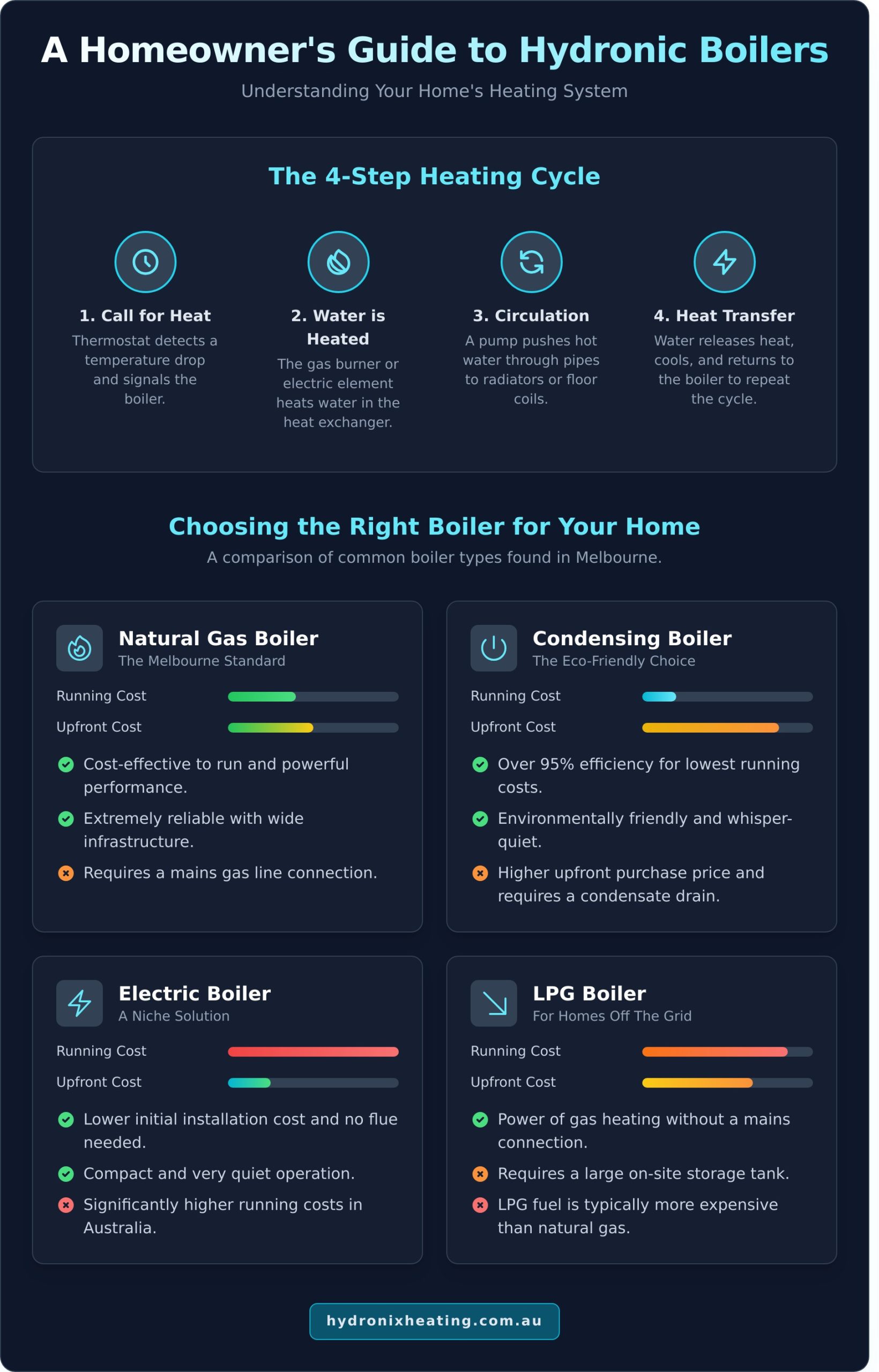
Understanding how your boiler operates is straightforward. The process follows a reliable, closed-loop cycle designed for maximum efficiency:
- Step 1: A Call for Heat. Your thermostat detects a drop in room temperature and sends a signal to the boiler to begin a heating cycle.
- Step 2: Heating the Water. The boiler’s gas burner or electric element activates, transferring thermal energy to the water contained within its heat exchanger.
- Step 3: Circulation. A circulator pump engages, pushing the newly heated water out of the boiler and through the pipes to your radiators or in-slab coils.
- Step 4: The Return Loop. As the water releases its heat into the rooms, it cools down and flows back to the boiler to be reheated, completing the circuit.
Key Components Inside Your Boiler
While it seems complex, your boiler is made up of several key components working in unison. For a technical overview of the device, you can explore the question of What is a Boiler? in more detail, but the essential parts you should know are:
- The Heat Exchanger: This is the core component where heat from the burner or element is efficiently transferred to the water.
- The Burner or Heating Element: The source of the heat. In Australia, this is most commonly a natural gas burner, but electric elements are also used.
- The Circulator Pump: A small, powerful pump responsible for moving the water through the entire hydronic circuit. Without it, the heat would stay in the boiler.
- Controls & Safeties: The ‘brain’ of the unit. This includes the thermostat interface, pressure gauges, and safety valves that ensure the system operates reliably and safely.
Types of Hydronic Boilers Found in Melbourne Homes
When selecting a hydronic heating boiler, the most significant factor is the fuel source. This choice directly impacts your system’s running costs, environmental footprint, and installation requirements. Your decision will depend on your home’s location in Melbourne, your budget, and your long-term efficiency goals. Understanding the difference between a standard and a high-efficiency boiler boiler is key to making a cost-effective investment for years to come.
Natural Gas Boilers: The Melbourne Standard
Thanks to Melbourne’s extensive natural gas infrastructure, this is the most common and often most practical choice for homeowners. These units are known for their reliability and power, providing consistent, comfortable heat.
- Pros: Highly cost-effective to run, powerful performance for larger homes, and extremely reliable.
- Cons: Requires a connection to the mains gas line and produces carbon emissions.
High-Efficiency Condensing Boilers
Condensing boilers represent the next generation of heating technology. They work by capturing additional heat from the flue gases that would otherwise be wasted, a process that significantly boosts their efficiency. Many modern ENERGY STAR certified boilers use this technology to achieve efficiency ratings of over 95%, translating directly into lower gas bills.
- Pros: Substantially lower running costs, more environmentally friendly, and whisper-quiet operation.
- Cons: Higher upfront purchase price and requires a condensate drain to be installed by an expert technician.
Electric Boilers: A Niche Solution
For properties where a gas connection is impossible or impractical, an electric boiler offers a viable alternative. They are compact and simpler to install, as they don’t require a flue to vent exhaust gases.
- Pros: Lower initial installation cost, very quiet operation, and no need for a flue or gas line.
- Cons: Significantly higher running costs due to current electricity prices in Australia, making them less economical for primary heating.
LPG (Liquefied Petroleum Gas) Boilers
LPG boilers provide a powerful gas-fired heating solution for homes located off the natural gas grid. They offer the same performance and reliability as a natural gas boiler, using fuel stored in a large tank on your property.
- Pros: Delivers the benefits and power of gas heating without a mains connection.
- Cons: Requires a large on-site storage tank and LPG fuel is typically more expensive than natural gas.
Common Boiler Problems: Signs You Need a Hydronix Expert
Your hydronic boiler is a sophisticated piece of equipment, central to the various Types of Heating Systems found in Australian homes. While built for reliability, no system is immune to issues. When problems arise, they require a licensed technician with specialised knowledge. At Hydronix, we operate with a repair-first philosophy-we have the expertise to fix complex systems that others might simply recommend replacing. Ignoring warning signs can lead to costly failures, so it’s crucial to address them promptly.
A malfunctioning boiler boiler unit often communicates through distinct signs. Understanding these can help you know when to call a professional. We’ve grouped the most common issues into three categories: noises, performance problems, and leaks.
Strange Noises: What Is Your Boiler Telling You?
Unusual sounds from your boiler are almost always a sign of an underlying issue. Listen for these specific noises:
- Kettling (rumbling or banging): This loud, disruptive noise is often caused by a buildup of limescale or sludge on the heat exchanger. This restricts water flow, causing it to overheat and boil, creating steam pockets that collapse violently.
- Gurgling: This sound suggests air is trapped somewhere in your hydronic system, often within the radiators or pipework. This can lead to inefficient heating and cold spots.
- Whistling: A high-pitched whistle can indicate low water pressure in the system, a blockage, or trapped air that is escaping through a small opening.
Performance Issues: Why Isn’t It Heating Properly?
If your home isn’t as warm as it should be, your boiler’s performance may be compromised. Common symptoms include:
- Radiators are cold at the top: This is a classic sign of trapped air preventing hot water from circulating fully. The radiator likely needs to be “bled” to release the air.
- Boiler keeps shutting off: Known as cycling, this can be caused by a faulty thermostat, incorrect water pressure, or a blockage preventing proper water circulation.
- No heat or hot water: Before calling an expert, perform two simple checks. For older models, see if the pilot light is out. For all systems, check the pressure gauge-if it’s too low, the boiler may not operate.
Leaks and Drips: When to Call for an Emergency Repair
Any water leak originating from the boiler unit itself is a serious issue that demands immediate attention. Water and electronics are a dangerous combination, and a leak indicates a component has failed. Common sources include a faulty pressure relief valve, worn-out pump seals, or corroded internal pipes. If you see a drip or puddle, you should shut off the water and power supply to the boiler and call a professional right away.
See any of these signs? Don’t wait for a complete breakdown. Schedule a boiler diagnostic service with Hydronix.
Boiler Maintenance vs. Repair vs. Replacement: Making the Smart Choice
Your hydronic boiler is the heart of your home’s warmth and comfort. To maximise its lifespan, efficiency, and overall value, it’s crucial for homeowners to understand the difference between routine maintenance, necessary repairs, and a full replacement. A proactive approach not only ensures reliable performance but also protects your long-term investment and prevents stressful, costly breakdowns.
Annual Servicing: The Most Important Investment in Your Heating
Think of an annual service as a preventative health check-up for your boiler. It is the single most effective way to avoid unexpected failures and expensive repairs. Our professional servicing is comprehensive and designed to keep your system in peak condition. A typical service includes:
- A thorough cleaning of internal components to ensure efficient heat transfer.
- Complete safety checks of all critical functions, including gas and water connections.
- Pressure adjustments and system balancing for optimal performance.
This simple step improves efficiency, extends your unit’s lifespan, and ensures it operates safely. We recommend booking your service in autumn to prepare your system before the winter peak.
The Hydronix Repair-First Philosophy
At Hydronix, we believe in fixing systems others are quick to replace. Too often, homeowners are pushed towards a complete replacement when a skilled, targeted repair is all that’s required. Our experts perform thorough diagnostics to pinpoint the root cause of any issue. A faulty boiler boiler system doesn’t automatically mean a costly replacement is your only option. With an extensive stock of spare parts for all major brands, we can often resolve the problem on the spot, saving you thousands of dollars and extending the life of your current unit.
When is it Time to Replace Your Boiler?
While we always prioritise repair, there are clear situations where a replacement is the most sensible and cost-effective long-term solution. Consider replacing your boiler if:
- It’s Over 15 Years Old: Boilers of this age are often significantly less efficient and more prone to failure, with parts becoming harder to source.
- The Repair Cost is Too High: If a single repair quote is 50% or more of the cost of a new, high-efficiency unit, investing in a new system makes more financial sense.
- You Want Higher Efficiency: Upgrading from an older standard boiler to a modern condensing model can reduce your heating bills by hundreds of dollars per year.
Unsure if you should repair or replace? Get an honest assessment from our experts. We provide clear, professional advice to help you make the smartest choice for your home.
Your Partner for Reliable Hydronic Heating in Melbourne
Your hydronic boiler is more than just an appliance; it’s the engine of your home’s comfort, providing consistent, radiant warmth. Understanding how your system works, the different types of boilers available, and the common signs of trouble empowers you to take proactive steps. Making the right call between a simple repair, routine maintenance, or a full replacement is crucial for both your comfort and your budget. When you need clear, expert advice on your hydronic boiler boiler, having a trusted specialist on your side makes all the difference.
At Hydronix Heating, hydronic systems are all we do. As Melbourne’s trusted specialists, our fully licensed and insured technicians bring unparalleled expertise to every job. We are committed to our ‘repair-first’ approach, meaning we exhaust every diagnostic and repair option to save you from the unnecessary cost of a replacement. We have the technical edge to fix the systems that others can’t.
We Know Hydronic Boilers. Schedule Your Service or Repair Today.
Trust your home’s warmth to the experts and enjoy reliable comfort all year round.
Frequently Asked Questions
How long should a hydronic heating boiler last?
A quality hydronic heating boiler, when properly installed and maintained, should last between 10 to 15 years. The lifespan depends heavily on the model, usage, and most importantly, the consistency of professional servicing. Annual maintenance by a hydronic heating specialist is the most effective way to identify minor issues before they become major problems, ensuring your system operates efficiently for years to come and extending the life of your investment.
How much does it cost to service a boiler in Melbourne?
In Melbourne, a standard hydronic boiler service typically costs between A$250 and A$450. This price generally includes a comprehensive inspection, cleaning of key components, safety checks, and an assessment of the system’s operational efficiency. The final cost can vary depending on the age and model of your boiler, as well as whether any specific repairs or replacement parts are required during the service call. Always choose a licensed and experienced technician.
Is it dangerous if my boiler’s pilot light goes out?
While a pilot light going out isn’t immediately dangerous, it does require professional attention. Modern boilers are equipped with a safety device called a thermocouple, which automatically shuts off the gas supply if the flame is extinguished, preventing a gas leak. However, you should never attempt to relight a pilot light if you smell gas. If the pilot light repeatedly goes out, it indicates an underlying fault that needs diagnosis by a qualified gas fitter.
What is a combi boiler and are they used in Australia?
A combi (combination) boiler is a single, compact unit that provides both central heating and instant hot water, eliminating the need for a separate hot water storage cylinder. They are highly efficient as they only heat water when you need it. Combi boilers are increasingly popular in Australia, especially in apartments and homes where space is limited. Their efficiency and space-saving design make them an excellent choice for many modern Melbourne households.
Can I replace my old gas boiler with a more efficient model?
Yes, replacing an old, inefficient gas boiler is one of the best ways to improve your home’s energy efficiency and reduce heating bills. Modern condensing boilers can be over 90% efficient, a significant improvement on older models. Upgrading your old boiler boiler to a new high-efficiency unit requires a professional assessment to ensure it is correctly sized for your home and integrated properly with your existing hydronic system for optimal performance.
What does the pressure gauge on my boiler mean?
The pressure gauge on your boiler shows the water pressure within your sealed hydronic heating system. For most residential systems, the ideal pressure is between 1 and 1.5 bar when the system is cold. If the pressure drops too low (into the red zone), your heating may not work. If it’s too high, it can put stress on the system. Consistently low or high pressure indicates a problem, such as a leak or a faulty component, that requires expert diagnosis.