
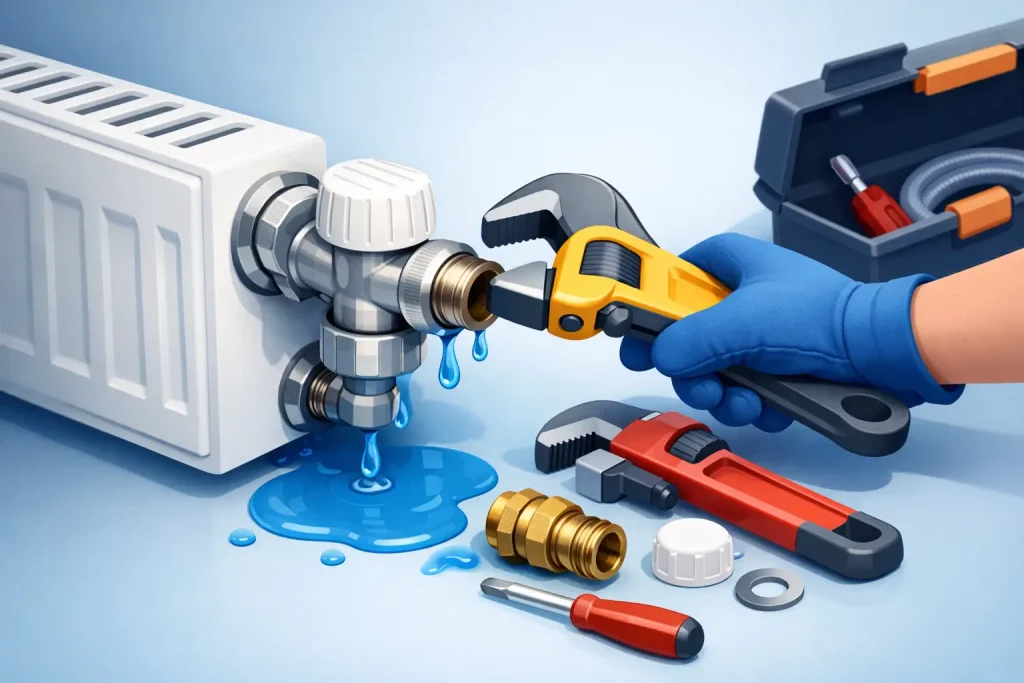
A leaking radiator valve rarely stays a small problem for long. What starts as a damp patch near the valve body or a slow drip onto the floor can turn into pressure loss, cold radiators, stained finishes and unnecessary stress when you need reliable heat most. A proper radiator valve leaking repair service is not just about stopping visible water – it is about finding the exact fault, protecting the rest of the system and restoring dependable performance without pushing you towards replacement that may not be needed.
In hydronic heating, the valve is a working part of a wider system. It controls flow, helps balance heat output and needs to seal correctly under pressure. When it leaks, the cause is not always obvious from the outside. A small weep from the spindle, a failed gland packing, corrosion around the union, movement in ageing pipework or wear inside a thermostatic head connection can all present differently. Treating them as the same problem is where rushed repair jobs go wrong.
What a radiator valve leaking repair service should actually cover
A specialist approach starts with diagnosis, not guesswork. The first job is to identify where the leak is coming from and whether the valve itself is the fault or simply the point where the issue is visible. In some homes, the leak is isolated to a valve seal. In others, the valve has been stressed by pipe misalignment, previous poor installation or system pressure issues.
That matters because the right repair depends on the condition of the full assembly. Tightening a connection might stop a drip temporarily, but if the olive has failed or the valve body is cracked, the leak will return. Replacing a whole radiator because of a minor valve fault is equally unnecessary in many cases. The sensible route is repair first, replacement only when the part condition genuinely demands it.
A thorough service should check the valve body, unions, tails, spindle area, lockshield, thermostatic head connection and nearby pipework. It should also look at the radiator itself, because leaks are sometimes misdiagnosed when water tracks along surfaces and appears in the wrong place. Clean diagnosis saves time and avoids paying for the wrong fix.
Common causes of radiator valve leaks
Most radiator valve leaks fall into a handful of categories, but the repair can vary significantly depending on age and system type. Older valves often leak from worn seals or corrosion around threaded joints. Thermostatic radiator valves can develop faults where moving components wear or stick. Compression fittings may begin to weep after years of thermal expansion and contraction, especially if the original installation was under strain.
There is also the question of material compatibility and previous workmanship. We regularly see valves fitted with limited regard for access, alignment or future servicing. In higher-end homes, that can be especially frustrating because leaks risk damaging timber floors, skirting, cabinetry and decorative finishes long before the heating performance itself becomes the main concern.
Sometimes the valve is serviceable and a targeted repair is the right answer. Sometimes replacement of that individual valve is the most reliable option. It depends on the condition of the part, the availability of compatible components and whether the surrounding pipework is sound. What should not happen is a blanket recommendation to replace far more of the system than necessary.
Why fast repair matters
A radiator valve leak affects more than the room where you can see it. Even a minor leak can lower system pressure over time, introduce air into the circuit and leave radiators partially cold. If topping up becomes routine, the system is no longer operating as it should. Repeated refilling can also bring in fresh oxygenated water, which increases the risk of internal corrosion across the wider heating system.
That is why speed matters, but so does accuracy. Homeowners usually call when they want the water stopped and the warmth back on. That is fair enough. But the best outcome is not a rushed patch. It is a proper onsite repair that deals with the immediate leak and helps prevent the next failure.
For busy households, the quality of the service experience matters too. A good contractor arrives prepared, protects the work area, explains what has failed in plain English and carries the parts needed to complete common repairs on the first visit. That reduces downtime and avoids the drawn-out process of multiple appointments for what should have been a straightforward repair.
Radiator valve leaking repair service for hydronic systems
Hydronic systems are not generic plumbing. The way a radiator valve performs is tied to circulation, boiler operation, balancing and overall system pressure. That is why a specialist repair service is the safer choice, particularly in homes with older European-style radiators, concealed pipe runs or premium finishes where mistakes are costly.
A specialist will know when the valve fault is isolated and when it points to a bigger issue. For example, if multiple valves are corroding, that may suggest water quality problems, system age or poor previous maintenance. If one radiator never heats correctly and the valve is leaking, the system may also need balancing or air removal once the repair is complete. The leak is the urgent symptom, but not always the full story.
This is where repair-first thinking makes a difference. Hydronix focuses on diagnosing what has failed, carrying out the repair properly and preserving the rest of the system where possible. That approach protects your budget and usually gets heat restored faster than a broad replacement recommendation.
What to expect during the repair visit
The process should be clear from the start. First comes inspection and confirmation of the leak source. If the valve or its connections are the issue, the affected section is isolated and the pressure managed safely before work begins. Depending on the fault, the repair may involve resealing, tightening and remaking a joint, replacing a failed valve component or fitting a new compatible valve where repair is no longer reliable.
After the physical repair, the system should be repressurised, vented if needed and checked under operating conditions. That last part matters. A valve can appear dry when cold and then weep again once the system is hot and circulating. Proper testing helps avoid call-backs and gives the homeowner confidence that the job is actually complete.
You should also expect honest advice if the leak has caused secondary issues. Damp skirting, swelling floor finishes or signs of repeated pressure loss are worth addressing early. A good service visit does not overstate the damage, but it does not ignore it either.
When repair is better than replacement
Many leaking radiator valves can be repaired or replaced individually without major disruption. That is usually the right path when the rest of the radiator is sound and the wider system is operating well. It keeps costs controlled and avoids unnecessary work.
Full radiator replacement may make sense if the radiator itself is corroded, the valve connections are incompatible with a reliable repair, or previous alterations have left the setup poorly configured. Even then, the decision should come from evidence, not assumption. Homeowners deserve to know why a repair will or will not hold, and what the practical options are.
This is especially relevant in established homes across Melbourne where hydronic systems may include mixed-age components. One leaking valve does not automatically mean the whole system is at end of life. Equally, one repaired leak does not mean the system should be ignored for another decade. Good advice sits in the middle – fix what is failing now, then plan sensibly for maintenance or upgrades if needed.
Choosing the right contractor
If you are booking a radiator valve leaking repair service, look for a contractor who works on hydronic heating day in, day out. Specialist knowledge matters, but so does service discipline. You want clear communication, respect for your home, tidy workmanship and a technician who arrives ready to repair, not just inspect.
Parts availability is another practical point. Many delays happen because the contractor identifies the problem correctly but has to leave and return later with the valve or fitting required. For a family without reliable heating, that is more disruption than necessary. A service-led specialist with stocked common parts is far more likely to resolve the issue promptly.
The strongest sign of quality is usually simple: they explain the fault clearly, recommend the least invasive reliable fix and stand behind the workmanship. That is the standard worth looking for when water is on the floor and the heating cannot wait.
If your radiator valve is leaking, act early. Small drips have a habit of becoming expensive problems, while timely specialist repair is often straightforward, controlled and far less disruptive than people expect.