
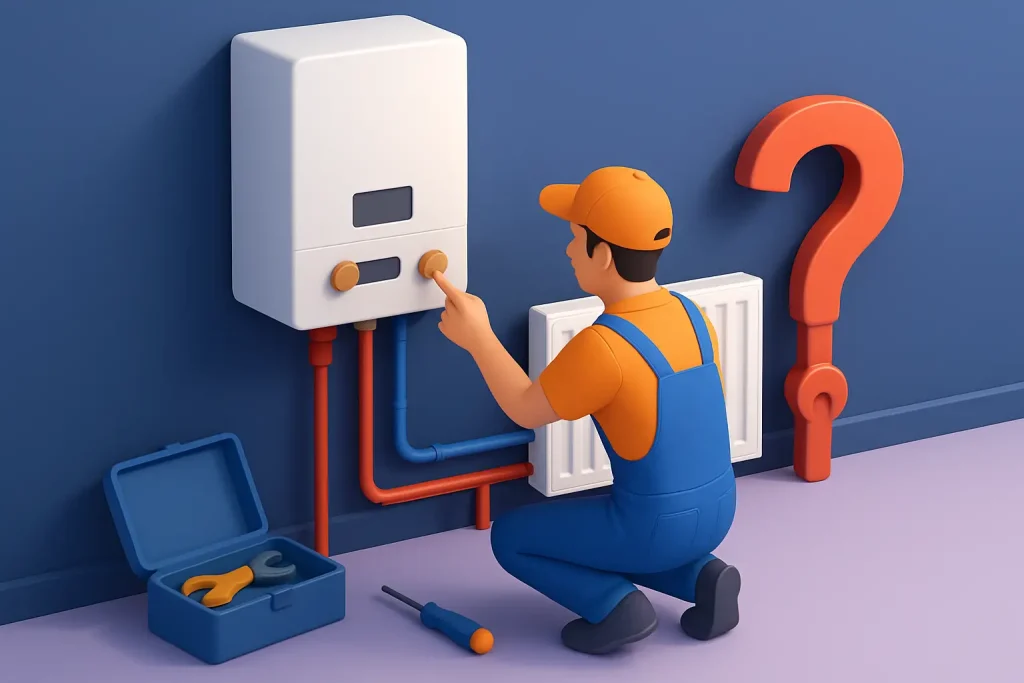
You notice it first in the morning: the floors are cold, the radiators are half-warm, and the boiler is making a noise you have never heard before. In Melbourne winter, hydronic heating does not fail politely – it fails when you need it most.
If you are searching for hydronic heating services Melbourne homeowners can rely on, the real question is not just who can attend quickly. It is who can diagnose accurately, fix on the spot where possible, and only recommend replacement when it is genuinely the best option for your home.
What “hydronic heating services Melbourne” should really include
Hydronic heating is a system, not a single appliance. A proper service provider treats it that way. That means looking beyond the boiler and checking the entire heat loop: water quality, circulation, pressure stability, controls, valves, emitters (radiators or underfloor), and any zoning.
The best outcomes come from a repair-first mindset with specialist-level troubleshooting. Many breakdowns are not “new system” problems – they are specific component failures, setup issues, or neglected maintenance that can be corrected without ripping out perfectly serviceable pipework and radiators.
In practical terms, hydronic services in Melbourne typically fall into five categories: diagnostics and repairs, leak and radiator work, preventative boiler servicing, full system design and installation, and upgrades to modern condensing boilers.
When you need a repair specialist, not a general plumber
A generalist can be excellent at many things, but hydronics is its own discipline. The symptoms can be deceptively similar even when the causes are different.
A cold radiator, for example, could be trapped air, a stuck valve, sludge restricting flow, a failed pump, incorrect balancing, low system pressure, or a control issue. Treating the symptom without finding the cause is how you end up paying for repeat call-outs.
Specialist hydronic repair is about narrowing it down quickly: confirming whether heat is being generated properly, whether it is being moved around the system effectively, and whether it is being delivered evenly throughout the home. That structured approach is what restores comfort fast – and keeps it stable.
Common faults Melbourne homes see in winter
In established homes across Greater Melbourne, we regularly see patterns. Boilers that short-cycle because of flow issues. Radiators that heat at the top but not the bottom due to sludge. Systems that lose pressure overnight because of a small but persistent leak. Underfloor zones that never quite reach temperature because of actuator or mixing valve problems.
None of these automatically mean “replace everything”. They mean diagnose properly.
Boiler repairs: what can be fixed quickly (and what cannot)
A quality hydronic contractor will aim to repair before replacing, but will be straight with you about limits.
Plenty of boiler issues are repairable in a single visit when the technician arrives prepared: failed ignition components, sensors, pumps, valves, pressure issues, blocked condensate lines (for condensing units), and control faults. Where time is often lost is waiting on parts, or guessing the fault and returning later.
On the other hand, if a heat exchanger has failed, or the boiler is so corroded that reliability is compromised, replacement may be the safer call. The point is not to “save” an old boiler at all costs. The point is to protect you from unnecessary replacement when the real fix is smaller, cheaper, and can be done cleanly.
Radiator, valve and leak fixes that protect the rest of the system
Leaks are not just a nuisance. In hydronic heating, a small leak can lead to repeated pressure drops, air ingress, corrosion, noisy operation, and poor circulation. Left long enough, it can shorten the life of pumps, valves, and the boiler itself.
Radiator issues are similar. A single stuck or partially closed valve can unbalance a system so the rooms closest to the boiler cook while the back bedrooms stay cold. You do not fix that by turning the thermostat up. You fix it by restoring flow control and balancing properly.
A thorough hydronic service will typically involve isolating the fault, repairing or replacing the failed component, and then confirming the system is stable under operating temperature and pressure – not just “it feels warm now”.
Preventative boiler servicing: the cheapest way to avoid the cold-house call-out
Most hydronic failures do not come out of nowhere. They build.
A preventative service is not a box-ticking exercise. Done properly, it is a reliability check before winter load hits: confirming safe operation, checking combustion performance where relevant, inspecting key wear components, testing pressure control, checking pumps and expansion vessels, verifying that zoning and thermostats do what they are meant to, and looking for early signs of leaks or water quality issues.
It also gives you predictability. Busy households do not want surprise breakdowns, and they definitely do not want them during the first cold snap when every technician in Melbourne is booked out.
Upgrading to a condensing boiler: when it makes sense
If your system is older, an upgrade can be a smart move – but it depends on your priorities and the condition of the existing setup.
Condensing boilers are designed to extract more heat from the combustion process, improving efficiency compared with many older non-condensing models. Over time, that can reduce running costs and improve temperature consistency, especially when paired with good controls and proper system setup.
However, upgrades work best when the system around the boiler is also treated with respect. A new boiler installed onto a sludged-up system with poor balancing is a recipe for disappointment. If you are considering an upgrade, expect a specialist to discuss water quality, filtration, controls, zoning, and whether your emitters are matched to the boiler’s operating characteristics.
Installation and design: the difference between “works” and “works beautifully”
Hydronic heating can be brilliant in Melbourne homes because it delivers even, comfortable warmth without blasting air around the house. But the comfort you get is directly tied to design decisions.
Good design considers heat loss room by room, radiator sizing or underfloor spacing, zoning for how you actually use the home, pipe sizing, pump selection, and control strategy. It also considers serviceability: can a technician access the critical components without ripping out cabinetry, and are isolation points installed so future repairs do not become major disruptions?
If you are renovating or building, involving a hydronic specialist early avoids awkward compromises later. It is much easier to create a neat plant area and sensible pipe routes at design stage than to patch solutions in after the fact.
A straightforward “how it works” for onsite hydronic service
Homeowners do not want drama. They want heat back, clear options, and tidy work.
A specialist process should feel simple. You book an onsite appointment. The technician arrives on time, protects floors where needed, and runs a structured diagnostic rather than swapping parts at random. You get an explanation in plain language: what failed, why it likely failed, what is required to fix it, and what can be done today.
From there, the best providers prioritise first-visit completion by carrying common parts and being equipped for real repairs, not just inspection. If the job is larger – such as a boiler upgrade or a full system install – you should receive a clear plan that sets expectations around scope, timing, and warranty.
Questions to ask before you book hydronic heating services in Melbourne
Most people only call a hydronic contractor when something has gone wrong, so it helps to ask a few protective questions upfront.
Ask whether hydronic systems are a core specialty or an occasional add-on. Ask whether they aim to repair first and what their approach is when parts are required. Ask what warranty applies to workmanship. And ask whether they can service and repair across the whole system, not just the boiler, because many comfort problems live in the distribution side.
If you want a benchmark for what specialist, repair-first service looks like, Hydronix positions hydronics as their only focus, with fast diagnostics, on-hand parts for first-visit repairs where possible, and a six-year workmanship guarantee for homeowners who want accountability.
The trade-offs: speed, cost, and long-term reliability
It is tempting to make the decision purely on who can come the soonest or who offers the lowest price. But with hydronic heating, the cheapest short-term option can become the most expensive if it leads to repeat failures.
A fast call-out that does not actually solve the root cause is not fast. And a replacement quote that skips proper diagnosis can mean spending thousands to mask a problem that was fixable.
The right balance is a provider who can respond quickly, diagnose decisively, and give you options with clear reasoning. Sometimes that means a same-day repair. Sometimes it means booking in a planned upgrade before the next winter. Either way, you should feel that the recommendation protects your home and your budget, not the other way around.
If your system is underperforming, do not wait for a complete breakdown to force your hand. The most comfortable Melbourne winters are the ones where your heating is quietly boring – and that starts with the right specialist looking after it.