A cold radiator in the middle of a Melbourne winter rarely starts as a small inconvenience. One room feels cooler than the rest, the boiler begins cycling oddly, or you notice pressure dropping for no obvious reason. By the time most people start searching for hydronic heating repairs in Melbourne, they are not looking for theory – they want the system diagnosed properly, repaired quickly, and put back into reliable service without being pushed into a full replacement.
That is where specialists like Hydronix come in. Hydronic heating is not a side service bolted onto general plumbing. It is a system of interdependent parts – boiler, pumps, valves, controls, pipework, radiators or in-slab circuits – and faults often sit behind the symptom you can see. A radiator that stays cold may not be a radiator problem at all. A leaking valve may be the result of pressure instability elsewhere. Good repair work starts with finding the actual cause, not changing random parts and hoping for the best.
Why hydronic heating repairs in Melbourne need a specialist like Hydronix
Melbourne homes with hydronic systems are often established properties, renovated family homes, and higher-end builds where comfort, quiet operation and finish quality matter. These systems are designed to deliver even, gentle heat. When they stop doing that, homeowners need more than a generic callout.
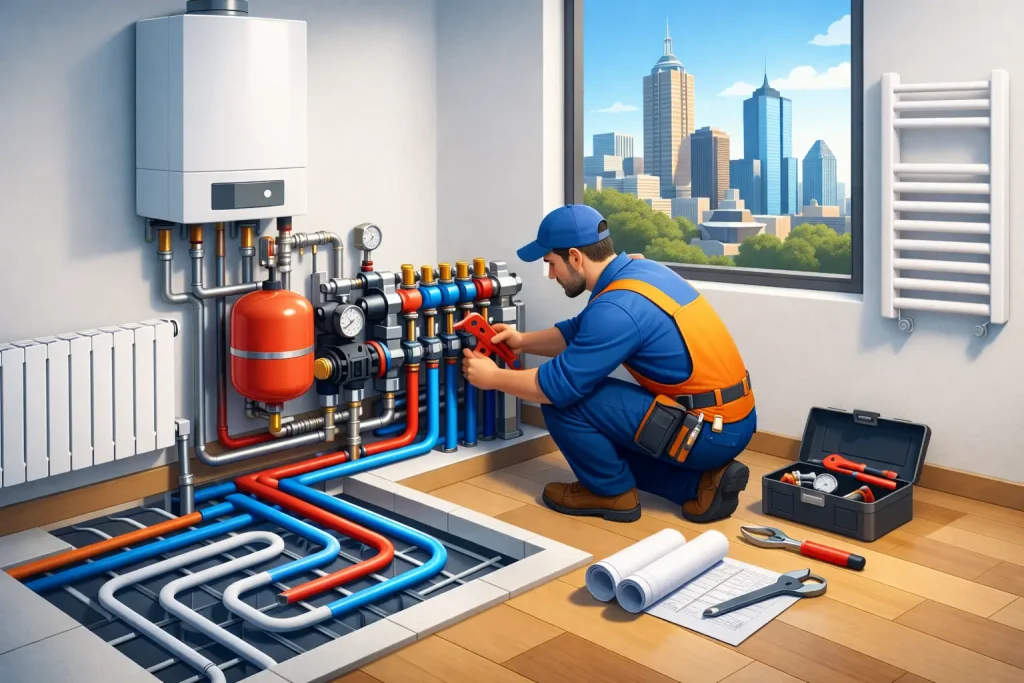
A specialist understands how older and newer hydronic setups behave under fault conditions. That includes conventional boilers, modern condensing boilers, radiator circuits, underfloor hydronic heating, zoning controls and mixed-temperature systems. It also means arriving prepared. When a contractor carries the common pumps, valves, sensors, ignition components and control parts needed for likely failures, repairs can often be completed on the first visit instead of dragging into multiple appointments.
There is also a financial reason to use a repair-focused contractor. Too many systems are written off before they are properly assessed. Sometimes replacement is the right answer, especially when a boiler is at the end of its life, unsupported, or inefficient enough to justify an upgrade. But often the real fix is a targeted repair, a control adjustment, or replacement of one failed component. The difference between those paths can be substantial.
The faults homeowners see most often
Most hydronic breakdowns do not begin with a dramatic failure. They begin with underperformance. The house takes longer to warm up. One radiator never seems as hot as the others. The boiler resets itself. You hear gurgling, ticking, or unusual pump noise. Those early signs matter because they often point to a repair that is still straightforward.
Boiler faults are among the most common callouts. Ignition problems, pressure loss, sensor issues, failed pumps, expansion vessel faults and worn valves can all leave a system unreliable or completely down. In many cases, the boiler is not beyond repair – it simply needs a proper diagnostic process from someone who works on hydronic systems every day.
Cold radiators are another frequent issue. Air in the system is one possibility, but not the only one. Sludge build-up, balancing problems, faulty thermostatic valves, circulation issues or control faults can all cause patchy heat. A quick bleed might improve things temporarily, but if the underlying cause is missed, the problem returns.
Leaks need careful handling. Some are obvious, such as water around a radiator valve or beneath the boiler. Others are slower and harder to spot, showing up first as regular pressure drops or minor staining. The right response depends on the source. A leaking union, valve gland, auto air vent, pump body or heat exchanger each calls for a different repair approach.
Repair first, replace only when it makes sense
A professional repair service should protect the homeowner from unnecessary cost, not create it. That means being clear about what is repairable, what is not, and where the long-term value sits.
If a boiler has a good-quality heat exchanger, available spare parts and a fault isolated to one or two serviceable components, repair is usually the sensible route. If the system itself is fundamentally sound, restoring reliable heat may be far more cost-effective than replacing major equipment.
On the other hand, there are cases where replacement deserves honest discussion. An ageing boiler with repeated faults, poor efficiency and declining parts support may no longer be the best investment. The same applies where an upgrade to modern condensing technology will materially improve running costs and comfort control. The point is not to replace by default. The point is to diagnose first, then advise based on the condition of the system in front of you.
That repair-first mindset is a major reason homeowners choose a hydronic specialist. The best result is not the biggest invoice. It is a stable system, dependable heat and a recommendation you can trust.
What a proper repair process looks like
Good hydronic repairs are structured, not improvised. The first step is onsite diagnosis. That means checking boiler operation, fault codes, system pressure, pump performance, controls, flow and return temperatures, radiator performance and visible pipework condition. If there is a leak, the source needs to be confirmed rather than guessed.
Once the fault is identified, the repair should be explained in plain terms. Homeowners do not need a lecture on heating engineering. They need to know what has failed, why it matters, whether it can be fixed immediately, and what the likely outcome will be.
Where parts are stocked on the vehicle, the work can often be completed there and then. That matters in winter, especially for households with children, older family members or anyone working from home who cannot wait days for heat to be restored. It also reduces disruption. A single well-managed visit is better than a drawn-out sequence of inspections and return trips.
Just as important is how the work is carried out. In established homes and finished interiors, tidy workmanship is not a bonus – it is expected. Respect for the home, clean work practices and clear communication are part of premium service, particularly when dealing with heating systems that often run through living spaces, hallways and bedrooms.
When servicing prevents bigger repairs
Many repair callouts could have been avoided with routine servicing. Boilers benefit from preventative maintenance for the same reason any hard-working mechanical system does: parts wear, settings drift, seals age, and minor performance issues become major failures if ignored.
Servicing is not just about keeping a warranty valid or ticking a compliance box. It is about catching the small faults before they turn into no-heat emergencies. A routine service can identify declining pressure stability, blocked condensate components, tired pumps, combustion issues, control faults and early leaks before they interrupt the whole system.
For Melbourne homeowners who rely on hydronic heating through the colder months, preventative maintenance is often the difference between a planned visit in autumn and an urgent breakdown in July. It also provides a clearer picture of whether the system is worth maintaining as-is or whether an upgrade should be planned rather than forced by failure.
Choosing the right contractor for hydronic heating repairs in Melbourne
The safest choice is a contractor whose work is centred on hydronic systems, not one who treats them as occasional side jobs. Ask yourself a few practical questions. Do they diagnose before recommending replacement? Do they carry parts for common failures? Can they explain the issue clearly? Are they set up to service, repair and, if needed, upgrade the system properly?
It is also worth paying attention to accountability. Insurance, recognised supplier relationships and a workmanship guarantee all matter because they reflect how seriously a contractor takes the work after the invoice is paid. Confidence is easy to claim. Backing repairs with a long workmanship guarantee is harder – and more meaningful.
For homeowners who value speed, cleanliness and certainty, specialist support matters. Hydronic systems are all one company like Hydronix does, and that focus changes the outcome. Faster diagnostics, better repair decisions and fewer unnecessary replacements are not marketing lines – they are what happens when the person attending actually knows the system.
If your boiler is faulting, your radiators are running cold, or the pressure keeps dropping, the next step should be a proper diagnosis, not a guess. Good hydronic repair work restores more than heat. It gives you confidence that the system is safe, efficient and ready for the next cold snap. Contact Hydronix today!