

Choosing the right hydronic heater for your home can feel overwhelming. You hear terms like boilers, radiators, and underfloor systems, but what’s the real difference? Beyond the technical jargon, you’re likely wondering which option is the most efficient, how it will look in your space, and what it will cost. Getting clear, reliable answers is the first step toward making a confident decision for lasting comfort and value.
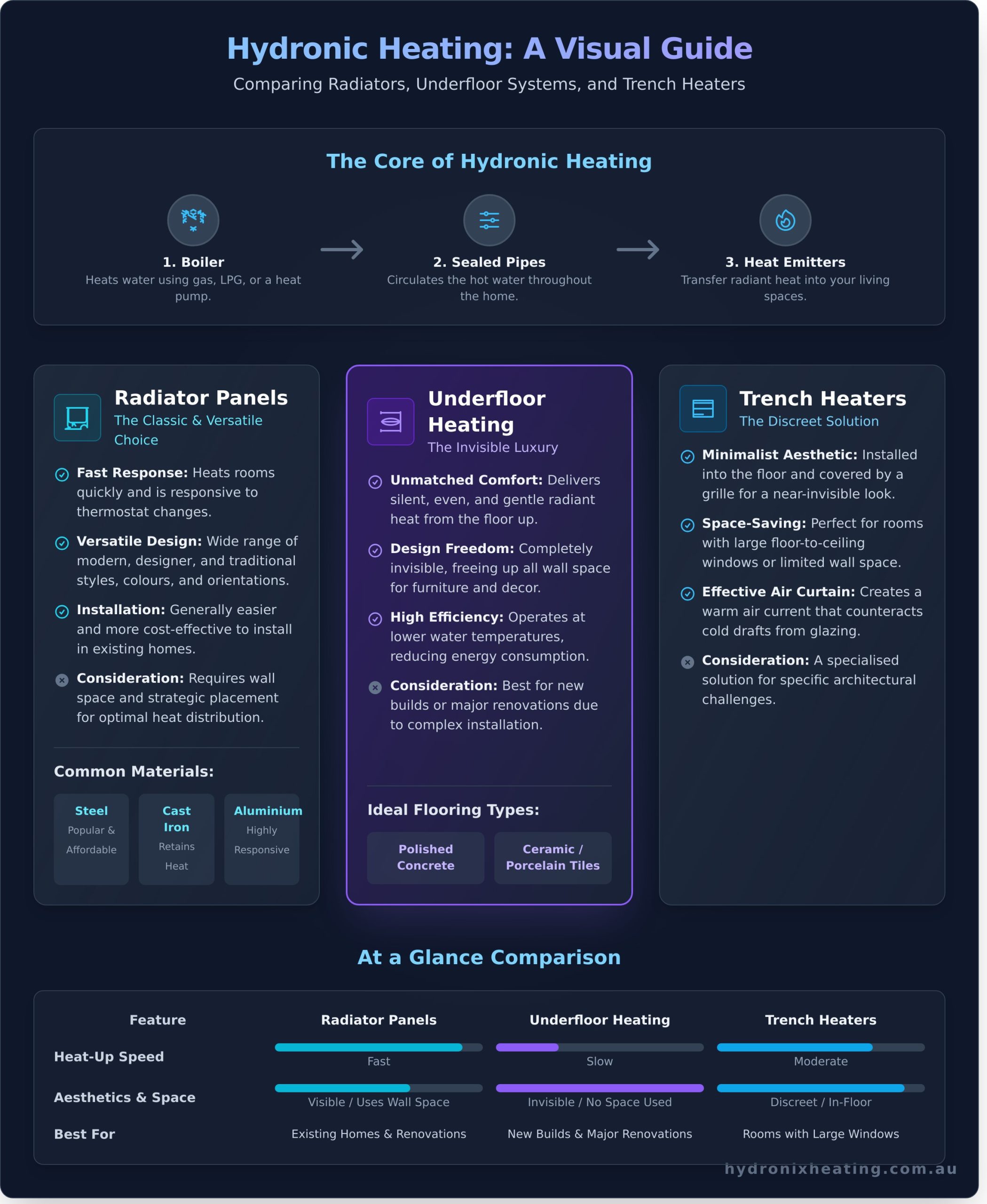
This expert guide is designed to provide those answers. We will demystify hydronic heating by breaking down the key differences between the three main types you’ll encounter: classic radiators, sleek designer panels, and invisible underfloor systems. We’ll explain how each one works, what’s involved in installation, and which provides the most comfortable and consistent warmth for your home.
By the end of this article, you will have a clear picture of the pros and cons, feel confident in selecting the right system for your home’s style and needs, and have the knowledge to invest in a truly efficient heating solution for years to come.
What is a Hydronic Heater? Understanding the Key Components
When homeowners discuss a hydronic heater, they are typically referring to the radiator panel or in-floor coil that delivers warmth into a room. However, this is just one part of a complete hydronic heating system-a highly efficient and reliable method for achieving comfortable indoor temperatures. The fundamental principle is simple: water is used to move thermal energy from where it’s created to where it’s needed. For a technical overview of the science, a great resource answers the question, What is hydronics? In practice, a central boiler heats water, which is then circulated through a sealed network of pipes to heat emitters located throughout your home.
Understanding the two primary components-the boiler and the heat emitters-is key to appreciating how this system works so effectively.
The Boiler: The Heart of Your System
Think of the boiler as the engine of your hydronic system. Its sole function is to heat the water that circulates through the pipes. In Australia, these units are most commonly powered by natural gas or LPG, though high-efficiency electric heat pumps are becoming a popular, energy-conscious alternative. The efficiency and reliability of your boiler directly impact your running costs and the overall performance of your heating, making it the most critical component to service and maintain.
Heat Emitters: Delivering Radiant Warmth
A heat emitter is any device that transfers the thermal energy from the hot water into your living space. Unlike forced-air systems that blow hot, dry air, hydronic systems provide gentle, radiant heat that warms objects and people directly for a more natural and silent comfort. This creates a consistent warmth without circulating dust and allergens. The primary types of heat emitters we work with include:
- Radiator Panels: The classic and most recognised option, available in a wide range of modern styles and sizes.
- Underfloor Heating Coils: A luxurious, invisible solution where pipes are laid beneath the floor, turning the entire surface into a gentle radiator.
- Trench Heaters: A discreet option installed in a ‘trench’ in the floor, ideal for rooms with large windows or limited wall space.
Radiator Panels: The Classic & Versatile Choice
When homeowners picture a hydronic heating system, the radiator panel is often the first thing that comes to mind. As the most recognisable type of hydronic heater, these units are the workhorses of the system. They are one of the five major components responsible for transferring warmth from the boiler into your room, offering a fast response time that heats spaces quickly and efficiently. Modern advancements mean today’s radiators are more versatile and stylish than ever before.
However, their effectiveness relies on correct selection and placement. Strategic positioning is key to creating natural convection currents that distribute warmth evenly, eliminating cold spots and maximising comfort.
Types of Radiator Materials
The material your radiator is made from directly impacts its performance and aesthetic. Each has distinct advantages:
- Steel Panels: The most popular choice in Australia, steel radiators offer an excellent balance of fast heat-up times and affordability. They are versatile, efficient, and available in a vast range of styles.
- Cast Iron: Known for their classic, traditional appearance, cast iron radiators take longer to heat up but retain warmth for an extended period. This provides a stable, gentle heat long after the boiler has switched off.
- Aluminium: As a superior conductor, aluminium is lightweight and highly responsive to thermostat changes. This makes it an energy-efficient option that heats a room rapidly.
Design, Style, and Sizing Considerations
Gone are the days of bulky, purely functional units. Modern radiators are design features in their own right, available in styles from traditional columns to sleek, flat designer panels. They can be customised with a wide array of colours and can be oriented vertically to save wall space or horizontally to fit under windows. A popular and practical option for bathrooms is the heated towel rail, a specialised radiator that provides ambient warmth while keeping towels dry and cosy.
Crucially, selecting the right size is a technical calculation, not a guess. Our specialists determine the correct output needed by assessing room dimensions, window sizes, and insulation levels to ensure your hydronic heater performs perfectly.
Underfloor Heating: The Invisible Luxury
Imagine a home where warmth radiates gently from the ground up, with no visible heaters or noisy fans. This is the reality of hydronic underfloor heating. It delivers a silent, even, and luxurious comfort that is unmatched by traditional heating methods. By eliminating the need for wall-mounted radiators, it frees up valuable space, giving you complete freedom in your interior design and furniture placement.
This system is highly efficient because it operates at lower water temperatures than radiators, reducing energy consumption. While it represents the pinnacle of home comfort, its installation is most practical and cost-effective during new builds or major renovations where floors are being replaced.
How Does Underfloor Heating Work?
At its core, the system consists of a network of durable pipes, or coils, laid out in a specific pattern beneath your floor surface. The central boiler of your hydronic heater warms water that circulates through these pipes, turning your entire floor into a large, gentle radiator. Installation typically follows one of two methods: ‘in-slab’ for new constructions where pipes are embedded in the structural concrete, or ‘in-screed’ where they are laid over an existing slab and covered with a thin layer of screed. For ultimate control, systems can be zoned, allowing you to set different temperatures in each room independently.
Best Flooring Types and Considerations
The performance of underfloor heating is directly influenced by your choice of flooring. Hard surfaces with high thermal conductivity are ideal, as they transfer heat quickly and efficiently into the room. These include:
- Polished concrete
- Ceramic or porcelain tiles
- Natural stone like slate or marble
While these are optimal, the system also works effectively with engineered timber and certain high-quality laminates. Even carpet can be used, provided it has a low tog rating to allow heat to pass through easily. Our specialists can advise on the best flooring to maximise your system’s efficiency.
Pros and Cons of Underfloor Systems
Like any heating solution, hydronic underfloor systems have distinct advantages and considerations. Understanding them is key to making an informed decision for your property.
Pros:
- Unmatched Comfort: Delivers gentle, radiant heat with no cold spots.
- Completely Invisible: Frees up wall space for a clean, minimalist aesthetic.
- Silent Operation: No fans or moving parts in the room means zero noise.
- Superior Efficiency: Runs at lower temperatures, reducing energy bills. This is a key benefit of a modern hydronic heater setup.
Cons:
- Slower Response Time: Takes longer to heat a room from cold and to cool down compared to radiators.
- Complex to Retrofit: Installation in an existing home is a major undertaking, often requiring floors to be raised or replaced.
The luxury and efficiency are undeniable, but the installation requires expert planning. Considering underfloor heating? Talk to our Melbourne specialists. We can assess your project and provide a reliable, professional solution.
Trench Heaters & Other Specialised Solutions
While traditional panel radiators and in-slab underfloor heating are the cornerstones of many hydronic systems, they aren’t always the perfect fit for every space. Modern Australian architecture, with its love for open-plan living, bi-fold doors, and vast expanses of glass, can present unique heating challenges. Limited wall space or the desire for a completely minimalist aesthetic may also rule out standard radiators. Fortunately, the inherent flexibility of hydronic technology provides specialised solutions to overcome these obstacles, ensuring efficient warmth without compromising your home’s design.
Trench Heaters: The Solution for Large Windows
Trench heaters are an elegant and powerful solution for rooms with floor-to-ceiling windows or sliding glass doors. Installed within a recessed “trench” in the floor and covered by a stylish grille, these units are practically invisible. Their primary function is to create a continuous curtain of warm air that rises directly in front of the glass. This thermal barrier effectively neutralises cold draughts, prevents condensation from forming, and stops heat from escaping through the glazing. The result is a consistently comfortable room where you can enjoy your views year-round, even on the coldest days.
Skirting Board Heaters: A Discreet Alternative
In rooms where every inch of wall is occupied by furniture, artwork, or built-in cabinetry, the skirting board hydronic heater is an exceptional choice. These slim, low-profile units are designed to replace standard skirting boards, integrating seamlessly with your interior decor. They operate by radiating gentle heat outwards from the base of the walls, warming the room evenly from the ground up. This method provides a comfortable, ambient warmth that eliminates cold spots around the perimeter, making them ideal for bedrooms, studies, or hallways with limited space.
These specialised options prove that hydronic heating is far more adaptable than many people realise. Whether you need to heat a grand living area with a wall of glass or find a subtle solution for a compact room, there is a hydronic solution designed for the task. The key is a professional assessment to identify the unique thermal dynamics of your space and recommend the most effective system. If your home presents a unique heating challenge, our specialists can design a reliable system tailored to your needs. Speak with the experts at Hydronix Heating to explore the full range of advanced solutions.
How to Choose the Right Hydronic Heater for Your Home
Selecting the perfect hydronic heater system isn’t a one-size-fits-all decision. The best choice depends entirely on your property, lifestyle, and budget. Key variables like your home’s insulation, room sizes, and even flooring type play a crucial role in determining the most effective and efficient solution. Beyond performance, you should also consider aesthetics and how different components will integrate with your interior design.
Often, the ideal setup isn’t about choosing one type over another, but creating a tailored combination that delivers optimal comfort throughout your home.
Key Decision Factors: A Quick Comparison
Understanding the core differences between the main types of hydronic heat emitters is the first step. Here’s a quick breakdown to guide your thinking:
- New Build vs. Retrofit: In-slab underfloor heating is significantly easier and more cost-effective to install during a new build or major renovation. Radiators and trench heaters are far more flexible for retrofitting into existing homes.
- Responsiveness: Panel radiators heat up and cool down quickly, offering on-demand warmth perfect for rooms you use intermittently. Underfloor systems have more thermal mass and provide a slower, constant heat.
- Efficiency: Because they operate at lower water temperatures, underfloor systems are generally the most energy-efficient option, potentially reducing running costs over the long term.
- Aesthetics: Underfloor heating is completely invisible, offering total design freedom. In contrast, modern radiators can be a deliberate and stylish design feature in any room.
Can You Mix Different Heater Types?
Absolutely. Combining different types of emitters is a common and highly effective strategy for creating a responsive and efficient hydronic heating system. This hybrid approach allows you to leverage the strengths of each component. For example, many Melbourne homes benefit from luxurious underfloor heating in the main living areas downstairs, combined with fast-acting radiators in the upstairs bedrooms for quick, targeted warmth. Adding heated towel rails in bathrooms provides comfort and functionality, supplementing any primary system.
Getting Expert Advice for Your Melbourne Home
The only way to guarantee a perfectly balanced and efficient system is with a professional assessment. An experienced technician can perform heat load calculations to ensure every hydronic heater is correctly sized and placed for optimal performance. At Hydronix, our deep expertise means we can recommend the most practical and cost-effective solution for your specific needs. Our repair-first philosophy ensures we provide honest advice focused on long-term value, not just a quick sale. Schedule a consultation with a Hydronix expert today.
Experience Unmatched Comfort with the Right Hydronic Heater
As you’ve discovered, hydronic heating provides a silent, efficient, and luxurious warmth unlike any other system. From the classic versatility of radiator panels to the invisible comfort of underfloor heating, the key is to match the system to your home’s unique needs and style. Choosing the perfect hydronic heater ensures you’ll enjoy consistent, allergen-free comfort for years to come.
At Hydronix Heating, we are Melbourne’s trusted hydronic heating specialists. Our expert, repair-first approach is designed to provide the most effective solution, often saving you money, while our six-year workmanship guarantee provides complete peace of mind. If you’re ready to invest in superior warmth and efficiency, our team is here to provide expert guidance.
We Know Hydronic Heating. Get a free quote for your Melbourne home.
Frequently Asked Questions About Hydronic Heating
Are hydronic heaters safe for children and pets?
Yes, hydronic heating is one of the safest options for homes with children and pets. The radiators warm to a controlled temperature that is hot to the touch but significantly less likely to cause instant burns compared to exposed elements on other heaters. Since the entire system is sealed and contains no open flames or electrical wiring in the panels, it provides reliable, gentle warmth without the risks associated with many conventional heating systems.
How much maintenance do hydronic heaters require?
A hydronic heater requires professional servicing once a year to ensure peak efficiency and safety. This annual check-up focuses on the boiler unit, which is the core of the system. Beyond this, the pipework and radiators are extremely durable and need minimal attention. Occasionally, radiators may need to be “bled” to release trapped air, a simple task that ensures the system continues to operate silently and effectively. Regular maintenance prevents costly breakdowns and extends system life.
Can a hydronic heater also cool my home?
A standard hydronic heating system is designed exclusively for warmth and cannot provide cooling. It works by circulating hot water to radiate heat. However, the same principles can be applied in a separate hydronic cooling system, which circulates chilled water through specialised panels or fan coil units. This requires a different type of installation and equipment, known as a heat pump or chiller, and is not a feature of a typical hydronic heating setup.
What is the average lifespan of a hydronic heating system?
Hydronic heating systems are a long-term investment known for their durability. With professional annual servicing, a quality boiler can be expected to last 15 to 20 years. The radiators and copper pipework are even more robust, often lasting well over 25 years without issue. This exceptional longevity is a key advantage, ensuring you have a reliable source of warmth for decades when the system is properly maintained by hydronic heating specialists.
Is hydronic heating more expensive than other heating types?
Initially, installing a hydronic heating system in Australia is typically more expensive than common alternatives like ducted gas or reverse-cycle air conditioning. The higher upfront cost is due to the boiler, specialised pipework, and individual radiator panels. However, this investment is often balanced by superior energy efficiency, which leads to significantly lower long-term running costs. Many homeowners find the radiant comfort and reduced energy bills justify the initial expense over the system’s long lifespan.
How noisy are hydronic heating systems?
Hydronic heating systems are renowned for being virtually silent. Unlike forced-air systems that create noise from fans and air moving through ducts, hydronic heating relies on natural convection and radiation. The only component that produces sound is the boiler, which is typically installed in a utility room, garage, or outside, away from main living areas. This ensures your home remains a quiet and peaceful environment while staying comfortably warm.