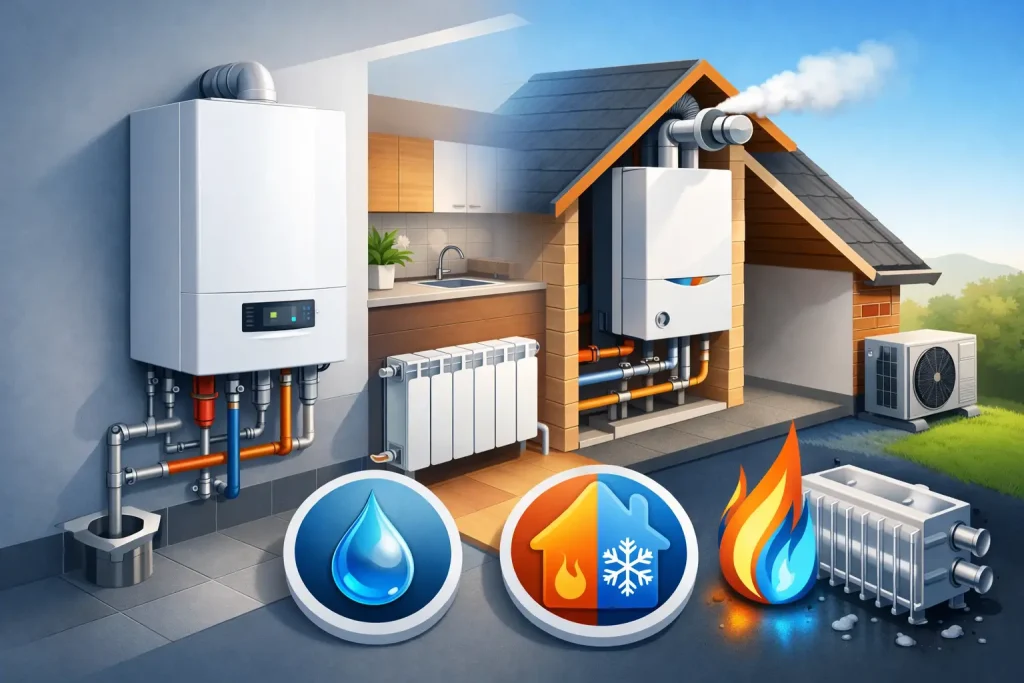
A boiler can look like a simple box on the wall, right up until winter exposes every weakness in the system around it. If you are trying to work out how to choose condensing boiler options for your home, the right answer is rarely the biggest unit, the cheapest quote, or the brand name you have heard most often. It is the boiler that matches your home, your radiators or underfloor circuits, your hot water demand, and the way the system is actually used day to day.
That matters because a condensing boiler only delivers its advertised efficiency when the system around it is set up properly. Get the selection wrong and you can end up with cycling, uneven room temperatures, noisy operation, poor hot water performance, and a boiler that wears out faster than it should.
How to choose a condensing boiler without overspending
Most homeowners start with efficiency ratings, and that makes sense. Condensing boilers are designed to recover more heat from the flue gases than older non-condensing models, which is why they can reduce running costs when installed correctly. But efficiency on paper is only one part of the decision.
The first question is whether you are replacing a failed boiler or upgrading the whole hydronic system. If the boiler has failed but the rest of the system is sound, a like-for-like replacement may be the sensible route. If radiators are undersized, pipework is poorly balanced, or leaks and sludge are already causing performance problems, a new boiler alone will not fix the wider issue. We see this often in older homes where the boiler gets blamed for faults that are really caused by neglected system components.
The second question is whether repair still makes more financial sense than replacement. A condensing boiler upgrade can be the right long-term move, but not every fault justifies a full changeover. On many systems, a specialist can restore reliable heating with targeted repairs, proper diagnostics, and the right parts on hand. Replacing a boiler too early is expensive. Replacing it too late can mean repeated breakdowns and rising petrol use. The decision should be based on condition, repair history, and system performance, not guesswork.
Start with the correct boiler size
Boiler size is not about the physical dimensions of the unit. It is about output, usually measured in kilowatts. This is where many poor decisions begin.
A boiler that is too small may struggle to keep up in colder weather, especially in larger or older properties with higher heat loss. A boiler that is too large can short cycle, meaning it turns on and off too frequently. That wastes energy, creates more wear on components, and often leads to inconsistent comfort.
The right size depends on the heat loss of the property, not just the number of bedrooms. Ceiling height, insulation levels, glazing, draughts, floor area, and emitter type all matter. A renovated Victorian terrace and a modern well-insulated home of the same footprint can need very different outputs.
For that reason, a proper heat loss calculation is far more reliable than rule-of-thumb sizing. If a contractor recommends a boiler without assessing the property and the system, be cautious. A specialist should look at the whole picture, including the existing radiators, pipework layout, and whether there is underfloor heating in any zones.
Match the boiler to your system design
Not every condensing boiler suits every hydronic layout. Some homes have panel radiators throughout. Others use a mix of radiators, towel rails, and underfloor heating. Each setup places different demands on temperatures, flow rates, and controls.
Condensing boilers perform best when return water temperatures are low enough for the unit to condense properly. Underfloor heating naturally helps with this because it runs at lower temperatures. Radiator systems can also work very efficiently, but only if the radiators are correctly sized and the system is balanced well.
If you are upgrading from an older high-temperature boiler, this is the point where proper advice matters. In some homes, keeping the existing radiators is completely viable. In others, selected radiator upgrades may be needed so the new boiler can run at lower temperatures without sacrificing comfort. That is not upselling. It is simply how you get the efficiency you are paying for.
How to choose condensing boiler features that matter
Boiler brochures can make every model sound impressive. In practice, a handful of features matter more than the long list of marketing claims.
Modulation range is one of the big ones. A boiler with a wide modulation range can turn its output down more effectively when the house needs less heat. That helps reduce cycling and improves efficiency across milder weather, not just on the coldest days.
Controls compatibility is just as important. Weather compensation, load compensation, zoning, and smart room controls can all improve performance when used properly. But controls should suit the house and the people living in it. Busy households usually want clear, predictable operation rather than an overcomplicated interface that nobody uses properly.
Build quality and parts support deserve close attention too. The best boiler on paper becomes a liability if spare parts are difficult to source or local support is weak. Reliability is not only about the badge on the casing. It is about whether the unit can be maintained properly over time and repaired quickly when needed.
Do not choose on boiler price alone
It is tempting to compare quotes by the figure at the bottom. That rarely tells the full story.
A lower-cost installation may exclude essential system work such as flushing, magnetic filtration, balancing, control upgrades, condensate routing adjustments, or flue changes. These are not minor extras. They directly affect how reliably and efficiently the new boiler will run.
It also matters who is carrying out the work. Hydronic heating is a specialist field. A generalist may be perfectly capable of hanging a boiler, but a condensing unit needs to be integrated into the wider system properly. Commissioning, flow settings, controls setup, and fault prevention all make a difference to real-world performance.
A better quote often includes better diagnostics, more thorough preparation, cleaner pipework practices, and a clearer plan for aftercare. That is usually the cheaper option over the life of the system.
Consider hot water demand and household habits
If your boiler also supports domestic hot water, your usage pattern matters. A home with one bathroom and modest hot water demand may suit a different setup from a family home with multiple bathrooms and peak-time demand in the mornings.
This is where the conversation should move beyond square metre figures. How many people live in the home? Are showers used back-to-back? Is there a preference for baths? Does the property already have a cylinder, and is it in good condition? Those details affect the right boiler and controls arrangement.
There is no single best answer. Some homes benefit from a compact, efficient setup. Others need a system designed around stronger hot water recovery and better distribution. The right choice is the one that delivers comfort without forcing the boiler to work harder than necessary.
Installation quality is as important as boiler brand
A well-chosen boiler can still disappoint if the installation is poor. Pipe sizing, water quality, air removal, inhibitor levels, condensate disposal, flue position, and system balancing all influence performance.
This is why a tidy, methodical installer matters. Good workmanship is not only about appearance. It reduces future faults, makes servicing easier, and protects the boiler from avoidable strain. In established and high-value homes, it also means respectful in-home conduct, clean working, and a clear process from diagnosis through to completion.
If you are comparing contractors, ask how they assess the existing system, what commissioning steps they include, and what happens if issues are uncovered during the job. The strongest answer is usually the most specific one.
When replacement is the right move
There are times when replacing the boiler is the clear call. If the heat exchanger has failed on an ageing unit, spare parts are no longer practical to source, or repeated repairs are stacking up across multiple components, replacement can protect you from escalating costs and winter downtime.
But the right contractor should still test that assumption rather than jump straight to a new appliance. Hydronic systems are all we do, and that specialist mindset matters because it separates a genuine end-of-life boiler from one that has simply been misdiagnosed.
A simple way to make the decision
If you want a practical route through the choice, focus on five things: accurate heat loss, compatibility with your emitters, a strong modulation range, reliable local parts support, and installation quality. Everything else follows from there.
A condensing boiler should not be chosen in isolation. It should be selected as part of a heating system that is meant to run quietly, evenly, and efficiently for years. If the advice you are getting feels rushed, brand-led, or based on rough guesses, pause there. The right boiler is not the one that sells fastest. It is the one that keeps your home warm without drama when you need it most.
The best next step is not to chase the broadest brochure or the lowest quote. It is to have the system assessed properly, so the boiler you choose fits the house, the heating layout, and the way your family actually lives.