

As gas bills continue to rise, many Melbourne homeowners are searching for a smarter, more sustainable way to enjoy the luxurious warmth of their hydronic system. You’ve likely heard the buzz around heat pumps, but may be wondering: How do they actually heat water? Are they effective in our changeable climate? And do the running cost savings justify the initial investment? These are the critical questions every homeowner should ask.
This guide provides the clear, expert answers you need. As specialists in our field, we will explain exactly how heat pump hydronic heating works to deliver exceptional energy efficiency and year-round comfort. We’ll cut through the jargon to give you a direct comparison against traditional gas boilers, outline the real-world benefits for Melbourne homes, and provide the trusted information you need to make a confident decision. Consider this your definitive resource for a more efficient future.
What Is Heat Pump Hydronic Heating? A Simple Explanation
At its core, heat pump hydronic heating is a remarkably efficient technology that uses electricity to move heat, not create it. Unlike traditional systems that burn gas to generate warmth, this system operates more like a refrigerator in reverse. While a fridge pushes heat out of its insulated box to keep things cool, a heat pump pulls residual warmth from the outside air and moves it inside your home.
This clever process makes it one of the most energy-efficient heating solutions available in Australia. The system is best understood as two distinct parts working in perfect harmony: the heat pump, which acts as the engine, and the hydronic circuit, which is the delivery network.
The Heat Pump: Capturing Warmth from the Air
The “engine” of the system is the outdoor unit, known as an air-source heat pump. This unit contains a special refrigerant that circulates in a continuous loop. Even on cold Melbourne days, there is ambient heat energy in the air. The refrigerant absorbs this low-temperature energy and is then passed through a compressor. This compression cycle dramatically increases its temperature. The science behind how air-source heat pumps work is a trusted application of thermodynamics, allowing the unit to extract and concentrate heat efficiently. This specialised process makes it far more than just an air conditioner running backwards; it is purpose-built for reliable heating.
The Hydronic System: Distributing Radiant Heat
Once the heat pump has generated high-temperature energy, it transfers it to the water within your home’s sealed hydronic system. This warm water is then circulated by a small, quiet pump through a network of pipes to either underfloor heating coils or sleek wall-mounted radiators. This is the same trusted delivery network that many gas boiler systems use. As the water flows through, it releases its warmth as gentle, comfortable radiant heat, warming objects and people in the room directly. The result is a consistent, silent, and deeply comfortable warmth without the dry, stuffy air associated with forced-air systems.
The Key Benefits: Why Choose a Heat Pump System?
Moving away from traditional gas boilers is a significant decision. For homeowners considering an upgrade, the long-term value of a heat pump hydronic heating system is built on three pillars: exceptional efficiency, tangible cost savings, and environmental responsibility. As specialists in hydronic systems, we see this technology as the definitive future of home comfort.
Unmatched Energy Efficiency
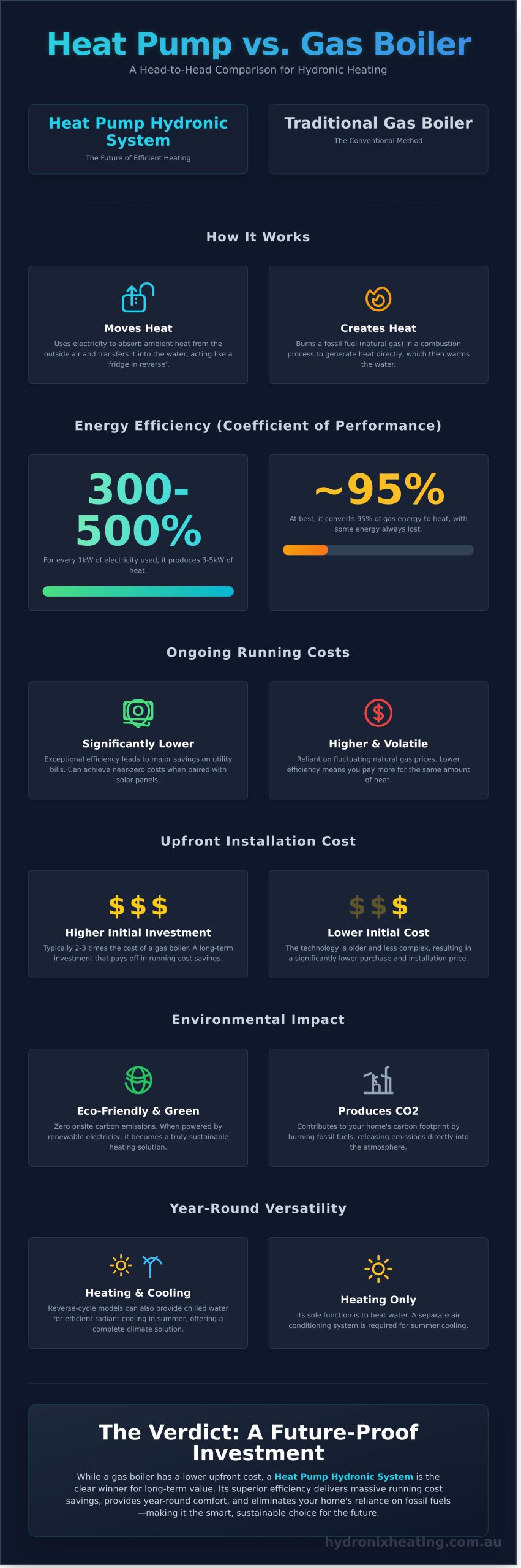
The single biggest advantage of a heat pump is its incredible efficiency. Unlike a gas boiler that burns fuel to create heat, a heat pump intelligently moves existing heat from the outside air into your home’s water circuit. This process is measured by a Coefficient of Performance (COP). In simple terms, for every 1kW of electricity a heat pump consumes, it can generate 3-5kW of thermal energy. This equates to an efficiency of 300-500%. When you compare this to a high-efficiency gas boiler, which maxes out at around 95% efficiency, the difference is clear. It’s a fundamental shift in how we heat our homes, and for those wanting to understand the mechanics, these government experts answer your questions on the technology in detail.
Significant Long-Term Running Cost Savings
Superior efficiency directly translates to lower energy consumption and smaller utility bills. While the initial investment may be higher than a traditional boiler, the ongoing savings on your power bills provide a strong return over the system’s lifespan. For homeowners with a solar PV system, the benefits are even greater. By powering your heat pump with self-generated, free electricity, you can achieve near-zero heating costs. This makes a heat pump a smart, future-proof investment, especially with regulations like the phasing out of gas in new Victorian homes.
Eco-Friendly and Sustainable
By choosing a heat pump for your hydronic system, you are making a powerful commitment to sustainability. Because these systems are all-electric, they eliminate onsite carbon emissions entirely, improving local air quality and reducing your home’s carbon footprint. This breaks the reliance on burning fossil fuels like natural gas. When your system is powered by electricity from renewable sources-either from the grid or your own solar panels-it becomes a genuinely green solution for keeping your family warm.
Versatility for Year-Round Comfort
Modern heat pump technology offers more than just winter warmth. Many advanced models are ‘reverse cycle’, meaning they can provide both heating and cooling. In summer, the system simply reverses its operation, extracting heat from inside your home and circulating chilled water through your underfloor pipes or radiators to deliver quiet, radiant cooling. This transforms your hydronic system into a complete, all-in-one climate solution for year-round comfort.
Heat Pump vs. Gas Boiler: A Head-to-Head Comparison
When upgrading or installing a new system, the decision often comes down to a traditional gas boiler versus a modern heat pump. As trusted specialists, we believe in providing a clear, expert comparison to help you make a confident choice. While gas has been the standard for decades, a heat pump hydronic heating system represents a significant leap forward in efficiency and sustainability.
Upfront Installation Cost
The most significant initial difference is the upfront cost. A heat pump requires a larger investment, with purchase and installation costs often two to three times higher than a conventional gas boiler. It’s essential to view this not as an expense, but as a long-term investment in your property. This initial outlay is for advanced technology that delivers substantial savings over the life of the system.
Ongoing Running Costs & Efficiency
This is where heat pumps win decisively. A heat pump doesn’t create heat by burning fuel; it efficiently moves ambient heat into your home, making it 300-400% more efficient than a gas boiler. With volatile gas prices, this efficiency translates into major long-term savings. The UK’s Energy Saving Trust highlights the financial benefits of air source heat pumps, which include significantly lower energy bills. For Australian homeowners with solar panels, the savings are even greater.
Environmental Impact
For environmentally conscious households, the choice is clear. Gas boilers burn fossil fuels, releasing CO2 directly into the atmosphere. A heat pump, by contrast, produces zero emissions at the point of use. When powered by a home solar array or a green electricity tariff, your hydronic heating can become entirely carbon-neutral, future-proofing your home and reducing its environmental footprint.
Performance in Cold Weather
It’s a common myth that heat pumps don’t work in the cold. Modern, high-quality units are engineered to perform effectively even during Melbourne’s coldest winter days. A gas boiler does have one advantage: its heat output is entirely independent of the outside air temperature. However, a correctly specified heat pump will provide reliable, consistent warmth throughout the typical Australian winter, making it a dependable choice for year-round comfort.
At a Glance: Heat Pump vs. Gas Boiler
- Upfront Cost:
- Heat Pump: Higher initial investment.
- Gas Boiler: Lower initial investment.
- Running Costs:
- Heat Pump: Very low, due to superior efficiency.
- Gas Boiler: Higher, and tied to volatile gas prices.
- Environmental Impact:
- Heat Pump: Zero local emissions. Can be carbon-neutral.
- Gas Boiler: Emits CO2 and other pollutants.
- Cold Weather Performance:
- Heat Pump: Excellent in Australian winters; efficiency reduces in extreme cold.
- Gas Boiler: Unaffected by outside temperature.
Is a Heat Pump System Right for Your Melbourne Home?
While the efficiency and environmental benefits are clear, the suitability of a heat pump hydronic heating system depends on your specific property. As Melbourne’s trusted specialists, we believe in providing honest, practical advice. Before you make a decision, it’s essential to consider a few key factors unique to your home.
Your Home’s Insulation
The performance of any hydronic system is directly linked to your home’s thermal efficiency. This is even more critical for heat pumps, which produce lower temperature water (typically 35-55°C) than traditional gas boilers. In a well-insulated home, this gentle, consistent warmth is highly effective. However, in a draughty or poorly insulated property, that heat can escape, forcing the system to work harder. We strongly recommend an insulation check before committing to an installation to ensure you get the best results.
Radiators vs. Underfloor Heating
The way you distribute heat is a major consideration. Heat pumps are an outstanding match for underfloor heating, as the large surface area of a concrete slab is perfect for the lower water temperatures they generate. They also pair exceptionally well with modern, oversized radiators designed for high efficiency. If you are retrofitting into a period home with older, undersized radiators, a careful assessment is needed to ensure they can adequately heat your space, or if an upgrade is required.
Space & Noise Considerations
A heat pump system includes an outdoor unit, similar in size to a standard air conditioner condenser. This unit requires a location with adequate airflow, clear of obstructions. Our technicians can help you find a discreet position that meets both performance needs and aesthetic preferences. As for noise, this is a common but often misplaced concern. Modern units are engineered for quiet operation, typically running at just 40-50 decibels-about the same as a quiet library or your kitchen fridge.
New Builds vs. Retrofitting
For new Melbourne homes being built to today’s 7-star energy standards, choosing heat pump hydronic heating is a logical, future-proof decision. The system can be designed for optimal performance from the ground up. Retrofitting this technology into an existing home is also highly achievable but demands expert planning. The system must be designed to work with your home’s unique layout, insulation, and existing heat emitters. Our specialists can assess your home’s suitability to design a reliable and efficient solution.
The Installation Process with Hydronix
Upgrading to a new heating system can feel like a daunting task. At Hydronix, we demystify the process with a clear, professional approach designed to give you complete peace of mind. A successful heat pump hydronic heating installation relies on precision and expertise, which is why it’s crucial to use a specialist. Hydronic systems are all we do, and our methodical process ensures your system is designed and installed for maximum efficiency and reliability from day one.
Step 1: Consultation and System Design
Our process begins with a detailed assessment of your home’s unique requirements. We don’t believe in one-size-fits-all solutions. Instead, our experts conduct precise heat load calculations to ensure every component, from the heat pump to the radiators or in-slab coils, is perfectly sized for your space. You will receive a comprehensive, transparent proposal outlining the entire system design, so you know exactly what to expect.
Step 2: Professional Installation
The installation is handled exclusively by our team of licensed and insured hydronic heating specialists. We manage every aspect of the project with meticulous care, including the precise placement of the outdoor heat pump unit, the expert connection of all internal pipework, and seamless integration with your chosen heat emitters. Throughout the process, we treat your home with respect, maintaining a clean and organised work site from start to finish.
Step 3: System Commissioning and Handover
Once the installation is complete, we conduct a rigorous commissioning process. This involves thoroughly testing and balancing the entire system to guarantee it operates at peak performance and efficiency. We then provide a complete handover, walking you through the new smart thermostat and controls to ensure you are comfortable and confident using your new system. For ultimate assurance, all our work is backed by a six-year workmanship guarantee.
Ready for a seamless transition to superior home comfort? Contact the Hydronix specialists to start designing your heat pump hydronic heating system today.
Partner with Melbourne’s Hydronic Heating Specialists
As we’ve explored, making the switch to a modern hydronic system is a smart investment in your home’s comfort and sustainability. These systems offer unparalleled energy efficiency, significantly reducing both your carbon footprint and your running costs-making them an ideal choice for Melbourne’s variable climate.
Choosing the right heat pump hydronic heating solution is crucial, and that’s where true expertise matters. At Hydronix, hydronic systems are all we do. We are not generalists; we are dedicated specialists focused on designing and installing the best long-term system for your home, backed by a comprehensive six-year workmanship guarantee for complete peace of mind.
Ready to experience reliable, year-round warmth and efficiency? Schedule a consultation with a Hydronix heating specialist today to discuss a tailored solution for your home and take the first step towards a more comfortable and sustainable future.
Frequently Asked Questions
How much maintenance does a heat pump hydronic system require?
A heat pump hydronic system is reliable but requires professional annual servicing to maintain peak efficiency and longevity. This routine check is similar to that of a traditional gas boiler. A qualified technician will inspect system pressure, clean filters, check refrigerant levels, and ensure all electrical components are functioning correctly. This preventative maintenance ensures your system operates effectively, preventing costly repairs and maximising its lifespan, giving you trusted warmth year after year.
How loud is a hydronic heat pump in operation?
Modern heat pumps are designed for quiet operation. The outdoor unit typically produces a sound level between 40 to 60 decibels, which is comparable to a quiet conversation or a modern refrigerator. The indoor components of a hydronic system are virtually silent. Proper installation by experienced specialists is crucial to minimise vibration and operational noise, ensuring your home’s comfort is not disturbed by the system’s operation. We ensure every installation is optimised for performance and quietness.
Are there any government rebates for installing a heat pump in Victoria?
Yes, Victorian homeowners can access significant government incentives. The Solar Homes Program, run by Solar Victoria, offers rebates for replacing old systems with energy-efficient heat pumps for both hot water and home heating. Additionally, the Victorian Energy Upgrades (VEU) program provides discounts through accredited providers. These programs can substantially reduce the upfront installation cost, making the switch more affordable. We recommend checking the official government websites for the latest eligibility criteria and rebate amounts.
What is the average lifespan of a heat pump compared to a gas boiler?
A high-quality heat pump, when properly installed and regularly maintained, has an average lifespan of 15 to 20 years. In comparison, a typical gas boiler generally lasts between 10 to 15 years. The longevity of any heat pump hydronic heating system is directly linked to the quality of the unit and the expertise of the installation and servicing. Investing in professional maintenance is the most effective way to ensure you get the maximum reliable service life from your system.
Can a heat pump also provide my home’s hot water?
Absolutely. Many modern heat pump systems are designed as integrated solutions that can manage both your home’s hydronic space heating and its domestic hot water supply. These all-in-one units are exceptionally efficient, as they use the same technology to heat water for your radiators or in-floor coils as they do for your taps and showers. This provides a streamlined, fully electric solution for year-round home comfort, helping to reduce your overall energy consumption and utility bills.
Will a heat pump work during a power outage?
No, a heat pump requires electricity to run its compressor, fans, and circulation pump. In this respect, it is the same as a modern gas boiler system, which also needs power for its electronic controls and pumps to function. If you live in an area with frequent power interruptions, pairing your heat pump with a solar panel and battery storage system can provide a reliable backup power source, ensuring your heating remains operational when the grid is down.