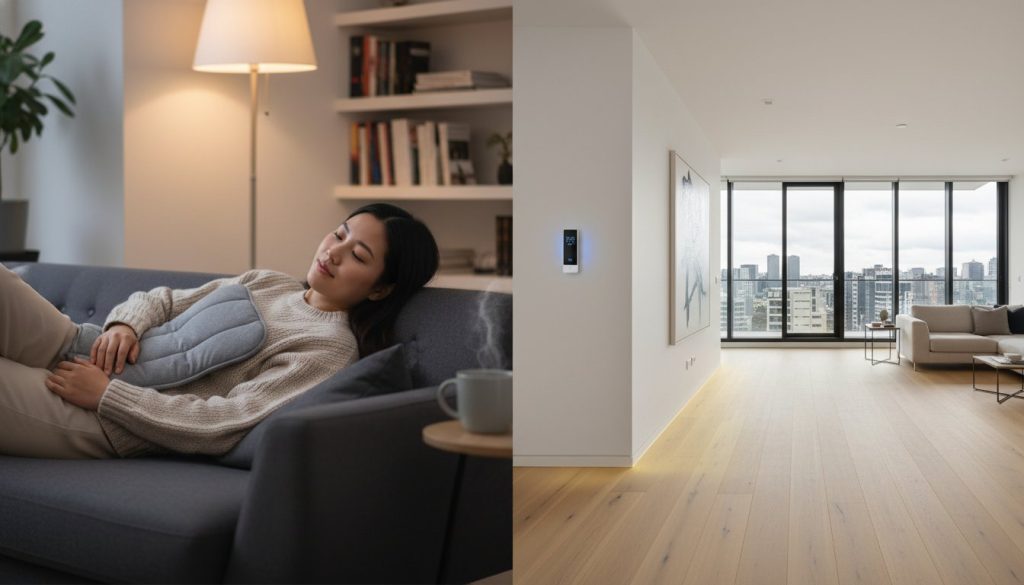
When a winter chill sets in, reaching for a personal electric heating pad offers instant, targeted relief. But what happens when that localised warmth isn’t enough to combat a truly cold room or an entire home? Many Australian homeowners face this challenge, questioning the best way to achieve consistent comfort without facing overwhelming energy bills. The world of electric heating extends far beyond small appliances, but navigating the options from running costs to installation can be a complex task.
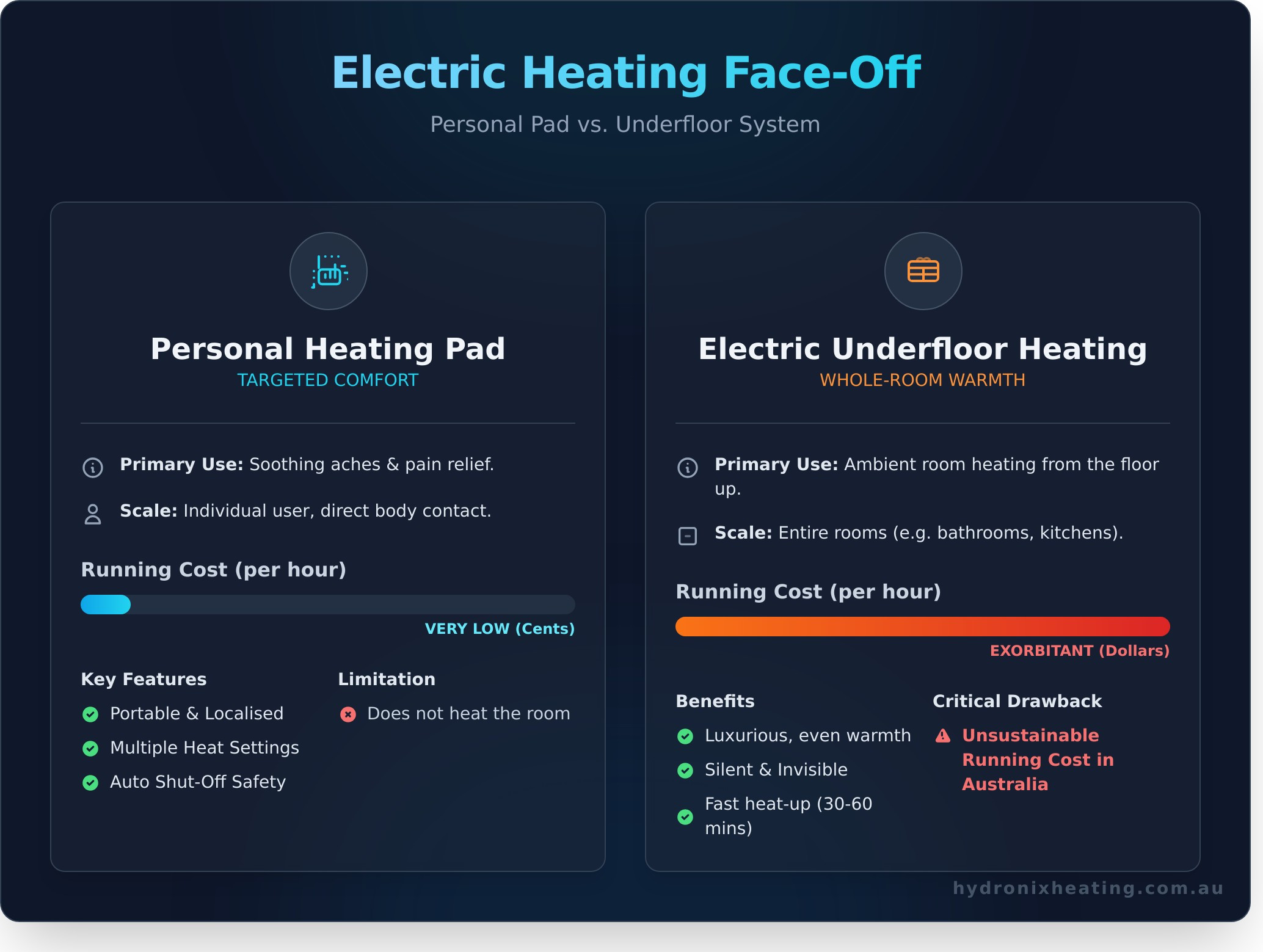
This guide provides the expert clarity you need. We explore the significant differences between a simple heating pad for soothing aches and a sophisticated electric underfloor heating system designed for whole-home luxury. We will break down the technology, compare the running costs in Australian dollars (A$), and analyse the long-term benefits of each. By the end, you will have a clear understanding of these systems, empowering you to make a confident and cost-effective decision for achieving reliable warmth in your home.
The Familiar Comfort: Understanding Personal Electric Heating Pads
Before exploring large-scale home heating solutions, it’s important to start with a familiar reference point: the personal electric heating pad. Most of us have used one to soothe a sore back or ease muscle cramps. These are portable, localised devices designed for one primary purpose-delivering targeted heat therapy directly to the body. For a foundational overview, Wikipedia offers a detailed guide to Understanding Personal Electric Heating Pads, but their core function is pain relief, not ambient warmth. Common types include:
- Dry Heat Pads: The most common type, offering consistent, dry warmth.
- Moist Heat Pads: Designed to provide a deeper, more penetrating heat.
- Weighted Pads: Combine heat with gentle pressure for enhanced comfort.
While highly effective for their intended use, their key limitation is clear: a personal heating pad is a tool for individual comfort, not a solution for heating a room or an entire home.
How They Work and Key Features
The design of a personal heating pad is straightforward. An insulated internal heating element, typically a flexible wire, warms up when connected to mains power. This element is encased in a soft, comfortable fabric cover, often made from micro-plush or fleece. Modern devices come with reliable features that prioritise user comfort and safety.
- Multiple Heat Settings: Allowing you to adjust the temperature for optimal comfort.
- Automatic Shut-Off: A crucial safety feature that turns the pad off after a set period.
- Low Running Cost: Their power consumption is minimal, costing only a few cents per hour to run for personal use.
Safety Considerations for Personal Pads
Operating any heating appliance requires a focus on safety. While modern pads are built with safety in mind, it is vital to follow manufacturer guidelines. Never fall asleep while using a pad that lacks an automatic shut-off timer, as this poses a burn risk. It’s also recommended to avoid using them on damaged skin, areas with poor circulation, or on infants. When purchasing, always check that the product complies with Australian standards and carries the Regulatory Compliance Mark (RCM), ensuring it has been tested for safety and performance.
Expanding the Concept: Electric Underfloor Heating as a ‘Whole-Room’ Pad
Many homeowners are familiar with the targeted warmth of a portable electric heating pad. Now, imagine scaling that technology to an architectural level. Electric underfloor heating takes this principle and integrates it directly into the structure of your home, transforming your entire floor into a large, gentle, and efficient radiant heater. This is not a portable appliance you plug into the wall; it is a sophisticated, permanent heating system designed for modern living.
Unlike a simple electric heating pad, this fully integrated solution provides consistent and luxurious warmth from the ground up, seamlessly managed by a dedicated wall thermostat. It bridges the gap between a temporary comfort item and a primary home heating solution, especially for specific applications.
How Electric Underfloor Heating Works
The system’s effectiveness lies in its straightforward design. A network of thin heating elements, either as pre-spaced mats or flexible loose-wire cables, is installed directly onto the subfloor before the final floor covering is laid. When activated by the thermostat, electricity flows through these resistive wires. As the Australian Government’s YourHome guide explains, Electric Underfloor Heating systems convert this electrical energy into radiant heat, which rises evenly through the floor. This warmth is absorbed directly by objects and people in the room, creating a comfortable environment without the drafts or noise associated with forced-air systems.
Types of Electric Underfloor Systems
Choosing the right system depends on the room’s shape and your chosen flooring. The main options available in Australia include:
- Heating Mats: These feature pre-spaced heating wires attached to a mesh backing. They are ideal for square or rectangular rooms, as they can be rolled out quickly for simple, fast installation.
- Loose-wire Systems: A single, continuous heating cable is laid out on the subfloor and secured in place. This offers maximum flexibility for custom layouts in irregularly shaped rooms, such as bathrooms with multiple fixtures.
- Foil Heating Systems: Specifically designed for use under floating floors like laminate and engineered wood, these systems consist of heating wires encased in a reinforced aluminium foil mat that distributes heat evenly.
Ideal Applications and Benefits
Electric underfloor heating is an excellent choice for targeted warmth in specific areas. It is particularly effective in rooms with hard, cold floor surfaces like tiles or polished concrete, making it a popular solution for bathrooms, kitchens, and laundries.
Key benefits include:
- Luxurious Comfort: Delivers a pleasant, even warmth underfoot.
- Fast Heat-Up Times: Electric systems can warm a floor in as little as 30-60 minutes.
- Silent Operation: The system is completely silent, with no fans or moving parts.
- Space-Saving Design: As an invisible system, it frees up valuable wall space by eliminating the need for radiators.
Electric Underfloor Heating: The Critical Drawbacks to Consider
While electric underfloor heating offers a certain modern appeal, a professional evaluation reveals significant long-term challenges. Before making a major investment, it’s essential to look past the initial marketing and understand the practical and financial realities. For most Australian homes, these drawbacks make it an unsuitable choice for a primary, whole-home heating solution.
High Running Costs: The Biggest Concern
The single greatest issue with electric underfloor systems is the exorbitant running cost. In Australia, generating heat directly from electricity is one of the most expensive methods available. With electricity rates often exceeding 30-40 cents per kilowatt-hour (kWh), compared to just a fraction of that for natural gas, the daily operational expense quickly becomes unsustainable for heating large areas.
This system is a form of ‘direct resistance’ heating. While it’s technically 100% efficient at converting electricity into heat, the high cost of that initial electricity makes it a poor value proposition. This high operational cost is a key reason why the Australian Government’s YourHome guide notes that hydronic radiant floor systems can be a practical alternative for whole-home radiant heating. Relying on an electric system for anything more than a small bathroom can lead to significant energy bills.
Installation Requirements and Limitations
Beyond the running costs, the installation process for an electric heating pad system is both disruptive and restrictive. It is not a simple upgrade but a significant renovation project with several key limitations:
- Major Disruption: Installation typically requires the complete removal and replacement of your existing flooring, adding considerable time and expense to the project.
- Professional Installation Required: All work must be completed and certified by a licensed electrician, a non-negotiable cost that adds to the initial investment.
- Flooring Incompatibility: These systems are not suitable for all floor types. They can damage certain solid timbers and are ineffective under flooring with high thermal resistance, like thick carpets and underlays.
- Difficult to Retrofit: Installing electric underfloor heating into an established home is a complex and expensive undertaking, often making it impractical compared to other heating alternatives.
When considering the high running costs and complex installation, it becomes clear that this technology is best reserved for small, specific applications. For reliable and cost-effective whole-home warmth, it’s crucial to explore more efficient solutions. If you need expert advice on the most suitable system for your property, the specialists at hydronic heating installation in Melbourne can provide a comprehensive assessment.
The Superior Alternative: Why Hydronic Heating Outperforms Electric
While an electric underfloor system can provide warmth, it’s often a solution for a single room or a small area. For those seeking a truly comprehensive, efficient, and luxurious heating solution for their entire home, hydronic heating is the professional’s choice. It’s not just a product; it’s an engineered system designed for superior comfort and long-term value. At Hydronix, we know hydronic heating is the smartest investment you can make in your home’s comfort and running costs.
How Hydronic Underfloor Heating Works
The principle is simple yet profoundly effective. A central, high-efficiency boiler (powered by natural gas or a heat pump) gently heats water. This warm water is then circulated through a network of durable pipes laid within your home’s concrete slab. The slab itself becomes a large, gentle radiator, evenly and silently warming the room from the ground up. This method delivers a consistent, ambient warmth that eliminates cold spots and the stuffiness associated with forced-air systems.
The Key Advantage: Unbeatable Efficiency and Lower Running Costs
The core difference lies in efficiency. Water is far more effective at holding and transferring thermal energy than the thin wires in an electric heating pad. Furthermore, the cost of generating heat with a modern gas boiler or heat pump is significantly lower than direct electric resistance heating. To heat a typical Australian living room, an electric system might cost over A$4 a day, whereas a hydronic system can achieve a more comfortable heat for less than half that cost. It’s a system that saves you money every single winter.
A True Whole-Home Solution
Hydronic heating is designed for scalability. A single boiler can be the heart of your home’s entire heating network, powering not only your underfloor system but also elegant wall-mounted radiators and heated towel rails in your bathrooms. This integrated approach provides unparalleled flexibility and ensures every corner of your home is efficiently heated. It transforms your heating from a simple appliance into a sophisticated, whole-home asset.
Considering a new heating system that offers superior comfort and lower bills? design and install a hydronic system
The Superior Choice for Whole-Home Warmth
While a personal electric heating pad offers targeted comfort, scaling that warmth to an entire home requires a more robust and efficient solution. Electric underfloor systems may seem like a modern step up, but their high running costs and potential for uneven heating often lead to disappointment. For true, lasting comfort and energy efficiency, hydronic heating stands as the clear and superior alternative, providing a gentle, radiant warmth that electric systems simply cannot match.
At Hydronix Heating, we are Melbourne’s trusted specialists in whole-home hydronic systems. Our expertise is in designing and maintaining energy-efficient solutions built for Australian homes, and our repair-first philosophy is designed to save you money. Don’t settle for inefficient electric heat. Choose the proven, reliable comfort of a professionally installed hydronic system.
Ready to experience the ultimate in home warmth? hydronic heating installation in Melbourne
Frequently Asked Questions
Is electric underfloor heating expensive to run in Melbourne?
Yes, electric underfloor heating can be expensive to run in Melbourne due to high electricity tariffs. While the initial installation cost is lower than hydronic systems, the ongoing running costs are significantly higher. A typical electric system can cost A$15-A$20 per square metre per year to operate, depending on usage and insulation. In contrast, a highly efficient hydronic system leverages gas or heat pumps, offering substantial long-term savings on your energy bills.
Can I install electric underfloor heating myself?
While some electric heating kits are marketed for DIY installation, all electrical connections must be completed by a licensed electrician to comply with Australian standards and ensure safety. Incorrect installation can pose a serious fire risk and will void product warranties. For a reliable and safe outcome, we always recommend professional installation for any underfloor heating system to guarantee it performs correctly and meets all regulatory requirements.
What’s the difference in comfort between electric and hydronic underfloor heating?
Both systems provide comfortable radiant heat, but hydronic heating offers a more gentle and consistent warmth. The heated water retains thermal energy for longer, creating a stable, ambient temperature without the frequent on-off cycling common with electric systems. This results in a superior, more luxurious feeling of comfort throughout the space. Electric systems heat up faster but can also cool down more quickly once turned off.
Which is better for a new build: electric or hydronic heating?
For a new build, a hydronic system is the superior long-term investment. Installing the pipework into a new concrete slab is straightforward and highly cost-effective, setting you up for decades of efficient, low-cost heating. While an electric system has a lower upfront cost, its higher running expenses and shorter lifespan make it a less economical choice for a whole-home solution in a new construction project. Electric is better suited for smaller, single-room renovations.
How long does an electric underfloor heating system last?
An electric underfloor heating system typically has a lifespan of 20 to 30 years, though thermostats and controllers may need replacing sooner. The longevity of the in-floor components, such as the electric heating pad or cables, depends heavily on the quality of the product and the installation. In comparison, the in-slab pipework of a hydronic system is designed to last for over 50 years, making it a more durable and permanent heating solution.
Can you repair electric underfloor heating if a wire breaks?
Repairing a broken wire in an electric underfloor heating system is a complex and invasive process. It requires specialised diagnostic equipment to locate the exact point of the break beneath the floor. Once found, the flooring must be removed to access and repair the damaged section. This can be costly and disruptive. Hydronic systems are far more serviceable, as most key components like the boiler and manifold are easily accessible for maintenance and repairs.