

Your hydronic heating system provides exceptional warmth, but its control centre-the thermostat-is where true efficiency and comfort are managed. Yet, choosing the right one can be confusing. Faced with technical terms like ‘C-wire’ and ‘zoning’, and unsure if a smart device is compatible with your boiler, it’s easy to feel uncertain. You simply need a reliable solution that puts you in complete control of your Melbourne home’s heating without the guesswork.
As hydronic heating specialists, we’re here to provide clarity. We know these systems inside and out. This expert guide will walk you through the different thermostat types, demystify the features that actually matter, and help you determine what you truly need for your home. Our goal is to empower you to make a confident, informed decision, ensuring you select a thermostat that works seamlessly with your system to improve comfort and potentially lower your energy bills.
What is a Thermostat and Why is it Crucial for Hydronic Heating?
Often overlooked, the thermostat is the central command hub of your entire hydronic heating system. It acts as the ‘brain’, making critical decisions that directly impact your home’s comfort and energy efficiency. While the fundamental concept of what a thermostat is-a device that regulates temperature-remains the same, its role in a hydronic setup is far more nuanced.
Unlike forced-air systems that deliver instant heat, hydronic systems have significant thermal mass. The water in your boiler and radiators takes time to heat up and also holds that heat for longer after the system switches off. This slower response time is the unique challenge of hydronic heating. A quality, correctly configured thermostat is essential for managing this process, providing the consistent, silent, and radiant warmth your system was designed to deliver.
How a Thermostat Controls Your Boiler and Radiators
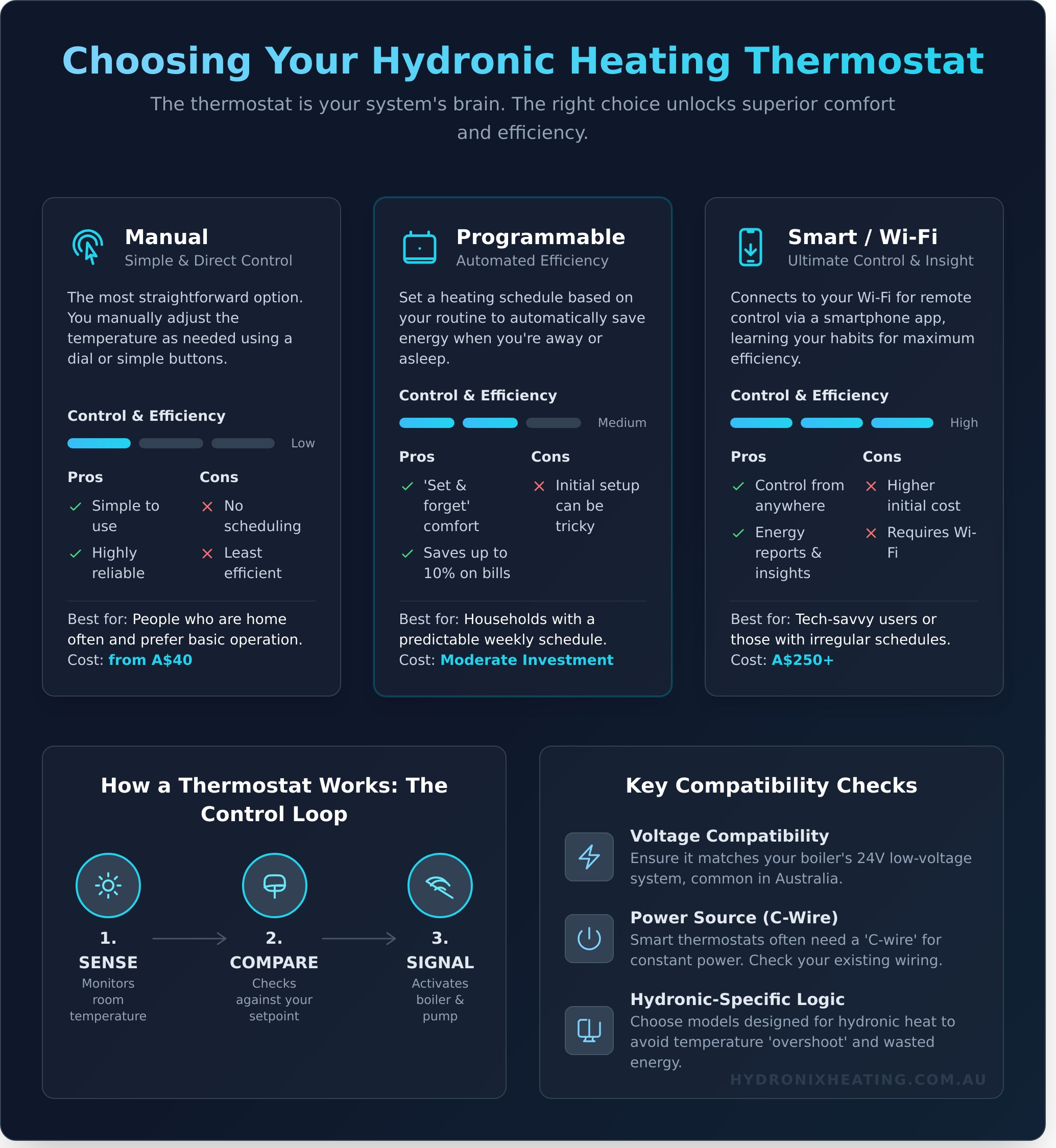
The communication between your thermostat and your hydronic system is a simple yet vital loop. It’s a constant process of measuring, comparing, and acting to maintain your desired temperature. This process involves several key steps:
- Sensing Temperature: The unit constantly monitors the ambient temperature of the room it’s in.
- Comparing to Setpoint: It compares this real-time reading against the temperature you have set (the ‘setpoint’).
- Signalling the System: If the room is too cold, it sends a signal to your boiler to ignite and start heating water. It also activates the circulation pump, which moves the hot water out to your radiators or in-slab coils. Once the setpoint is reached, it signals the system to turn off.
Why a Generic Thermostat Might Not Be Enough
Using a basic, off-the-shelf model designed for a different type of heating can lead to poor performance and discomfort. Many standard thermostats are built for fast-acting forced-air furnaces. When paired with a slow-reacting hydronic system, they often cause the temperature to ‘overshoot’ the target, making the room uncomfortably warm before shutting off. This cycle of over-heating and then cooling creates an inconsistent environment and wastes energy. A proper thermostat designed for hydronic heat uses smarter algorithms to anticipate the system’s thermal mass, ensuring precise control and reliable comfort.
Types of Thermostats: From Simple Dials to Smart Control
Selecting the right control unit for your hydronic heating system is a critical decision. The thermostat acts as the brain of your system, and understanding the three main categories will help you make an expert choice. Each type offers a different level of control, convenience, and efficiency, so consider your lifestyle, budget, and how much you want to interact with your heating before deciding.
Manual / Non-Programmable Thermostats
This is the most straightforward type of thermostat, featuring a classic dial or a simple digital display for temperature adjustment. Its function is direct: you turn the heat up or down manually as needed. They are a reliable, no-fuss solution for controlling your hydronic system.
- Pros: Simple to operate, highly reliable, and the lowest initial cost, often starting from just A$40.
- Cons: Lacks scheduling, requires constant manual changes, and is the least energy-efficient option as it can easily be left running high.
- Best for: Homeowners who are home most of the time, prefer hands-on control, or want the most basic, dependable operation.
Programmable Thermostats
A programmable thermostat allows you to create a heating schedule based on your routine. You can set different temperatures for weekdays, weekends, and specific times of the day. By automatically lowering the temperature when you’re asleep or away, you can significantly reduce running costs. In fact, research from the U.S. Department of Energy shows proper use can save as much as 10% a year on heating, making the investment worthwhile.
- Pros: ‘Set and forget’ convenience improves comfort and delivers consistent energy savings.
- Cons: The initial setup can be confusing for some users.
- Best for: Households with a predictable daily and weekly schedule who want to improve efficiency without active management.
Smart / Wi-Fi Thermostats
The most advanced option, a smart thermostat connects to your home’s Wi-Fi network. This allows you to monitor and control your hydronic heating from anywhere using a smartphone app. Many models offer features like energy usage reports, geofencing (which adjusts the temperature when you leave or approach home), and learning algorithms that adapt to your habits over time.
- Pros: Unmatched convenience and control, detailed energy insights, and maximum efficiency through smart features.
- Cons: Higher initial cost (typically A$250+), and requires a stable Wi-Fi connection and a smartphone to use effectively.
- Best for: Tech-savvy users, households with irregular schedules, or anyone wanting the ultimate control over their comfort and energy consumption.
Key Features to Consider for Your Hydronic System
Once you have an idea of the type of thermostat you want-manual, programmable, or smart-it’s time to look closer at the specific features. The right functions will ensure your new thermostat integrates perfectly with your hydronic heating system, maximising both comfort and efficiency. Choosing a model without considering these details can lead to compatibility issues and missed opportunities for energy savings.
System Compatibility and Wiring
The most critical feature of any thermostat is its ability to communicate with your boiler. Hydronic heating systems have specific requirements, and confirming compatibility is the first step. Before making a purchase, you must verify a few key technical details:
- Voltage: Most modern boilers in Australia operate on a 24V system. Ensure your chosen thermostat is designed for this low-voltage setup.
- Power Source: Many smart thermostats require a constant power source via a ‘C-wire’ (common wire). If your current wiring doesn’t have one, you may need a professional to install it or choose a model with an alternative power solution.
- System Control: If your property has an add-on cooling system integrated with your hydronic heating, your thermostat must be able to manage both functions seamlessly.
Unsure about your system’s wiring or compatibility? It’s always best to consult a professional. Our experts can help.
Zoning Capabilities
Zoning allows you to divide your home into distinct areas, controlling the temperature in each one independently. For instance, you can keep the living areas warm during the day while leaving the upstairs bedrooms at a lower temperature. A multi-zone setup is the key to superior comfort and efficiency in larger or multi-level homes. If your hydronic system is designed for zoning, you need a thermostat that can manage multiple zones, either through a central control unit or via multiple connected thermostats.
Interface and Ease of Use
A powerful thermostat is only effective if it’s easy to operate. Look for a model with a clean, user-friendly interface. Features like a large, backlit display make it easy to read in low light, while intuitive buttons or a responsive touch screen simplify programming. For smart models, the mobile app becomes your primary point of control. The quality of this app is paramount; leading tech publications often review the software and usability of the best smart thermostats, which can be a valuable resource for making your decision.
Smart Thermostats and Hydronic Heating: A Perfect Match?
Smart thermostats are one of the most popular home upgrades, offering convenience and potential energy savings. But for Melbourne homeowners with hydronic heating, the question is more complex. Because hydronic systems operate differently from standard forced-air systems, it’s crucial to understand if a smart thermostat is a wise investment or a frustrating mismatch.
The answer isn’t a simple yes or no. While some features are a perfect fit, others require careful consideration. Here, we break down the real-world pros and cons for your hydronic system.
The Advantages: Remote Control and Better Scheduling
The greatest benefit of a smart thermostat is undoubtedly the superior control it gives you. The ability to adjust your home’s temperature from anywhere using a smartphone app is a game-changer. You can turn the heating on as you leave the office, ensuring a warm welcome without heating an empty house all day. This level of flexible, intuitive scheduling is far more efficient and user-friendly than the rigid timers on older programmable models.
The Challenge: ‘Learning’ Features and Thermal Lag
Hydronic systems have significant ‘thermal lag’-they take a long time to heat up and cool down. This is because they rely on heated water circulating through radiators or in-slab pipes. Some smart thermostats with ‘learning’ algorithms, designed for fast-reacting air systems, can struggle with this slow response. The device might overshoot the target temperature, assuming the system isn’t working, only for the room to become too hot an hour later. The key is to look for models with specific settings for radiant or hydronic heat, which helps the algorithm adapt to this slower cycle.
The Verdict: Is It Worth the Investment?
For most homeowners, the answer is a confident yes. The unmatched convenience of remote access and highly customisable schedules outweighs the potential quirks of learning algorithms. The focus should be on these core benefits, along with valuable energy usage reports that help you make smarter decisions. A modern thermostat is a valuable upgrade that brings a new level of control and efficiency to your trusted hydronic system. For expert advice on which models work best, the specialists at Hydronix Heating can guide you to the right solution for your home.
Why Professional Installation is Non-Negotiable
While it might be tempting to view a new thermostat as a simple DIY upgrade, this is a common and costly mistake. For a hydronic heating system, the thermostat is not a standalone gadget; it’s the central command for your entire system, communicating directly with your boiler’s sensitive control board. Getting it wrong can lead to system malfunctions, inefficient performance, and even expensive damage.
At Hydronix Heating, we believe in a repair-first approach that prioritises the long-term health of your system. Professional installation is a critical part of that philosophy, ensuring every component works in perfect harmony from day one.
Ensuring Safety and Correct Wiring
Working with any electrical wiring carries inherent risks. More importantly, every boiler brand has specific wiring requirements. A wire in the wrong terminal can instantly short-circuit your new thermostat or, worse, damage the boiler’s main control board-a far more expensive repair. Our licensed technicians are specialists in hydronic heating; they understand the precise configurations for all major brands, ensuring every connection is safe, secure, and correct.
Optimising Settings for Hydronic Efficiency
A professional installation goes far beyond simply connecting wires. To achieve peak efficiency, a modern thermostat must be correctly configured for the unique demands of a hydronic system. This involves setting advanced parameters like:
- Cycle Rates (CPH): We adjust this setting to match your boiler’s capacity, preventing “short-cycling”-when the boiler turns on and off too frequently. This reduces wear and tear and saves on energy costs.
- System Type: We ensure the thermostat is set specifically for radiant heat, which has different operational needs than a standard forced-air system.
This meticulous setup ensures your system runs smoothly, heats your home evenly, and operates as efficiently as possible.
Get Expert Advice and Flawless Installation
Choosing the right device is the first step. During a routine service call, our experts can assess your needs and recommend the best thermostat for your home and hydronic system. From selection and sourcing to wiring and final configuration, the Hydronix team manages the entire process flawlessly. Trust Melbourne’s hydronic specialists to ensure your system’s brain is installed with the technical edge it deserves. Schedule a service with a Hydronix expert today.
Your Key to Efficient Hydronic Heating Control
Selecting the right thermostat for your hydronic system is a crucial decision that directly impacts your home’s comfort and energy efficiency. From simple programmable models to advanced smart technology, the features you choose will define how you interact with your heating. Ultimately, ensuring correct compatibility and relying on professional installation are the most important steps for getting the best performance from these specialised systems.
As Melbourne’s trusted hydronic heating specialists, we provide expert guidance to help you make the right choice. Our unique ‘repair-first’ approach means we find the most effective solution for your specific needs, and our fully qualified and insured technicians ensure a flawless installation for your complete peace of mind.
Ready to upgrade your control and comfort? Need help choosing or installing a thermostat? Contact the Hydronix experts.
Take the final step to unlocking the full potential of your hydronic heating and enjoy the perfect warmth and efficiency you deserve.
Frequently Asked Questions
Can I install a new thermostat myself?
While it may seem like a simple task, we strongly advise against DIY thermostat installation for hydronic systems. Incorrect wiring can easily damage the thermostat’s sensitive electronics or, more seriously, your boiler’s main control board. A licensed hydronic heating specialist ensures the unit is compatible, installed correctly, and calibrated to your system for safe, efficient operation. This protects your warranty and prevents costly repairs down the line.
Will a smart thermostat save me money with my hydronic system?
Yes, a smart thermostat can deliver significant savings with hydronic heating. These systems have a slower response time than forced-air systems. A smart unit learns your home’s heating patterns and can activate the boiler at the optimal time, preventing overheating and wasted energy. Features like scheduling, geofencing, and remote access via your phone provide precise control, ensuring you only use energy when you truly need it for maximum efficiency.
What are the best thermostat brands for hydronic heating in Australia?
Several reliable brands in Australia offer excellent thermostats specifically suited for hydronic heating. Honeywell is a long-trusted name known for its durability and precise control. For smart features and seamless integration, Google Nest thermostats are a popular choice. Other reputable brands like Salus and Siemens also provide robust options designed to manage the unique demands of hydronic systems. An expert technician can recommend the best model for your specific setup.
Brands like Siemens operate across various scales, from home thermostats to the complex industrial automation components found on specialist supplier sites like instrodirect.com.au.
How long does a thermostat typically last before it needs replacing?
A modern digital thermostat has a typical lifespan of 10 to 15 years. Older mechanical or mercury-based models may last longer but are far less accurate and efficient. While a unit may function beyond this period, technology often advances significantly. Upgrading an older, working thermostat to a newer programmable or smart model is often a worthwhile investment for improved comfort, control, and energy savings.
My current thermostat seems inaccurate. Does it need to be replaced?
Not necessarily. In line with our repair-first approach, we recommend checking a few things before considering a replacement. An inaccurate reading can be caused by dust inside the unit, dead batteries, or poor placement-such as in direct sunlight, near a heat source, or in a draught. If cleaning the unit and checking its location doesn’t solve the issue, a professional diagnostic is the next step to identify the root cause.
Can I have different temperatures in different rooms with one thermostat?
A single thermostat can only manage one temperature for the entire area it controls, known as a ‘zone’. To set different temperatures in different rooms or sections of your house, you need a zoned hydronic heating system. This involves installing multiple thermostats, each connected to electronic zone valves that control the flow of hot water to specific radiators or floor circuits, giving you precise room-by-room temperature control.