
As another cold Melbourne winter approaches, is your home’s heating system a source of concern? Perhaps your energy bills are climbing, or you’re unsure if that old, noisy unit needs a simple fix or a complete replacement. The heart of your home’s warmth is its hydronic heating boiler, and understanding this essential appliance is the first step towards a more comfortable and cost-effective home.
This comprehensive guide is designed to give you that clarity. We will demystify your hydronic system, explaining exactly how a boiler functions, the key differences between combi and system models, and the clear signs that indicate it’s time for a professional service or upgrade. Our goal is to provide you with the trusted insights needed to make confident decisions, ensuring your home remains reliably warm and your heating system runs at peak efficiency for years to come.
How a Boiler Works: The Engine of Your Hydronic System
At the heart of every reliable hydronic heating system is the boiler. Think of it as a highly efficient, continuous kettle dedicated to keeping your entire home warm. Its job is straightforward but essential: it heats water to a specific temperature and then, using a pump, circulates this hot water through a sealed network of pipes to your radiators, in-slab coils, or wall panels. This process provides the consistent, radiant warmth that makes hydronic heating so comfortable. For a detailed technical overview, a great resource is this article explaining What is a Boiler? and the engineering principles behind the technology. While its primary role is central heating, many modern systems also use this powerful appliance to provide domestic hot water for your taps and showers.
The Core Components Inside Your Boiler
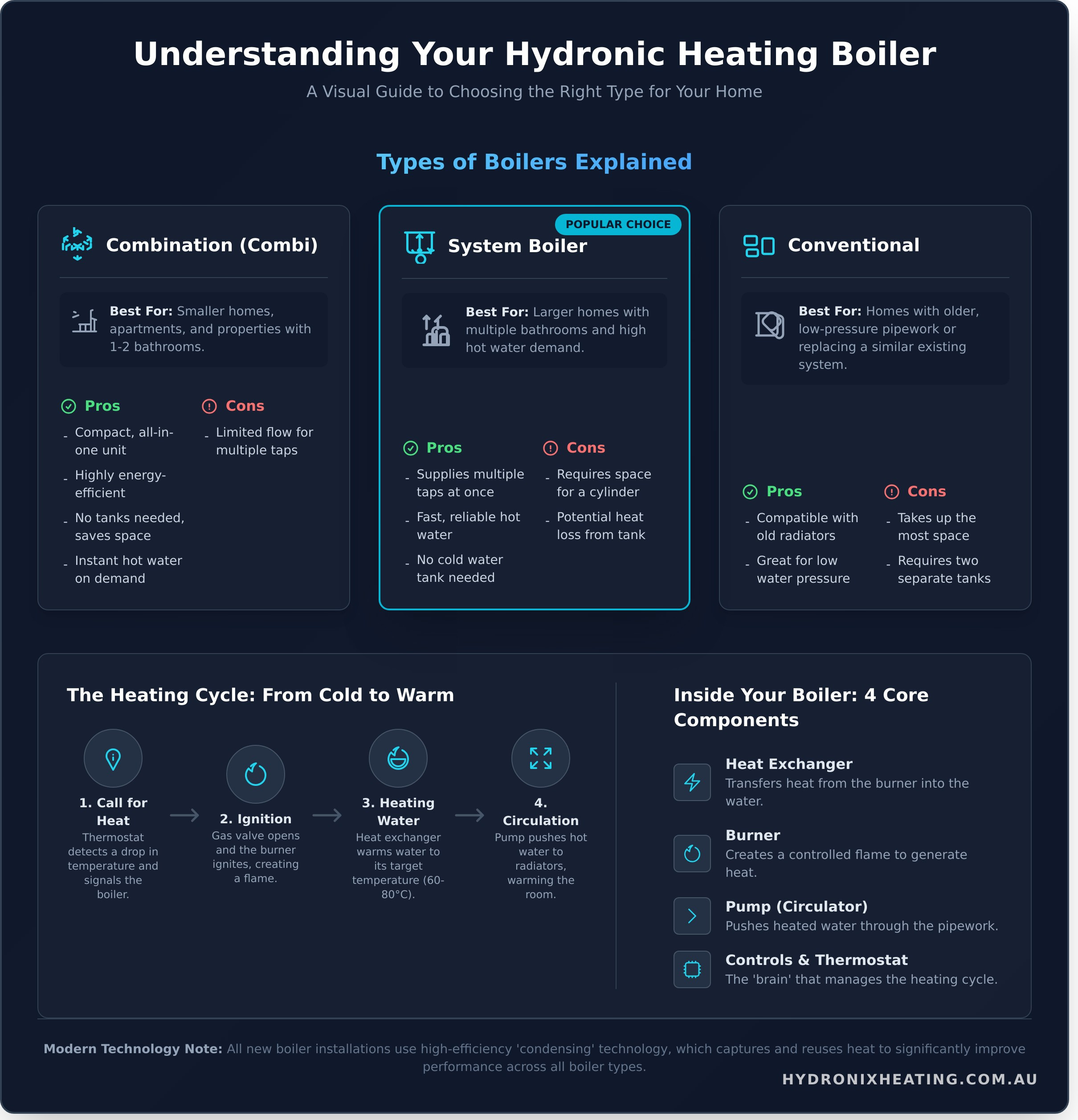
Understanding your system means knowing its key parts. While models vary, every unit contains four critical components working in unison to deliver reliable heat:
- Heat Exchanger: This is where the core function happens. As water passes through its coils, the heat generated by the burner is transferred directly into the water, raising its temperature efficiently.
- Burner: The burner receives gas and, upon ignition, creates a controlled flame that produces the heat required to warm the heat exchanger.
- Pump (Circulator): Often called the ‘heart’ of the system, the pump is an electric motor that pushes the heated water out and through the pipework to your radiators.
- Controls & Thermostat: This is the ‘brain’. The thermostat monitors your room temperature and tells the boiler’s control panel precisely when to fire up and when to shut down, ensuring optimal comfort and efficiency.
The Heating Cycle: From a Cold Radiator to a Warm Room
The process of heating your home is a continuous, closed-loop cycle. From the moment you feel a chill to the comforting warmth of a radiator, here is the step-by-step sequence:
- Call for Heat: Your room thermostat detects the temperature has dropped below your set point and sends an electrical signal to the boiler to begin the heating cycle.
- Ignition Sequence: The control panel opens the gas valve, and an electronic igniter sparks the burner, creating a flame to heat the system.
- Water is Heated: Water within the heat exchanger rapidly absorbs heat from the burner, reaching the target temperature (typically 60-80°C).
- Circulation Begins: The pump activates, pushing this newly heated water out to the radiators. As the radiators release their heat into the room, the now-cooler water flows back to be reheated, continuing the cycle until your home is warm.
Types of Boilers Explained: Combi, System & Conventional
The boiler is the engine of your hydronic heating system. In Melbourne, homes are typically fitted with one of three main types of gas boiler: combination (combi), system, or conventional. Choosing the correct unit is crucial and depends entirely on your property’s size, the number of bathrooms, and your family’s hot water usage. It’s also important to note that while you’ll hear the term ‘condensing boiler’, this refers to the highly efficient technology used in all new installations, not a separate type. This Modern Boiler Technology captures and reuses heat that would otherwise be lost, significantly improving efficiency across all models.
For a quick overview, here is a simple comparison of the three main types:
Combination (Combi) Boilers
A combination or ‘combi’ boiler is a single, compact unit that provides both central heating and instant hot water on demand. It heats water directly from the mains, eliminating the need for a separate storage tank. This makes it a highly efficient and space-saving solution, perfect for apartments and smaller houses with one or two bathrooms. Its main limitation is an inability to supply hot water to multiple taps simultaneously at full pressure.
System Boilers
A system boiler works with a dedicated hot water storage cylinder, ensuring a constant supply of hot water is ready for use. While it requires more space than a combi, most major components are built into the boiler itself, simplifying installation. This setup is ideal for larger homes with multiple bathrooms, as it can comfortably supply hot water to several taps at once without a drop in pressure. The primary drawback is potential heat loss from the cylinder over time.
Conventional (Heat-Only) Boilers
Also known as a heat-only or regular boiler, this is the most traditional setup. It requires both a hot water storage cylinder and a separate cold water feed tank, usually located in the loft. This system takes up the most space but is often the best choice for properties with older radiator systems that may not handle the high water pressure of modern units. It’s the go-to option when replacing an existing, similar setup to minimise pipework changes.
Repair or Replace? A Crucial Decision for Homeowners
When your hydronic heating system falters, the immediate question is whether to repair the existing unit or invest in a new one. At Hydronix, our specialist technicians operate on a ‘repair-first’ philosophy. We believe in providing honest diagnostics to save you money, as a full replacement isn’t always the necessary or most cost-effective solution. The right choice depends on a few key factors: the age of your boiler, the estimated repair cost, and its current energy efficiency.
As a general guide, if a repair is quoted at 50% or more of the cost of a new unit, replacement is often the smarter financial decision. Similarly, a unit that is over 15 years old is typically reaching the end of its reliable service life and is a strong candidate for an upgrade.
Warning Signs Your Unit Needs an Expert Inspection
An underperforming system rarely fails without warning. If you notice any of the following signs, it’s time to call a specialist for a professional diagnosis:
- Strange Noises: Gurgling, banging, or whistling sounds can indicate trapped air, limescale buildup, or a failing pump.
- Leaks or Drips: Any water pooling around the unit is a clear sign of a problem, often with a seal or internal component.
- Reduced Performance: If your radiators take longer to heat up or don’t get as hot as they used to, the system is struggling.
- Rising Energy Bills: A sudden, unexplained increase in your gas bills points directly to a drop in your system’s efficiency.
When to Prioritise Repair
A repair is often the most practical and economical choice if your system is in good overall health. We recommend repairing your unit when:
- The unit is relatively new (less than 10 years old).
- The problem is a minor, inexpensive component failure, such as a faulty valve, thermostat, or pump.
- Your system has been serviced regularly and is otherwise performing well.
Don’t guess what the problem is. Get a fast, honest diagnosis from our repair specialists.
When a Replacement Makes More Sense
While we always aim to fix systems others might replace, sometimes a new installation is the only logical path forward. Replacement is the best option when:
- The boiler is old and requires frequent, costly repairs.
- The heat exchanger has failed-a critical and expensive component to replace.
- Spare parts for your specific model have become obsolete and are difficult or impossible to source.
- You want to significantly reduce your running costs by upgrading to a high-efficiency condensing model and take advantage of advances in modern boiler efficiency.
Modern Boiler Technology: Efficiency and Fuel Sources
The boiler is the heart of your hydronic system, and today’s technology is a world away from the inefficient units of the past. Understanding the advancements in efficiency and the available fuel sources is key to making a smart investment that lowers your running costs for years to come. A modern, high-efficiency boiler not only delivers superior warmth but also significantly reduces your energy consumption and environmental footprint.
Condensing vs. Non-Condensing Boilers
The single biggest leap in efficiency comes from condensing technology. Unlike older models that waste a significant amount of heat through the flue, a modern condensing boiler captures this latent heat from exhaust gases and uses it to pre-heat water returning to the system. This clever process allows them to achieve over 90% efficiency, directly translating to lower gas bills. In Australia, all new gas boiler installations must be condensing models. If you see a small plume of white ‘steam’ from your flue on a cold day, it’s simply harmless water vapour-a reassuring sign your unit is operating at peak efficiency.
Fuel Sources: Gas vs. Heat Pumps
Choosing the right fuel is a critical decision based on your property’s location and long-term goals. For Melbourne homeowners, the primary options include:
- Natural Gas: The most common and currently the most affordable fuel source for homes connected to the mains gas grid. It provides reliable and cost-effective heating performance.
- LPG (Liquefied Petroleum Gas): An excellent alternative for properties in areas without access to the natural gas network, offering the same powerful heating as natural gas.
- Hydronic Heat Pumps: A highly efficient, all-electric solution that extracts warmth from the ambient air. While the upfront investment is higher, they represent a sustainable upgrade path for the future, especially when paired with solar panels.
While the initial installation cost is a factor, the long-term running costs determined by fuel type and efficiency are what truly impact your household budget. The expert team at Hydronix Heating can help you assess the most effective and economical solution for your home.
Essential Boiler Maintenance for Longevity and Safety
A hydronic heating system is a significant investment in your home’s comfort. To protect that investment and ensure it operates safely and efficiently, regular maintenance is not just recommended-it’s essential. Proactive servicing is the single most effective way to prevent unexpected and costly breakdowns, especially during Melbourne’s colder months. All manufacturers and hydronic heating specialists advise an annual service to maintain peak performance. This simple step ensures four critical outcomes: optimal safety, maximum energy efficiency, unwavering reliability, and the validation of your manufacturer’s warranty.
DIY Checks You Can Do Between Services
While a professional service is non-negotiable, you can perform a few simple checks yourself to spot potential issues early. These quick inspections help maintain your system’s health between expert visits.
- Check the pressure gauge: Your system’s pressure should typically be between 1 and 1.5 bar when it is cold. If it’s too low or too high, it may indicate a problem.
- Visually inspect the unit: Look for any signs of water leaks, drips, or corrosion on the boiler and the surrounding pipework.
- Ensure vents are clear: Make sure the external flue and any vents are free from obstructions like leaves, nests, or garden debris to allow for proper ventilation.
- Listen for unusual noises: Pay attention to any new gurgling, clunking, or whistling sounds that could signal an underlying issue.
What to Expect from a Professional Hydronix Service
An annual service from a qualified Hydronix technician is a comprehensive diagnostic and safety procedure. We know hydronic heating, and our meticulous approach ensures every component is functioning correctly. Our goal is to fix potential problems before they become expensive emergencies, giving you complete peace of mind. A professional service includes:
- A full visual inspection of the boiler and its controls.
- Cleaning of crucial internal components, such as the heat exchanger and burner.
- Checks on gas pressure and flow rates to ensure efficient operation.
- A thorough flue and ventilation analysis for safe exhaust.
- A critical safety test to detect any carbon monoxide leaks.
Don’t wait for a breakdown to think about your heating system. Book your annual boiler service to keep your system running perfectly.
Trust Your Boiler to Melbourne’s Hydronic Heating Specialists
Understanding your home’s heating system is the first step towards reliable warmth and efficiency. As we’ve explored, knowing the type of boiler you have, recognising the signs for repair versus replacement, and committing to regular maintenance are crucial for longevity and safety. These informed decisions not only ensure your comfort through Melbourne’s coldest months but also protect your investment.
When you need professional advice or expert service, trust the specialists. At Hydronix Heating, our fully licensed and experienced technicians are dedicated to hydronic systems. We pride ourselves on our ‘repair-first’ approach, aiming to fix systems others would replace to save you money. As Melbourne’s trusted hydronic heating experts, we provide honest diagnostics and reliable solutions.
Ready for year-round comfort and peace of mind? Schedule a Service or Get a Quote from Melbourne’s Boiler Experts and experience the difference that true professional care makes.
Frequently Asked Questions About Boilers
How long does a new boiler typically last?
A high-quality, professionally installed boiler should provide reliable heating for 10 to 15 years, sometimes longer. The key to maximising this lifespan is consistent annual servicing by a qualified hydronic heating specialist. Regular maintenance ensures the unit operates efficiently and safely, preventing minor issues from becoming major, costly problems. Investing in a trusted brand and expert installation is the best way to secure long-term performance.
What does boiler ‘efficiency rating’ mean for my bills?
A boiler’s efficiency rating shows how much fuel it converts into usable heat versus how much is lost. Modern condensing boilers have ratings over 90%, meaning for every dollar spent on gas, 90 cents directly heats your home. Upgrading from an older, 70% efficient unit to a new high-efficiency model can lead to significant savings on your energy bills, making it a smart long-term investment for any household.
Can I install any brand of boiler with my existing radiators?
In most cases, a new boiler is compatible with existing radiators, provided the system is correctly sized and balanced. An expert technician will assess your current setup to ensure the new unit’s output matches your home’s heat requirements and your radiators’ capacity. Proper system flushing is crucial during installation to guarantee optimal performance and ensure your entire hydronic heating system works together seamlessly for reliable warmth and efficiency.
What is a flue and why is it important for my boiler?
The flue is the boiler’s exhaust pipe, designed to safely vent combustion gases like carbon monoxide out of your home. It is a critical safety component. A correctly installed and unobstructed flue ensures these potentially harmful by-products are expelled outside, protecting your family. During any service or installation, a qualified gasfitter will meticulously inspect the flue to confirm it meets all safety regulations and is in perfect working order.
Is it normal for my boiler to make some noise when it starts up?
A soft hum or whirring sound as the boiler ignites and the pump engages is completely normal. However, loud banging (kettling), gurgling, or whistling noises are not. These sounds often indicate underlying issues like air in the system, limescale buildup, or low water pressure. If you hear any unusual or loud noises, it is best to schedule a diagnostic check with a hydronic heating specialist to identify and fix the problem promptly.
How much does a new boiler installation cost in Melbourne?
In Melbourne, a straightforward boiler replacement typically costs between A$4,000 and A$7,000. This price can vary based on the boiler’s brand and capacity, the complexity of the installation, and whether any additional pipework or flue modifications are required. For a precise quote tailored to your home’s needs, we recommend a professional on-site assessment. This ensures all factors are considered for an accurate and transparent price.