

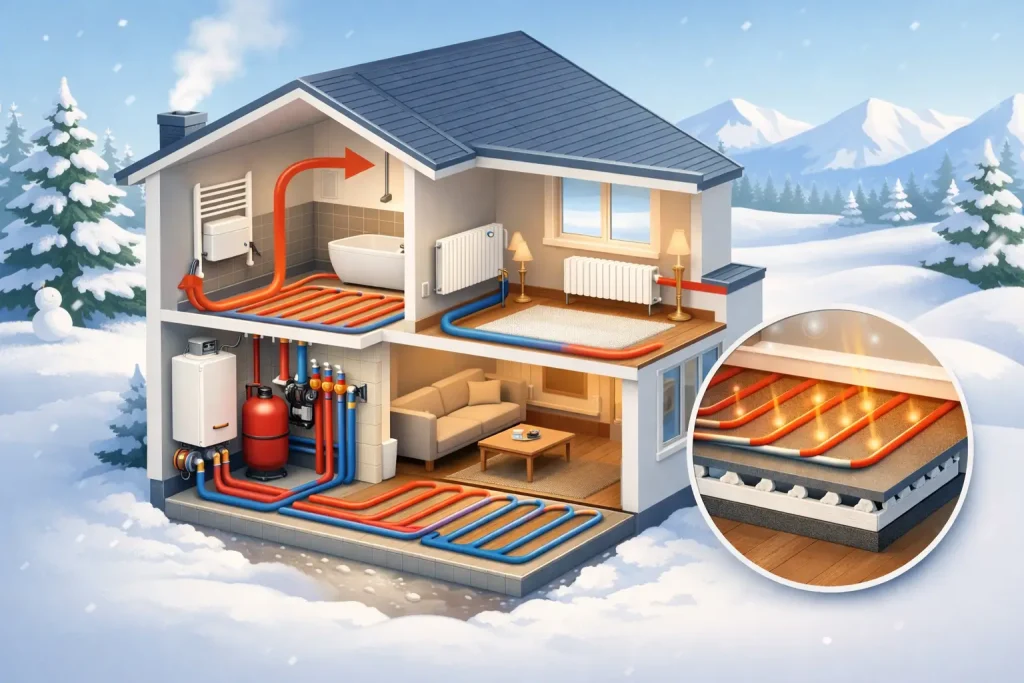
When a hydronic heating system starts missing a room, dropping pressure or leaving radiators half-cold, the problem is rarely random. It usually points to a fault that can be traced, tested and fixed properly. That matters in winter, especially in Melbourne homes where reliable heat is not a luxury – it is part of how the house needs to function day to day.
Hydronic systems are all we do, and there is a reason specialists approach them differently from general plumbing work. These systems combine boilers, pumps, valves, controls, pipework and heat emitters into one closed loop. If one part is underperforming, the symptom might show up somewhere else entirely. A cold radiator could be trapped air, a balancing issue, a failed valve, low system pressure or a boiler-side fault. Replacing parts without proper diagnostics is how homeowners end up paying for work they did not need.
What hydronic heating does well
Hydronic heating uses heated water to distribute warmth through radiators, panel heaters, towel rails or underfloor pipework. Done properly, it gives a very different result from ducted air. The heat is steadier, quieter and generally more comfortable, particularly in established homes where people want warmth that feels consistent rather than forced.
That comfort is not only about temperature. Hydronic heat does not blow dust around the house, and it does not create the same hot-and-cold swings that some homeowners notice with air-based systems. In living areas and bedrooms, that often translates to a calmer, more even indoor environment.
It also suits homes where appearance and finish matter. Radiators can be integrated neatly, boilers can be upgraded without rebuilding the whole house, and zoning can be tailored to how the property is actually used. For many households, that means better control over running costs as well as comfort.
Why hydronic heating needs a specialist
Hydronic systems are reliable when they are designed correctly and maintained properly, but they are not simple. They rely on correct water circulation, proper heat exchange, accurate control settings and the right pressure across the system. A fault in any of those areas can reduce efficiency long before the boiler stops altogether.
This is where specialist diagnosis matters. A generalist may identify the obvious symptom. A specialist looks for the actual cause. If a boiler is locking out repeatedly, the answer may not be a new boiler. It could be poor circulation, a failed expansion vessel, sludge in the system, an issue with combustion components or a control fault. Repair-first thinking protects the homeowner from unnecessary replacement costs and often gets heat restored faster.
That is also why parts availability makes a difference. If a contractor arrives, diagnoses the fault and then has to leave to source common components, the household loses more time. For homeowners with no heating in the middle of winter, first-visit repair capability is not a small detail.
Common hydronic heating problems in homes
Most faults fall into a few categories, though the exact cause still needs testing. Boilers can fail to ignite, lose pressure, short cycle or stop responding to controls. Radiators may stay cold at the top or bottom, heat unevenly or fail to warm at all. Some systems develop leaks around valves, joins or ageing components. Others continue to run, but with poor output and rising petrol bills.
Sludge and air are common culprits in older systems. Over time, corrosion debris can affect circulation and reduce heat transfer. Air trapped in the system can leave certain radiators ineffective and create noise in pipework. Neither issue should be guessed at. The right fix depends on the system condition, the age of the boiler and whether the problem is isolated or spread across the network.
Controls are another overlooked area. Homeowners sometimes assume the boiler is failing when the issue is actually a thermostat, zone valve or programmer fault. Equally, some systems are technically operating but are badly set up, which leaves parts of the house underheated and wastes energy.
Repair or replace? It depends on the fault
This is the question most homeowners ask when something goes wrong, and the honest answer is that it depends. Not every ageing boiler should be replaced immediately. Not every repair is good value either.
If the fault is isolated, spare parts are available and the boiler is otherwise sound, a repair is often the sensible option. That is particularly true where the rest of the system – radiators, pipework and controls – is performing well. A targeted repair can restore full operation without the cost and disruption of replacement works.
Replacement starts to make more sense when faults are recurring, efficiency is poor, parts are obsolete or the existing boiler is no longer suited to the property. For example, some older units consume more petrol than necessary and struggle to deliver stable performance under modern household demands. In those cases, a condensing boiler upgrade may improve both comfort and running costs.
The key point is that replacement should follow diagnosis, not guesswork. Homeowners are best served when a contractor can explain what has failed, what can be repaired, what the likely lifespan looks like after repair, and whether an upgrade offers a genuine long-term benefit.
Condensing boiler upgrades and efficiency
For many homes, the biggest performance gain comes from replacing an outdated boiler with a modern condensing unit. These boilers are designed to recover more heat from combustion, which can improve efficiency when the system is set up correctly.
That said, a new boiler on a poorly prepared system will not deliver its best. Water quality, system flushing, controls setup and overall compatibility all matter. Installing a premium boiler without addressing circulation issues or contaminated water can lead to disappointing results. This is one reason specialist installation matters just as much as product choice.
A well-planned upgrade can bring quieter operation, lower energy use, more stable hot water temperatures within the heating loop, and better zoning response. In high-use family homes, those gains are often noticeable quickly.
How hydronic heating service should work
Good service is not only about technical skill. It is also about how the job is handled from the first call to completion. Homeowners want clarity, fast attendance and a tidy result. They do not want a vague inspection followed by delays and uncertainty.
The right process is straightforward. First, the system is assessed onsite and the fault is diagnosed properly. Then the homeowner is told what has failed, what can be repaired that day and what the options are if larger works are needed. If parts are on hand, the repair should happen there and then. If the job is an upgrade or full installation, the next step should be a structured plan that fits the home, not a generic quote.
That service standard matters even more in lived-in homes where access, cleanliness and communication are part of the job. Respectful in-home conduct is not an extra. It is expected.
Preventative servicing saves more than inconvenience
Many boiler breakdowns are preceded by warning signs: pressure fluctuations, delayed ignition, inconsistent radiator output or unusual noise. Servicing helps catch those issues early and keeps the system operating closer to its intended efficiency.
For homeowners, routine maintenance is less about theory and more about avoiding winter disruption. A serviced system is less likely to fail on the coldest week of the year, and when small issues are found early, the repair cost is often lower than it would be after a major breakdown.
Servicing also gives a clearer picture of the system’s condition. That helps homeowners plan ahead, whether that means continuing with confident maintenance, scheduling repairs before winter, or preparing for a future upgrade rather than being forced into one.
Choosing the right contractor for hydronic heating
Not every plumber is a hydronic specialist, and that distinction matters when the system is complex or underperforming. Homeowners should look for a contractor who regularly works on hydronic boilers, radiators, leaks, controls and full system upgrades – not someone treating the job as a side service.
It helps when the contractor can repair as well as install. That usually signals stronger diagnostic capability and a more balanced recommendation. It also helps when they carry common spare parts, stand behind workmanship and can explain faults in plain language without pushing replacement as the first answer.
For homeowners across Greater Melbourne, that is the practical value of working with a specialist such as Hydronix. The goal is simple: restore heat quickly, protect the system where repair is the better option, and make upgrades count when replacement is genuinely warranted.
If your system is slow to heat, leaking, losing pressure or simply not performing as it should, act before it turns into a full winter breakdown. The right diagnosis early usually gives you more options, lower cost and a much faster path back to a warm house.