

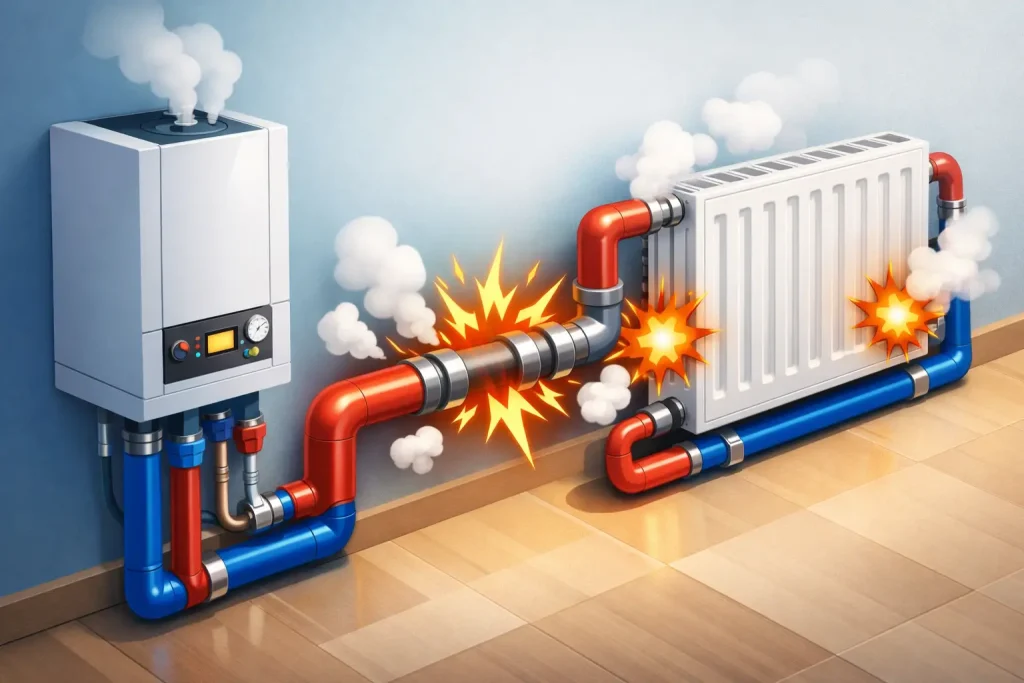
A hydronic system should not sound like someone is hitting the pipework with a spanner at 2am. If your hydronic heating is making a banging noise, the sound is usually a warning that something in the system is expanding badly, moving water incorrectly, or struggling under pressure. Sometimes the fix is minor. Sometimes it is the early sign of a fault that gets more expensive if left alone.
In homes across Melbourne, we see this most often at the start of winter, after a period of low use, or after another contractor has made a partial repair without properly balancing or checking the wider system. The right response is not to ignore it and hope it settles down. It is to work out when the noise happens, where it is coming from, and whether the issue is in the boiler, the pipework, the pump, or the radiators.
Why hydronic heating makes banging noise
Banging is not one single fault. It is a symptom. The pattern of the noise matters.
If the banging starts as the system heats up, pipe expansion is a common cause. Copper and steel move as they warm. If pipework is too tight through timber framing, clipped badly, or rubbing against masonry, that movement can create sharp knocks and bangs. In established homes, this is especially common where previous renovations boxed in pipe runs without allowing for heat expansion.
If the sound comes from the boiler itself, kettling is more likely. That happens when scale, sludge, or restricted water flow causes localised overheating inside the heat exchanger. Water flashes into steam bubbles and collapses again, creating a noise that can sound like banging or rumbling. This is not a fault to leave alone. Kettling puts stress on the boiler and usually points to a wider circulation or maintenance problem.
If the banging happens when the pump starts or a zone opens, trapped air, poor system pressure, or a failing pump can all be involved. Air pockets can move through the system and hit changes in direction. Low pressure can make circulation unstable. A worn pump may struggle to move water evenly, especially in larger homes with multiple circuits.
Then there is water hammer. While more common in domestic plumbing, it can occur in hydronic systems where valves close abruptly or flow is poorly controlled. The result is a sudden shock through the pipework. It is less common than expansion noise or kettling, but when it happens, it is usually quite distinct.
The most common causes in Melbourne homes
Expansion noise in concealed pipework
This is one of the most frequent causes of a hydronic heating making banging noise. The system heats, the pipe grows slightly, and it catches on timber, metal brackets, plaster, or brick. The noise often comes in bursts rather than a steady sound. It may be louder first thing in the morning when the system goes from cold to hot.
The trade-off here is that the heating itself may still be working. That makes it tempting to put up with the noise. The problem is that movement tends to worsen over time, and repeated friction can eventually damage clips, finishes, or joints.
Air trapped in radiators or pipe runs
Air should not be circulating around a sealed hydronic system. When it is, you might hear knocking, gurgling, or intermittent banging. Radiators may also feel hot at the bottom and cooler at the top, or some rooms may heat unevenly.
Bleeding a radiator can help in some systems, but recurring air usually means there is an underlying issue. It might be low pressure, a faulty automatic air vent, poor fill procedure, or a leak drawing air in over time.
Kettling inside the boiler
Kettling is a specialist fault, not a DIY one. It is often linked to sludge, scale, restricted circulation, blocked components, or incorrect boiler settings. High-efficiency boilers are especially sensitive to poor water quality and neglected maintenance. If the boiler sounds like it is boiling, popping, or banging, it needs proper diagnosis rather than guesswork.
Pump or valve problems
A tired circulator pump can create noise directly, but it can also cause secondary noise by allowing uneven flow through the system. Zone valves or motorised valves can contribute too, especially if they are sticking, closing abruptly, or operating against pressure conditions they were not set up for.
What you can check safely first
There are a few sensible checks a homeowner can make before booking a repair.
Start by noticing the timing. Does the noise happen only at start-up, only when one part of the house calls for heat, or all the time? That detail helps narrow the fault quickly.
Look at the boiler pressure gauge if your system has one. If pressure is clearly low or unstable, that is useful information. Do not start adjusting settings unless you know the system well. Incorrect topping up can mask a leak or create a second problem.
Check whether particular radiators are cooler than others, especially at the top. That can point to trapped air or circulation imbalance. Also listen closely to where the noise is loudest. Homeowners often assume it is the boiler when the actual cause is a pipe run in a wall or floor nearby.
What you should not do is keep resetting the boiler, turning controls up and down at random, or trying to dismantle valves and pumps. Hydronic systems are specialised. A general plumbing approach often misses the real cause.
When hydronic heating making banging noise means call a specialist
Some noises can wait a day or two for an appointment. Others should be treated as urgent.
If the boiler is locking out, pressure is dropping, radiators are not heating properly, or you can hear violent banging from the boiler casing, book a specialist promptly. The same applies if the noise started after a leak repair, a boiler replacement, or any recent work on the system. New faults after recent works usually mean something has not been commissioned, vented, or balanced correctly.
This is where specialist diagnostics matter. Hydronic systems are all we do, and that changes the speed and accuracy of fault finding. Instead of defaulting to replacement, the right technician checks circulation, pressure behaviour, pump performance, boiler condition, air management, and pipe movement as a connected system.
How a proper repair process works
A good hydronic repair should not begin with a sales pitch for a new boiler. It should begin with diagnosis.
First, the system is tested while the fault is present or recreated. That means checking temperatures, pressure, component operation, and the exact trigger for the noise. If the fault is intermittent, the homeowner’s description becomes important.
Next comes fault isolation. Is the problem in the boiler, a heating zone, a radiator circuit, the pump, or the pipe supports? This is where experience saves time. Banging sounds often travel, so the apparent location is not always the true one.
Then the repair itself needs to suit the cause. That may mean venting and repressurising the system properly, replacing a worn pump or valve, cleaning blocked components, correcting mounting or support issues, or addressing boiler-side restrictions causing kettling. In some cases, more than one issue is present, particularly in older systems that have had piecemeal repairs over the years.
Finally, the system should be rechecked under normal operating conditions. Quiet running is part of a successful outcome, not a bonus extra.
Repair first is usually the smarter move
Homeowners are often told that strange noises mean the whole system is finished. Sometimes that is true, but not nearly as often as people think. Many banging noise faults are repairable if they are caught early and diagnosed properly.
That matters because replacement is disruptive and expensive, particularly in larger homes with multiple radiators or concealed pipework. If the boiler is still fundamentally sound and the issue is with flow, air, sludge, support, or controls, a repair-first approach usually makes more financial sense.
Hydronix takes that view because it is better for the customer. We fix systems others replace, and that starts with identifying the actual fault rather than making assumptions from the noise alone.
Preventing the noise from coming back
Most repeat noise problems come down to neglected maintenance or incomplete repairs. An annual boiler service, pressure checks, water quality management, and proper attention to small changes in sound can prevent larger faults later.
If your system has been noisier each winter, takes longer to heat up, or has had repeated top-ups, those are signs to act before a minor annoyance becomes a no-heat callout. A quiet hydronic system is not a luxury. It is usually the sign that water is circulating properly, components are working as they should, and the system is being looked after properly.
If your heating is making you listen for the next bang, it is already asking for attention. The sooner the cause is identified, the better the chance of a straightforward repair and a quieter house by nightfall.