

A radiator that stays cold while the rest of the house struggles along is not just annoying. It usually means the system is telling you something specific. If you are searching for how to fix cold hydronic radiators, the right approach is not guesswork or replacing parts at random. It is a simple sequence of checks that tells you whether the issue is trapped air, poor circulation, a stuck valve, low pressure or a boiler fault.
Hydronic systems are reliable when they are set up and maintained properly, but they are less forgiving of rough diagnosis than standard plumbing. A general plumber may treat a cold radiator as an isolated issue. In many homes, it is not. One cold panel can point to a wider circulation or control problem that needs proper testing.
How to fix cold hydronic radiators: start with the pattern
Before touching anything, work out whether the problem affects one radiator, one zone or the whole system. That pattern matters.
If only one radiator is cold and nearby radiators are hot, the fault is usually local to that panel. Air trapped inside, a stuck thermostatic valve, a balancing issue or sludge can all cause that result. If several radiators are cold, especially on the same level or in the same part of the house, the problem is more likely to be circulation, zoning, pump performance or low system pressure. If every radiator is underperforming, the boiler or main controls need attention first.
This first check helps avoid a common mistake: bleeding every radiator in the house when the actual fault is a failed pump or a closed motorised valve.
Check whether the radiator is cold all over or only in parts
Put the heating on and let it run long enough for the system to reach operating temperature. Then feel the radiator carefully.
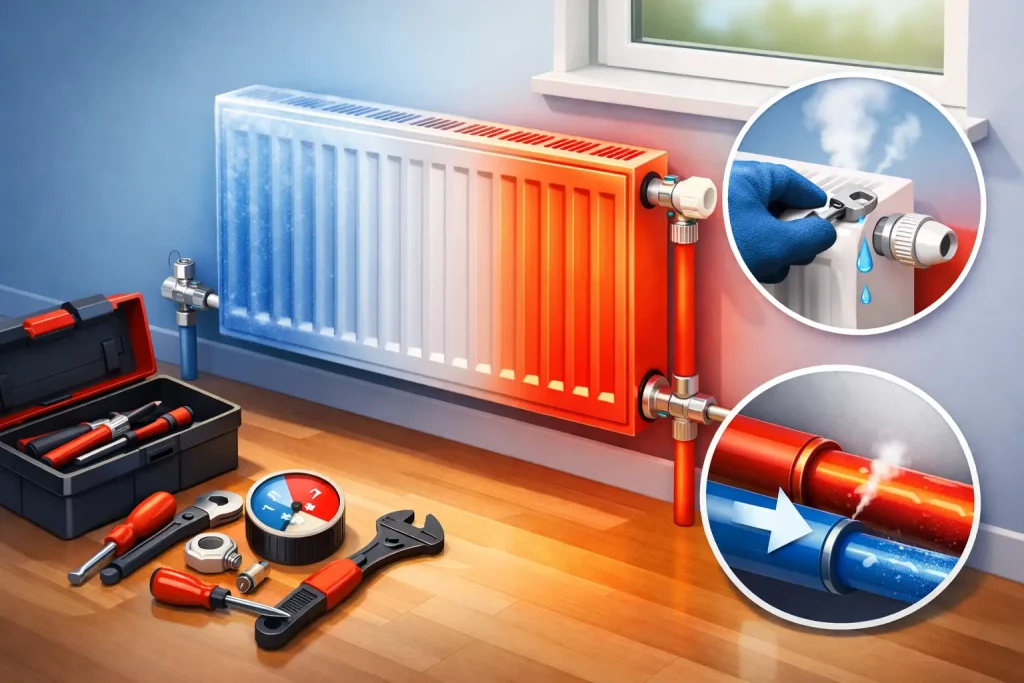
If it is cold at the top and warmer at the bottom, trapped air is the most likely cause. Air collects at high points and stops hot water filling the whole panel. If the radiator is hot at the top but cold at the bottom, sludge or magnetite build-up is more likely. That sediment restricts flow through the lower section. If one side is hot and the other remains cool, you may be looking at a balancing issue, a valve problem or poor circulation through that panel.
Those differences matter because the fix changes with the symptom. A radiator full of air needs bleeding. A radiator full of sludge usually needs more than a bleed screw and a towel.
Bleed the radiator if the top is cold
Bleeding is the first practical step when a radiator is cool at the top. Turn the heating off first, allow the system to settle, and use a radiator key or the correct bleed tool. Hold a cloth under the bleed point and open it slowly. You are listening for air escaping. Once water starts flowing in a steady stream, close the valve firmly but do not overtighten it.
Then check the system pressure at the boiler, especially if you have a sealed system. Bleeding removes air, but it can also drop the pressure enough to affect circulation elsewhere. If the pressure has fallen below the manufacturer’s recommended range, the system may need topping up.
If the same radiator keeps collecting air, that is a sign to take seriously. Repeated airlocks can point to a small leak, poor system filling, automatic air vent problems or corrosion producing gas inside the system. In that case, bleeding treats the symptom rather than the cause.
Make sure the radiator valves are actually open
It sounds obvious, but stuck or half-closed valves are a regular cause of cold hydronic radiators. Check both ends of the radiator. One side may have a thermostatic radiator valve and the other a lockshield valve.
If the thermostatic head is set low, turn it up fully and wait. If it still does nothing, the internal pin may be stuck in the closed position. That can happen after warmer months when the valve has sat unused. In some cases, the head can be removed and the pin freed carefully. In others, forcing it does more harm than good and turns a small job into a leaking valve replacement.
The lockshield valve should also be open to its set position. If someone has closed it completely, the radiator will not heat. If it has been altered without rebalancing the system, one radiator may rob flow from another.
Check boiler pressure and circulation
If more than one radiator is cold, or the heat is weak throughout the house, look at the boiler and the main system components. Low pressure on a sealed hydronic system can stop water reaching upper radiators properly and reduce overall circulation.
Check the pressure gauge when the system is cold and compare it with the boiler’s recommended operating range. If the pressure is low, topping it up may restore performance, but only if the system is otherwise sound. Pressure that drops again is usually evidence of a leak, a failed expansion vessel or a relief valve issue.
Circulation problems can also come from a tired pump, seized pump, air in the pump body or a control fault stopping the pump from running when it should. You may hear humming, clicking or nothing at all. Homeowners can do the basic observation, but live electrical testing and pump diagnosis are best left to a hydronic specialist.
When cold radiators are caused by sludge
Older systems, especially those without proper water treatment or filtration, often develop sludge. This settles in low points and radiators, reducing heat output and restricting flow. The radiator may feel warm in one corner, cool across the lower half, or never fully heat despite bleeding and open valves.
This is where DIY efforts often stall. Bleeding will not remove sludge. Repeatedly topping up the system can actually make the problem worse by introducing fresh oxygen and accelerating corrosion.
A proper fix depends on severity. Sometimes a single radiator can be removed and flushed. In other homes, the whole system needs a chemical clean, power flush or a magnetic filter added to protect the boiler and radiators going forward. The right option depends on the age of the system, the level of contamination and whether the boiler is already showing signs of strain.
How to fix cold hydronic radiators in zoned systems
If an entire area of the house is cold, think beyond the radiator itself. Zoned systems rely on controls, actuators and motorised valves to direct heat where it is needed. If one zone is not calling for heat correctly, every radiator in that part of the house can stay cold even though the boiler is running.
Check the thermostat settings first. Then listen for whether the boiler fires when that zone calls for heat. If the thermostat appears normal but the zone still does not warm up, the fault may sit with the actuator, zone valve or wiring rather than the radiators.
This is one of those cases where the symptom is simple but the diagnosis is not. Replacing radiators will achieve nothing if the zone valve never opens.
What you can check safely and what needs a specialist
A homeowner can usually check thermostat settings, confirm whether valves are open, bleed a radiator carefully and look at the boiler pressure gauge. Those are sensible first steps and may solve a straightforward issue.
Once the problem points to recurring air, pressure loss, sludge, boiler lockouts, pump faults, zoning controls or leaks, it is time to stop experimenting. Hydronic systems are closed heating systems, not standard domestic water lines. A rushed fix can introduce more air, worsen corrosion or leave you with an avoidable breakdown in the middle of winter.
That is where specialist diagnosis matters. A proper hydronic repair is not about replacing parts until something works. It is about identifying the failed component or underlying condition, carrying the right parts, and restoring heat without unnecessary replacement of the wider system.
The fastest route to a lasting repair
If your radiator has gone cold once, the fix may be simple. If it keeps happening, the system is asking for a proper inspection. The most cost-effective repair is nearly always the one that identifies the root cause first.
At Hydronix, hydronic systems are all we do. That means we look at the radiator, the valves, the boiler, the controls and the water quality as one system rather than a collection of separate faults. In many homes, that is the difference between a quick return visit and getting the heat restored properly on the first one.
Cold radiators rarely fix themselves, and they rarely improve with guesswork. Start with the safe checks, pay attention to the pattern, and if the problem persists, get it diagnosed before a cold room turns into a full heating failure.