
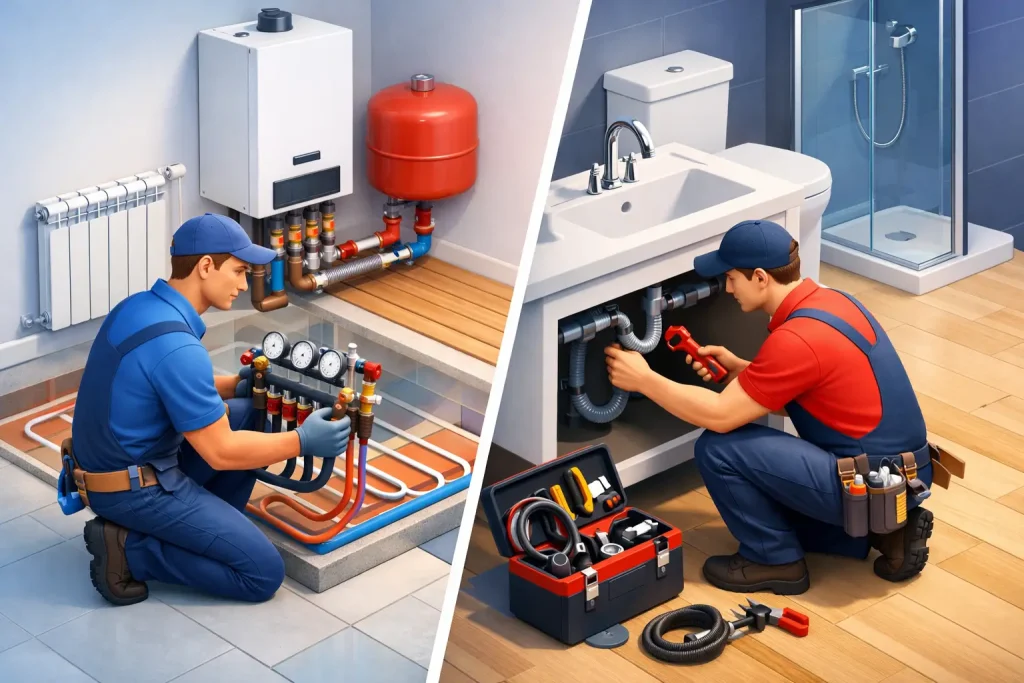
When the boiler stops, a radiator stays cold, or you find water where it should not be, the question becomes urgent: hydronic specialist vs plumber – who should you actually call? For a standard tap leak or blocked waste, a plumber is the right trade. But when the problem sits inside a hydronic heating system, the difference between a generalist and a specialist often decides whether your heat is restored quickly or you end up paying for guesswork.
Hydronic heating is not just plumbing with hot water. It is a closed heating system made up of a boiler, pump, valves, controls, pipework, pressure management and emitters such as radiators or in-slab circuits. Every component affects the others. A fault in one area can look like a problem somewhere else, which is why accurate diagnosis matters more than swapping parts and hoping for the best.
Hydronic specialist vs plumber: what is the real difference?
A plumber is trained to work across a broad range of water, gas and drainage services. That breadth is valuable. Most homes need a general plumber at some point, and many plumbers are highly capable in their field. The issue is not quality. The issue is specialisation.
A hydronic specialist works specifically on heating systems that circulate heated water through a home. That means understanding how boilers communicate with thermostats, how balancing affects room temperatures, how air locks mimic circulation faults, and why pressure loss can point to very different causes depending on the age and layout of the system. Hydronic systems are all we do, and that level of focus changes the outcome for homeowners.
If your concern is comfort, efficiency and a lasting repair, the key question is not who can attend, but who can diagnose the system correctly on the first visit.
When a plumber is the right choice
There are situations where a plumber is absolutely the right person to call. If you have a burst water pipe unrelated to the heating system, a leaking tap, a blocked toilet, a drainage issue or general water service work, a plumber is the obvious trade.
Some plumbers also handle simple heating-related jobs, particularly if the issue is isolated and obvious. For example, replacing an exposed section of pipework or repairing a straightforward leak may sit comfortably within their scope. In some homes, a plumber may also install a boiler or radiator system if they have the right experience.
The problem starts when the fault is not straightforward. Many hydronic issues look simple from the outside but are not. A cold radiator may be air, sludge, poor balancing, a failed valve, low system pressure, a pump issue or a boiler control fault. If the diagnosis is wrong, the repair cost grows while your home stays cold.
When a hydronic specialist is the better call
If your home already has hydronic heating and something is not working as it should, a specialist is usually the safer and faster option. That includes boilers locking out, uneven heating, frequent pressure drops, noisy pipework, failed pumps, radiator valves not responding, hot water not circulating properly, and systems that have slowly become unreliable over time.
Specialists are also the better choice for older systems. Established homes often have heating layouts that have been altered over the years, sometimes by multiple trades. Components get upgraded in stages, controls are changed, and original design logic gets lost. A generalist may only see the visible symptom. A hydronic specialist traces the whole system and finds the actual cause.
This is particularly important if you have been told the boiler needs replacing but no one has shown you clear evidence why. We fix systems others replace. In many cases, a careful diagnostic process and the right spare parts can return an existing system to proper operation without the cost of a full replacement.
Why hydronic systems are easy to misdiagnose
Hydronic heating rewards technical precision. Water temperature, flow rate, pressure, control logic and emitter performance all need to work together. Change one variable and the symptom may appear somewhere else.
Take a home with two radiators not heating. A non-specialist might replace the radiator valves and leave. But if the real problem is poor pump performance or an incorrectly set bypass, those new valves change nothing. Or consider a boiler showing a fault code. The code points to one area, but the root cause may be poor circulation, sensor drift or a pressure issue elsewhere in the system.
This is where specialist experience matters. It reduces trial and error. It protects the homeowner from paying for unnecessary parts, repeated call-outs and replacement recommendations based on incomplete diagnosis.
Hydronic specialist vs plumber for repairs
Repairs are where the gap becomes most obvious. A general plumber may be able to repair the visible fault. A hydronic specialist aims to restore the full system properly, not just quieten the immediate symptom.
That means checking how the boiler is operating under load, whether radiators are balanced, whether the pump is matched to the system, whether air elimination is working, and whether control settings are causing short cycling or inconsistent comfort. It is a more complete approach because heating performance depends on the system, not one isolated component.
It also matters from a practical point of view. Fast diagnosis only helps if the repair can be completed without delay. On-hand spare parts make a real difference, especially in winter when homeowners need heat restored quickly. Waiting days for standard components is frustrating enough. Waiting because the first diagnosis was wrong is worse.
What about installations and upgrades?
For new installations, extensions or major upgrades, specialisation becomes even more important. Hydronic performance starts with design. Boiler sizing, zoning, pipe sizing, radiator output, controls and commissioning all affect comfort and running costs.
A plumber who occasionally installs heating may complete the job, but a hydronic specialist is more likely to design around the way the house actually heats. That is especially relevant in larger Melbourne homes, renovated period properties and households that want better efficiency rather than simply replacing old equipment with similar equipment.
Modern condensing boilers, for example, deliver their best efficiency when the system is designed and set up to let them condense properly. If flow temperatures are wrong or controls are poorly configured, the homeowner pays for premium equipment without getting the intended performance.
How to choose between a hydronic specialist and a plumber
The quickest way to decide is to look at the problem, not just the trade title. If the issue is part of your hydronic heating system, ask who works on these systems every week. Ask who carries out diagnostics before recommending replacement. Ask who holds common hydronic parts and can explain the fault clearly.
A good specialist should be able to tell you what the visit involves, what they will test, and what happens if the fault can be repaired immediately. They should also be realistic. Sometimes replacement is the right decision, particularly when a boiler is beyond economical repair or parts are no longer available. But that recommendation should come after proper assessment, not before.
It is also reasonable to ask about workmanship standards. In higher-end homes, homeowners want more than a technical fix. They want tidy work, respect in the home, clear communication and accountability if further adjustments are needed.
The cost question homeowners really mean
Many people ask whether a plumber is cheaper than a hydronic specialist. The better question is which option costs less overall.
A lower call-out fee means very little if it leads to multiple visits, incorrect parts replacement or a premature boiler swap. A specialist may not always be the cheapest first invoice, but accurate diagnosis often makes them the more economical choice. You are paying for resolution, not just attendance.
That matters even more when winter comfort is on the line. For busy households, downtime has a cost as well. If you can avoid days of uncertainty and get the heat restored properly, the value is obvious.
Who should you call first?
If you have a general plumbing problem, call a plumber. If your radiators are cold, your boiler keeps faulting, pressure keeps dropping, there is a leak on the heating circuit, or the system is no longer heating the house evenly, call a hydronic specialist first.
That does not diminish the plumbing trade. It simply reflects the complexity of the system in your home. Specialist heating work is specialist for a reason. The right person will protect your time, your comfort and your budget by diagnosing the fault properly and repairing what can be repaired.
For homeowners who rely on hydronic heating, that is usually the difference that matters most. When the house is cold, you do not need a guess. You need the right fix, done cleanly, quickly and with confidence.