
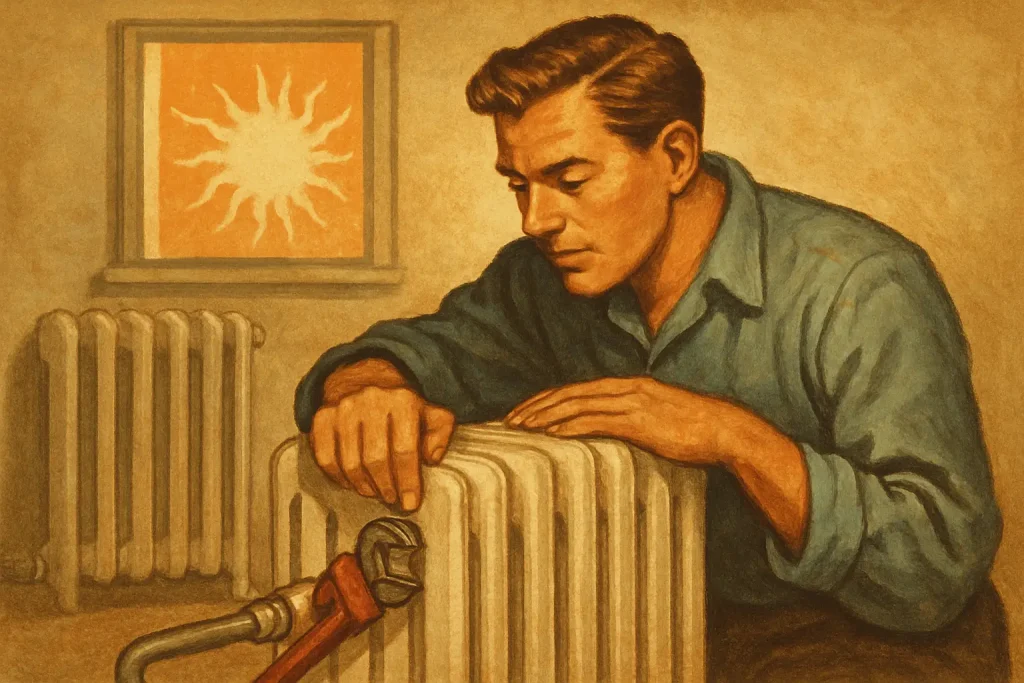
When a hydronic system fails, it rarely fails politely. You notice it when the house is already cold, the kids are complaining, or you have guests coming and half the radiators have decided to take the night off. The good news is that most breakdowns are repairable – and in many homes, repair is the smartest path because it gets heat back quickly without forcing a rushed replacement decision.
Hydronic heating is also less forgiving of guesswork than people expect. A general “plumber’s look” can miss the real cause, especially where there are multiple zones, older pipework, or a mix of panel radiators and underfloor circuits. Proper hydronic heating repairs start with clear diagnosis: what’s happening in the boiler, what the water is doing in the system, and what the controls are telling it to do.
What’s actually failing in a hydronic system?
Hydronic heating is simple in principle – a boiler heats water, a pump moves it, and heat emitters (radiators or underfloor) release warmth into the rooms. In practice, the system relies on pressure stability, clean water, correct flow rates, and controls that coordinate everything.
That means faults often cluster into a few categories. Either the boiler is not producing heat reliably, the hot water is not circulating properly, the heat emitters are not releasing heat evenly, or there is a leak or pressure issue that destabilises everything. Controls and electrical components can also be the hidden culprit – the system may be healthy, but never receives the correct signal to run.
A repair-first specialist will treat symptoms as clues, not as the diagnosis. A cold radiator, for example, could be air, sludge, a stuck valve, an unbalanced circuit, a failing pump, or a zone valve that is not opening fully. Each fix is different, and picking the wrong one wastes time.
Common symptoms that point to specific hydronic heating repairs
A few patterns show up again and again in Melbourne homes, particularly in established properties with extensions and retrofits.
The boiler fires up, then cuts out
Short cycling (starting and stopping repeatedly) can be caused by low system water volume, a circulation issue, sensor faults, or heat exchanger problems. Sometimes it is as simple as incorrect settings after other work has been done, but it can also indicate that the boiler is being asked to do something the system cannot support – like trying to run at high temperature with restricted flow.
The trade-off here is speed versus thoroughness. You can sometimes “get it going” temporarily, but unless the underlying reason is found, the boiler will keep protecting itself by shutting down.
Some radiators are hot, others are cold
If the same radiator is always cold, suspect the radiator valve, the lockshield setting, a blockage in that run, or a local air pocket. If radiators go cold across an entire zone, look at the zone valve, pump performance, or control wiring.
Balancing also matters more than most homeowners realise. In larger homes, the nearest radiators can steal flow, leaving the far end lukewarm. A proper repair may include correcting balancing, not because it is “nice to have”, but because it stops repeated complaints and reduces boiler stress.
You’re topping up pressure all the time
Frequent pressure loss is not normal. It usually means a leak, a failing expansion vessel, or a pressure relief valve that is weeping and sending water to drain. A small leak under timber floors can go unnoticed until it becomes expensive, so repeated topping-up is a reason to act quickly.
There is also risk in over-topping. Too much pressure can trigger discharge through the relief valve, and the constant introduction of fresh water increases oxygen in the system, encouraging corrosion.
No heat, but the boiler seems “fine”
This is often a controls issue. A thermostat not calling for heat, a programmer set incorrectly, a failed relay, or wiring faults can all prevent heat delivery. It is common after renovations or electrical work for something small to be disturbed.
A skilled diagnostic approach checks the call-for-heat signal, confirms the boiler response, and then verifies that pumps and valves are actually moving water where it should go.
The repair process that actually saves you money
Hydronic systems reward methodical work. A “swap parts until it works” approach can become more expensive than a planned repair.
A strong process usually looks like this: confirm the fault (not just the complaint), verify system pressure and water condition, check boiler operation and error history, test circulation components (pumps, zone valves, differential bypass where fitted), and then assess heat emitter performance.
The practical benefit is speed. When the technician arrives prepared with common hydronic parts and tests in the right order, the repair often happens on the first visit. That matters because many failures happen in winter when you cannot afford days of downtime.
If you want a benchmark, this is where a specialist like book a hydronic repair positions itself – hydronic systems are all they do, with fast diagnostics and a repair-first mindset rather than defaulting to replacement.
When a repair is the right call – and when it isn’t
Homeowners are often wary of repairs because they have seen “band-aid” fixes. The reality is more nuanced.
Repairs are usually the right call when the boiler is fundamentally sound, parts are available, and the system’s design suits the home. A pump, valve, sensor, ignition component, or control repair can restore full performance for a sensible cost.
Replacement or a planned upgrade starts to make sense when the boiler is at end-of-life, parts are becoming difficult to source, or the system efficiency is clearly poor. In particular, older non-condensing boilers can be costly to run compared with modern condensing technology, especially in homes that heat for long hours.
It also depends on your tolerance for risk. If you have a history of repeated faults each winter, a strategic upgrade may buy predictability, quieter operation, and improved running costs. But you should not be pressured into replacement simply because a fault is inconvenient. Plenty of systems are replaced unnecessarily when a targeted repair would have restored reliable heat.
Leaks, sludge, and “dirty water” problems
Not all hydronic heating repairs are about the boiler. Water quality is a silent driver of performance.
Sludge and magnetite build-up restrict flow, cold-spot radiators, and strain pumps. You may notice that radiators heat slowly, gurgle, or never get evenly hot across the panel. In severe cases, the boiler overheats locally and trips out.
Leak repairs range from obvious (a weeping valve) to hidden (pipework under floors). The longer a leak continues, the more it destabilises pressure and the more fresh water enters the system, accelerating corrosion. A proper fix includes identifying the cause, repairing it cleanly, and then re-pressurising and bleeding the system correctly.
Water treatment and cleaning can be worthwhile, but it depends on system age, pipe materials, and how contaminated the circuit is. A full powerflush is not automatically the answer for every home. Sometimes a targeted clean, magnetic filtration, inhibitor dosing, and correct balancing gives excellent results with less disruption. The key is to match the intervention to the condition of the system, not to sell the biggest job.
What you can safely check before calling a specialist
There are a few homeowner checks that can speed up the visit, as long as you stay within what is safe and sensible.
You can confirm your thermostat and timer settings, and note any boiler error codes. If you have radiators, you can feel whether the pipes to a cold radiator are warm (which suggests a radiator-side issue) or cold (which suggests a circulation or control issue). You can also check the pressure gauge on the boiler – low pressure is a common reason systems lock out.
What you should not do is repeatedly top up pressure without understanding why it is dropping, or keep resetting a boiler that is locking out. Those actions can mask a leak or push a struggling component harder, turning a repair into a larger failure.
How to reduce the chances of another winter breakdown
The most cost-effective hydronic repair is the one you avoid. Preventative servicing is not about unnecessary tinkering – it is about verifying combustion safety where relevant, checking components before they fail, and confirming the system is operating within correct parameters.
A good service focuses on real failure points: pressure stability, expansion vessel charge, relief valve condition, pump performance, zone valve operation, and signs of water contamination. It also checks that the boiler is not running hotter than it needs to, because excessive temperatures increase stress and reduce condensing efficiency on modern boilers.
If your home has been renovated, it is also worth checking whether the heating load has changed. Adding rooms, changing glazing, or altering insulation can shift how the system should be balanced and controlled. Sometimes what looks like a “fault” is actually a system that no longer matches the house.
Choosing the right contractor for hydronic heating repairs
Hydronic systems are specialist work. The right contractor should be able to explain the fault in plain language, outline the options, and give you a clear call on repair versus upgrade.
Look for professional behaviours that protect your home: tidy work, respect for finishes, careful leak checks, and proper commissioning after the repair. Technically, you want someone who tests rather than guesses, carries common parts to avoid delays, and is comfortable working across boilers, radiators, underfloor circuits, pumps, valves, and controls.
Most importantly, you want accountability. A workmanship guarantee and full insurance are not marketing extras – they are signals that the business expects its repairs to last.
A warm home is the goal, but predictability is the upgrade you really feel. If your system is underperforming, treat it like you would any major home asset: diagnose properly, repair decisively, and only replace when the numbers and the risk actually justify it.