

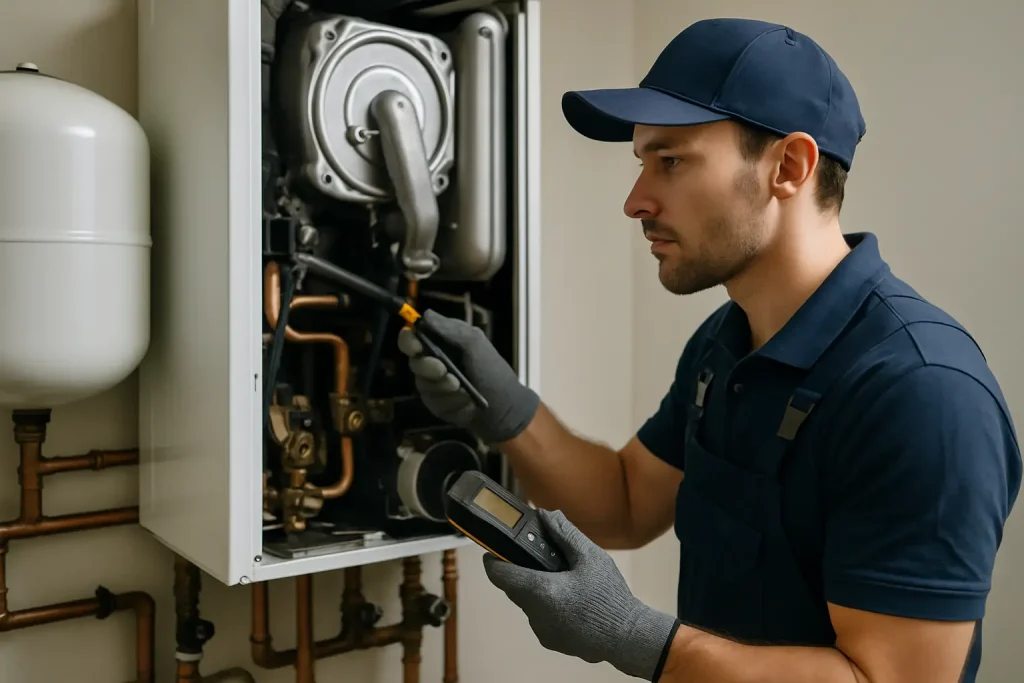
You notice it first in the quiet moments: the boiler starts, runs longer than usual, and the house still feels flat-cold. Or one radiator stays stubbornly lukewarm while the rest are fine. When you search “hydronic boiler repair near me”, you are not looking for a lecture – you want heat back, quickly, without being pushed into an unnecessary replacement.
Hydronic heating is simple in purpose and unforgiving in practice. A small issue in water quality, pressure, combustion, controls, or circulation can show up as the same symptom: no comfort. The right repair is rarely guesswork. It is fast diagnostics, the right parts, and a technician who deals with hydronic systems every day.
Why “near me” matters more with hydronic boilers
Hydronic breakdowns are time-sensitive because water-based systems can escalate. A minor leak can become a pressure fault, air ingress can cause circulation issues and corrosion, and repeated lockouts can stress components. A nearby specialist can attend sooner, but “near me” should mean more than postcode coverage.
It should mean the contractor can arrive with common hydronic spares, understands both the boiler and the distribution side (radiators, valves, pumps, zoning), and can diagnose cleanly without trial-and-error. With hydronic heating, speed comes from competence, not haste.
The failures we see most – and what they usually mean
Homeowners often describe the same handful of problems. The nuance is what sits underneath.
Boiler keeps cutting out or shows a fault code
Repeated lockouts can be caused by ignition issues, flame sensing, condensate management, airflow problems, or safety devices doing their job. It could also be system-side: low pressure from a leak, air causing poor flow, or a pump that is not moving water through the heat exchanger.
A good technician will not just clear the fault and leave. They will confirm why the safety shut-down occurred, test operation under load, and check the surrounding causes that make the fault return.
Radiators cold at the bottom, hot at the top – or vice versa
Cold spots often point to air, sludge, or poor circulation. Air tends to collect at high points and starve sections of the system. Sludge restricts flow and can damage pumps and valves. Sometimes the radiator is fine and the issue is a stuck valve or a zone control not opening fully.
The fix depends on the pattern across the home. One radiator misbehaving is different from the entire system underperforming. That “it depends” is exactly why hydronic diagnostics is a specialist job.
Pressure drops, topping up becomes routine
A sealed hydronic system should not need frequent topping up. If it does, you are either losing water somewhere or the expansion control is not doing its job. Small leaks are often missed because they evaporate on hot pipework or sit under floors where you cannot see them.
Pressure behaviour also changes with temperature. A technician should check cold pressure, hot pressure, the pressure relief discharge, and whether the expansion vessel (or equivalent) is correctly charged and sized for the system.
Boiler runs but the house never gets properly warm
This is one of the most expensive symptoms if misdiagnosed. You can waste months overpaying for energy while comfort stays mediocre.
Common causes include incorrect boiler settings, sensor or control issues, partially seized pumps, blocked strainers, and balancing problems across radiator circuits. In some homes, the boiler is fine but the system was never properly commissioned – a repair visit can turn into a performance reset that restores the heating you thought you had.
Quick checks you can do without risking damage
You do not need to be a technician, but you can gather information that speeds up a repair and reduces call-out time.
If the boiler is off, check whether there is power to the appliance and whether the controller is actually calling for heat. If your system has a pressure gauge, note the cold pressure before you touch anything. If you can see the boiler display, take a photo of any fault code. If there is visible water around the boiler, stop and book a visit rather than topping up repeatedly.
Beyond that, resist the temptation to “keep resetting it”. Resetting can mask intermittent faults and, in some cases, can worsen component wear. A boiler that locks out is telling you something.
What a proper hydronic repair visit should look like
A real repair process has a rhythm. It starts with questions that narrow the fault: when did it begin, has anything changed, is it whole-house or one zone, does pressure drop overnight, does the issue correlate with rain or cold snaps, has any work been done recently.
Then comes onsite testing. The technician should confirm combustion and safety operation where relevant, verify circulation, inspect key hydronic components (pump, air eliminators, valves, strainers), and check for leaks with an experienced eye. They should also look beyond the boiler casing. Many “boiler problems” are actually distribution problems.
The difference between a general plumbing approach and a hydronic specialist approach is not the tools – it is the decision-making. The goal is repair-first, but not repair-blind. If a part is failing, it gets replaced. If the system is dirty, the root cause is addressed, not covered up.
Repair vs replacement: the honest trade-off
Homeowners often worry that calling someone out means being sold a new boiler. Sometimes replacement is the right call, but it is not the default.
Repair makes sense when the heat exchanger is sound, the unit is otherwise in good condition, and the failure is isolated – pump, fan, ignition, sensors, valves, controls, small leaks, or system-side circulation issues. In these cases, a targeted repair can restore reliability for years at a fraction of the cost of a full changeover.
Replacement starts to make more sense when parts are no longer supported, breakdowns are frequent across different components, the boiler is inefficient compared to modern condensing technology, or the system design has outgrown the appliance. Even then, a specialist should be able to explain the why in plain language, with options that fit your home and usage.
The customer-protective approach is simple: prove the fault, quote the remedy, and give you the choice with clear consequences either way.
Why first-visit completion depends on parts and experience
Hydronic repairs can stall when the technician diagnoses correctly but cannot source the part quickly. That is how a “no heating” situation turns into days of waiting.
A hydronic-focused contractor will typically carry a meaningful range of common spares and the fittings needed to deal with what they find. That matters in established homes where access can be tricky and where you want the work done once, cleanly, and without repeat disruption.
It also matters because many issues are layered. You might have a minor leak and a circulation restriction, or a boiler fault that was triggered by low pressure caused by a separate issue. Having parts on hand allows the repair to be completed as a complete fix, not a temporary patch.
Choosing a local specialist without wasting time
When you search “hydronic boiler repair near me”, you will see plenty of options. The simplest filter is to ask direct questions.
Ask whether hydronic systems are their core work or just something they “also do”. Ask if they diagnose and repair boilers as well as radiator and leak issues. Ask what their warranty on workmanship looks like and whether they carry insurance suited to in-home trade work. Ask if they commonly complete repairs on the first visit, and what happens if a part is not available.
Pay attention to how they respond. A specialist will be confident, specific, and calm. They will not promise miracles, but they will explain the process and likely outcomes.
If you are in Greater Melbourne and want a repair-first hydronic specialist with fast diagnostics, Hydronix is set up for exactly this kind of call-out – restoring heat quickly, fixing what others replace, and backing workmanship for the long haul.
Preventing the next breakdown (without over-servicing)
Hydronic systems reward light, regular attention. They do not need constant tinkering, but they do benefit from preventative servicing that focuses on the right things: safe combustion where applicable, reliable ignition, stable system pressure, clean circulation, and controls that respond properly.
If your home has had recurring cold spots, noisy pipework, or frequent topping up, do not wait for a full failure in the middle of winter. Those are early warning signs that the system is drifting out of balance or developing a small fault.
A practical rule: if the system behaviour has changed, treat it as information. The sooner the diagnosis, the cheaper and cleaner the fix tends to be.
The closing thought
When your heating fails, the fastest path back to a warm, predictable home is not a generic “boiler guy” and a reset button – it is a hydronic specialist who can prove the fault, carry the parts, and leave you with a system that runs properly after they have gone.